

A motivated seller is a homeowner or property owner who has a strong reason to sell their property. They may want to close quickly because of a job relocation, financial situation, divorce, inherited property, or another personal circumstance.
The phrase is common in real estate marketing, property investing, home buying, and sales conversations. Real estate investors often use it when looking for homeowners who may be more open to negotiating price or closing terms.
However, “motivated seller” can sound like sales jargon. Using a more specific phrase can make your writing clearer and better suited to the situation.
Why Use Other Ways to Say “Motivated Seller”?
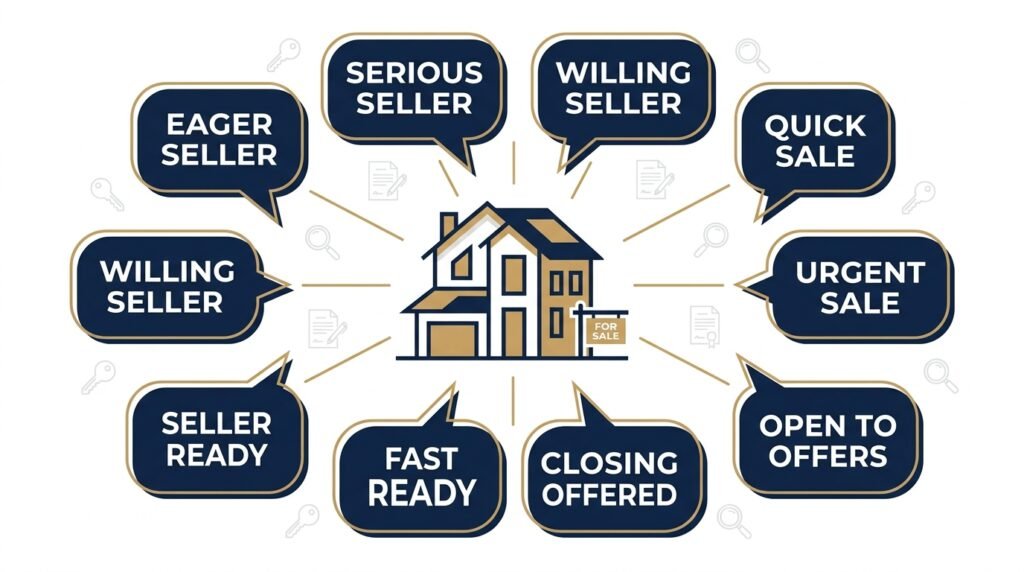
Using different wording can make real estate communication sound more natural and precise. It can also help you describe the seller’s situation without making assumptions about why they want to sell.
Other phrases can help you:
- Avoid repeating the same real estate term.
- Sound more natural in conversations and marketing copy.
- Explain the seller’s willingness to sell more clearly.
- Match your language to a professional or casual audience.
- Describe urgency without sounding overly aggressive.
- Make property listings and advertisements easier to understand.
10 Best Other Ways to Say “Motivated Seller”
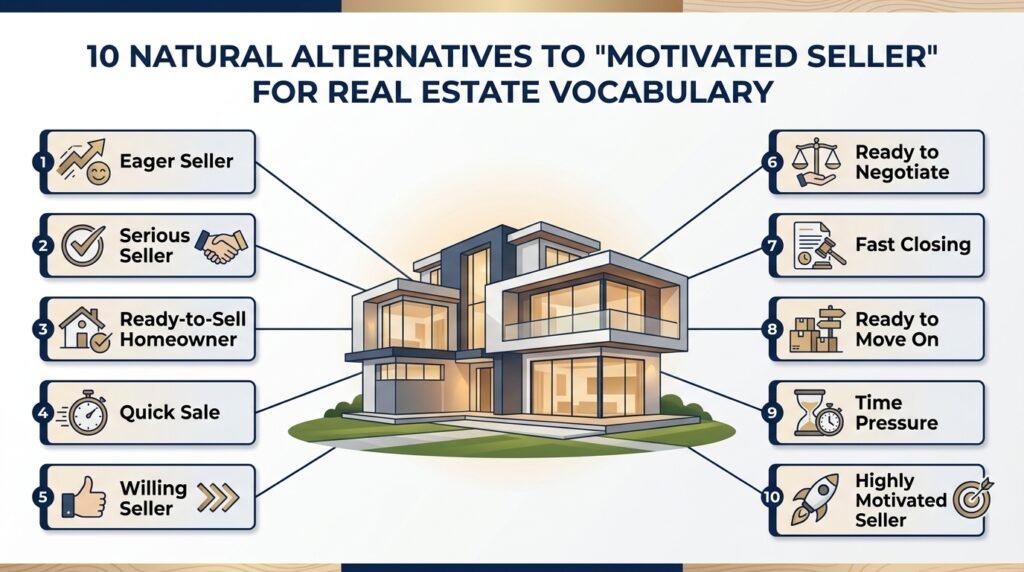
1. Eager Seller
Meaning
An eager seller is someone who is enthusiastic or particularly willing to sell their property. The phrase suggests strong interest in completing a sale but does not necessarily imply financial hardship or an urgent deadline.
Best For
- Casual
- Friendly
- Professional
Example 1
The agent is working with an eager seller who is ready to review offers this week.
Example 2
Buyers may find an eager seller more open to discussing the closing timeline.
Quick Tip
Use eager seller when you want to communicate willingness without suggesting that the owner is under pressure.
2. Serious Seller
Meaning
A serious seller is someone who genuinely intends to sell rather than simply testing the market. It emphasizes commitment and can be useful when distinguishing active sellers from homeowners who are only considering a sale.
Best For
- Professional
- Formal
- Casual
Example 1
The listing appears to come from a serious seller who has already chosen a preferred closing date.
Example 2
Investors should focus on serious sellers who are prepared to discuss actual offers.
Quick Tip
Choose this phrase when the main point is that the seller is genuinely ready to move forward.
3. Ready-to-Sell Homeowner
Meaning
A ready-to-sell homeowner clearly communicates that the property owner has decided to put the home on the market. It sounds straightforward and avoids implying that the person is desperate to sell.
Best For
- Professional
- Formal
Example 1
The campaign targets ready-to-sell homeowners in growing suburban neighborhoods.
Example 2
A ready-to-sell homeowner may already have a preferred moving date.
Quick Tip
This is a strong choice for real estate websites, educational articles, and professional marketing materials.
4. Seller Looking for a Quick Sale
Meaning
This phrase describes a property owner who wants the transaction completed relatively soon. It focuses specifically on speed rather than the reason behind the seller’s decision.
Best For
- Professional
- Casual
- Formal
Example 1
The investor specializes in working with sellers looking for a quick sale.
Example 2
A seller looking for a quick sale may prioritize a simple closing process.
Quick Tip
Use this wording when speed is more important than explaining the seller’s personal circumstances.
5. Willing Seller
Meaning
A willing seller is a property owner who is open to selling under acceptable terms. The phrase is broader than “motivated seller” because it does not necessarily suggest urgency.
Best For
- Formal
- Professional
Example 1
The buyer is negotiating directly with a willing seller.
Example 2
Finding a willing seller can make discussions about price and terms easier.
Quick Tip
Use willing seller when you want neutral language that focuses on the owner’s openness to a transaction.
6. Seller Ready to Negotiate
Meaning
A seller ready to negotiate is someone who may be open to discussing the purchase price, closing date, or other terms. It emphasizes flexibility rather than simply the desire to sell.
Best For
- Professional
- Casual
Example 1
The property could appeal to buyers seeking a seller ready to negotiate.
Example 2
A seller ready to negotiate may consider different financing or closing arrangements.
Quick Tip
This phrase works best when the seller’s flexibility is actually known rather than assumed.
7. Seller Seeking a Fast Closing
Meaning
A seller seeking a fast closing specifically wants the transaction completed quickly. It is more precise than “motivated seller” because it identifies the seller’s primary preference.
Best For
- Professional
- Formal
Example 1
The property is owned by a seller seeking a fast closing.
Example 2
Buyers with financing already arranged may appeal to a seller seeking a fast closing.
Quick Tip
Use this expression when the desired closing speed is confirmed.
8. Seller Ready to Move On
Meaning
A seller ready to move on suggests that the homeowner has decided to leave the property and begin the next stage of life. It has a warmer, more conversational tone.
Best For
- Casual
- Friendly
- Warm
Example 1
The agent connected us with a seller ready to move on to a new home.
Example 2
A seller ready to move on may appreciate buyers who can keep the process simple.
Quick Tip
This phrase is useful for conversational content, but it is less precise than standard real estate terminology.
9. Seller Under Time Pressure
Meaning
A seller under time pressure indicates that the owner has a deadline or other circumstance that makes a timely sale important. The phrase is stronger than simply saying someone is willing to sell.
Best For
- Professional
- Formal
Example 1
The buyer submitted an offer after learning that the seller was under time pressure.
Example 2
A seller under time pressure may place greater value on a reliable closing date.
Quick Tip
Use this wording carefully because it can imply personal or financial pressure that you may not actually know exists.
10. Highly Motivated Home Seller
Meaning
A highly motivated home seller is a stronger version of the original phrase. It suggests that the homeowner has a particularly strong desire or need to complete the sale.
Best For
- Professional
- Formal
- Marketing
Example 1
The investor’s latest campaign targets highly motivated home sellers in the local market.
Example 2
A highly motivated home seller may be willing to consider several types of offers.
Quick Tip
Use this phrase in marketing only when the wording accurately reflects the seller’s situation and does not create misleading expectations.
Comparison Table

| Alternative | Best Used In | Tone |
| Eager Seller | General real estate communication | Friendly |
| Serious Seller | Property discussions and marketing | Professional |
| Ready-to-Sell Homeowner | Real estate websites and articles | Professional |
| Seller Looking for a Quick Sale | Investor marketing | Direct |
| Willing Seller | Formal negotiations | Neutral |
| Seller Ready to Negotiate | Buyer-seller discussions | Practical |
| Seller Seeking a Fast Closing | Transaction-focused communication | Formal |
| Seller Ready to Move On | Conversational content | Warm |
| Seller Under Time Pressure | Specific selling situations | Serious |
| Highly Motivated Home Seller | Real estate marketing | Strong |
Common Mistakes
1. Using Casual Phrases in Professional Communication
Terms such as “eager seller” can sound conversational. For contracts, formal reports, or professional correspondence, a more neutral phrase such as willing seller may be appropriate.
2. Assuming the Seller Is Desperate
“Motivated seller” does not automatically mean a homeowner is desperate. Avoid language that suggests financial difficulty or personal problems unless the seller has clearly disclosed those circumstances.
3. Choosing Overly Formal Language
Not every real estate message needs corporate-sounding wording. In a conversation with a buyer or homeowner, simple language such as ready-to-sell homeowner may work better.
4. Ignoring Context
The best alternative depends on what you actually know. If the seller wants speed, say seller seeking a fast closing. If the seller is open to offers, willing seller may be more accurate.
5. Sounding Insincere
Real estate marketing can become pushy when every seller is described as highly motivated. Use specific, truthful wording instead of exaggerating a homeowner’s willingness to sell.
Frequently Asked Questions
What is another word for a motivated seller?
Common alternatives include eager seller, serious seller, willing seller, ready-to-sell homeowner, and seller looking for a quick sale. The right choice depends on the meaning you want to communicate. “Serious seller” emphasizes genuine intent, while “seller seeking a fast closing” focuses specifically on the need for speed.
What is a professional way to say motivated seller?
Serious seller, willing seller, and ready-to-sell homeowner are professional alternatives. They sound more neutral than “motivated seller” and can work well in real estate articles, reports, business communications, and marketing materials without automatically suggesting that the seller is under financial or personal pressure.
What does motivated seller mean in real estate?
In real estate, a motivated seller is a property owner who has a strong reason to sell. The reason could involve relocation, an inherited property, changing financial circumstances, a divorce, or simply a desire to complete the sale quickly. The term does not necessarily mean the seller will accept a very low offer.
Is “eager seller” the same as “motivated seller”?
The two phrases are similar, but they are not always identical. Eager seller emphasizes enthusiasm or willingness to sell, while motivated seller can suggest a stronger reason or incentive behind the sale. If you want neutral wording, “eager seller” may sound less forceful.
How do you describe someone who wants to sell a house quickly?
You can say seller looking for a quick sale, seller seeking a fast closing, or homeowner ready to sell quickly. These phrases are useful because they clearly communicate the seller’s preference for speed without requiring you to speculate about why the seller wants to move quickly.
What is the opposite of a motivated seller?
A less motivated seller may be described as a reluctant seller, less eager seller, or seller in no rush. These expressions suggest that the homeowner is not under a strong incentive to sell immediately and may be willing to wait for better terms or a higher offer.
Can I use “motivated seller” in a real estate listing?
Yes, but the phrase should accurately reflect the situation. If you are advertising a property as coming from a motivated seller, avoid implying that the owner is desperate or willing to accept any offer unless that information is actually known. Clear, factual descriptions build more trust with buyers.
Which alternative to “motivated seller” sounds the most natural?
Serious seller is one of the most natural choices when you want to emphasize genuine intent to sell. Willing seller is better for neutral or formal situations, while seller looking for a quick sale works best when speed is the main concern.
Conclusion
Finding another way to say motivated seller can make real estate writing more precise and natural. The best alternative depends on what you actually want to communicate about the homeowner and the sale.
Use eager seller when you want a friendly expression, or choose serious seller when you want to emphasize genuine intent. Willing seller works well in formal and neutral situations, while seller looking for a quick sale clearly communicates urgency. If speed is specifically related to closing, seller seeking a fast closing is even more precise.
Most importantly, avoid assuming that a seller is desperate or under financial pressure. Choose language that accurately reflects the situation, and your real estate communication will sound clearer, more professional, and more trustworthy.