

“You got it” is a common American English phrase with two main meanings. It can show that you understand what someone said, or it can mean that you agree to do something they asked.
For example, if your manager gives you instructions, you might say, “You got it.” If a friend explains a plan, the same phrase can mean, “I understand.”
Because the phrase is informal and broad, using another way to say “you got it” can help you sound more precise, professional, friendly, or enthusiastic.
What Does “Another Way to Say You Got It” Mean?
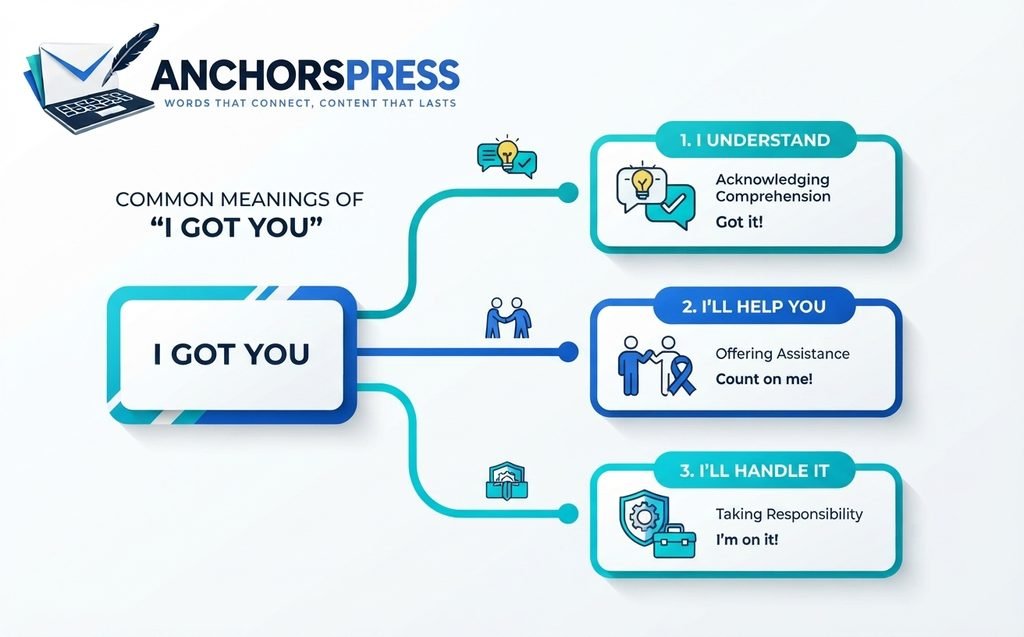
“Another way to say you got it” means looking for a different phrase that communicates understanding, agreement, confirmation, or willingness to help.
The right alternative depends on what you mean. If someone explains something, “I understand” is clear. If someone asks you to complete a task, “Absolutely” or “Consider it done” may sound more appropriate.
These expressions are commonly used in conversations, text messages, customer service, workplace communication, emails, and everyday interactions.
Why Use Other Ways to Say “You Got It”?
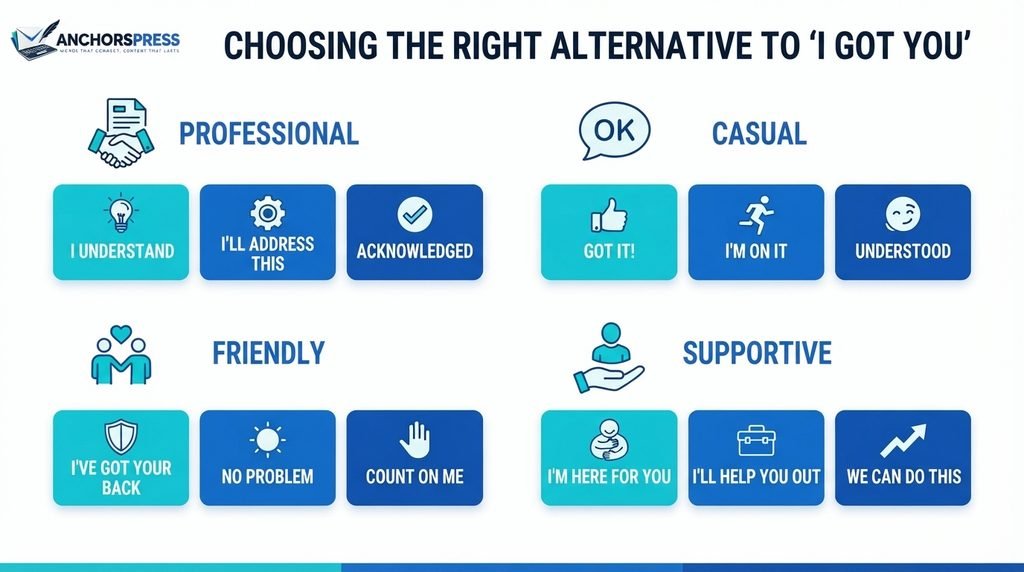
Using alternatives can make your communication clearer and better suited to the situation.
- Avoid repetition: Keep conversations from sounding predictable.
- Sound more natural: Choose wording that fits the context.
- Match the situation: Use formal language at work and casual language with friends.
- Communicate clearly: Show whether you understand, agree, or will take action.
- Express your attitude: Sound confident, warm, polite, or enthusiastic when needed.
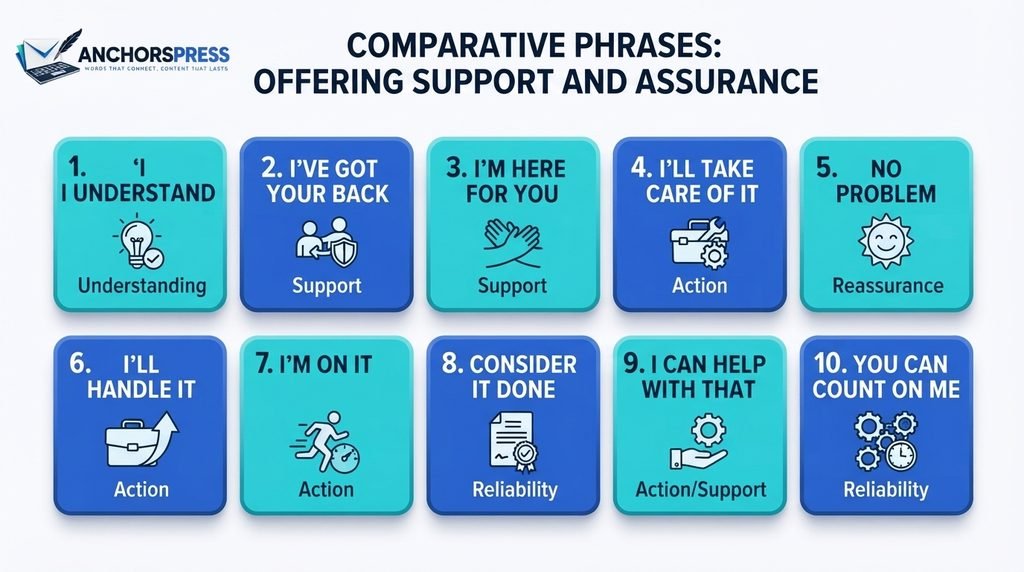
10 Best Other Ways to Say “You Got It”
1. I Understand
Meaning
“I understand” clearly tells someone that you understand what they have explained or requested. It is straightforward and works in many professional and everyday situations.
Best For
- Professional
- Formal
- Polite
Example 1
“I understand the new procedure and will follow it from now on.”
Example 2
“I understand what you need from me before Friday.”
Quick Tip
Use “I understand” when clarity matters more than sounding casual.
2. Understood
Meaning
“Understood” is a concise way to confirm that you have received and understood information. It sounds professional without being unnecessarily formal.
Best For
- Professional
- Formal
- Polite
Example 1
“Understood. I’ll send the revised report this afternoon.”
Example 2
“Understood, thanks for clarifying the deadline.”
Quick Tip
This is one of the safest alternatives for workplace emails and messages.
3. Gotcha
Meaning
“Gotcha” is a relaxed version of “I understand.” It sounds conversational and friendly, making it more suitable for informal interactions.
Best For
- Casual
- Friendly
Example 1
“Gotcha. I’ll meet you outside the theater at seven.”
Example 2
“Gotcha, now I see why you changed the schedule.”
Quick Tip
Avoid “Gotcha” in formal emails unless you already have a very casual relationship with the recipient.
4. Absolutely
Meaning
“Absolutely” communicates strong agreement, confidence, or willingness to help. It often sounds warmer and more enthusiastic than simply saying “you got it.”
Best For
- Professional
- Friendly
- Warm
- Polite
Example 1
“Absolutely. I’ll make sure the presentation is ready before the meeting.”
Example 2
“Absolutely—I’d be happy to help you organize the event.”
Quick Tip
Use it when you want your response to sound positive and confident.
5. No Problem
Meaning
“No problem” tells someone that their request is acceptable and does not create an issue for you. It is common in everyday American English.
Best For
- Casual
- Friendly
- Polite
Example 1
“No problem. I can pick up the documents on my way home.”
Example 2
“No problem at all; just send me the updated address.”
Quick Tip
For formal business writing, “Certainly” may sound more polished.
6. Certainly
Meaning
“Certainly” is a polite and professional way to show agreement or willingness to help. It has a more polished tone than “no problem” or “gotcha.”
Best For
- Professional
- Formal
- Polite
Example 1
“Certainly. I’ll forward the information to the accounting team.”
Example 2
“Certainly, we can arrange a different appointment time.”
Quick Tip
Choose “certainly” when speaking with customers, clients, supervisors, or other professional contacts.
7. Consider It Done
Meaning
“Consider it done” means you agree to handle a request and intend to complete it. It sounds confident and reassuring.
Best For
- Casual
- Friendly
- Warm
Example 1
“You need the invitations mailed today? Consider it done.”
Example 2
“Leave the reservation to me; consider it done.”
Quick Tip
Use this when you want to emphasize action rather than simply acknowledge information.
8. I’m On It
Meaning
“I’m on it” means you have understood a task and are already prepared to work on it. It sounds energetic, direct, and natural.
Best For
- Professional
- Casual
- Friendly
Example 1
“I’m on it. I’ll check the figures and send you the results.”
Example 2
“I’m on it—I’ll contact the supplier this morning.”
Quick Tip
This phrase works especially well when someone has just assigned you a task.
9. Makes Sense
Meaning
“Makes sense” indicates that you understand or agree with someone’s explanation. It is conversational and often used after someone explains a reason or decision.
Best For
- Casual
- Friendly
- Polite
Example 1
“Makes sense. I understand why you want to move the meeting.”
Example 2
“That makes sense now that I know how the system works.”
Quick Tip
Use it after an explanation rather than as a direct response to every request.
10. You Can Count on Me
Meaning
“You can count on me” communicates confidence and reliability. It tells someone that they can trust you to follow through on a commitment.
Best For
- Professional
- Friendly
- Warm
- Polite
Example 1
“You can count on me to have the materials ready by Monday.”
Example 2
“Thanks for trusting me with the project. You can count on me.”
Quick Tip
Choose this phrase when you want to emphasize reliability and commitment.
Comparison Table
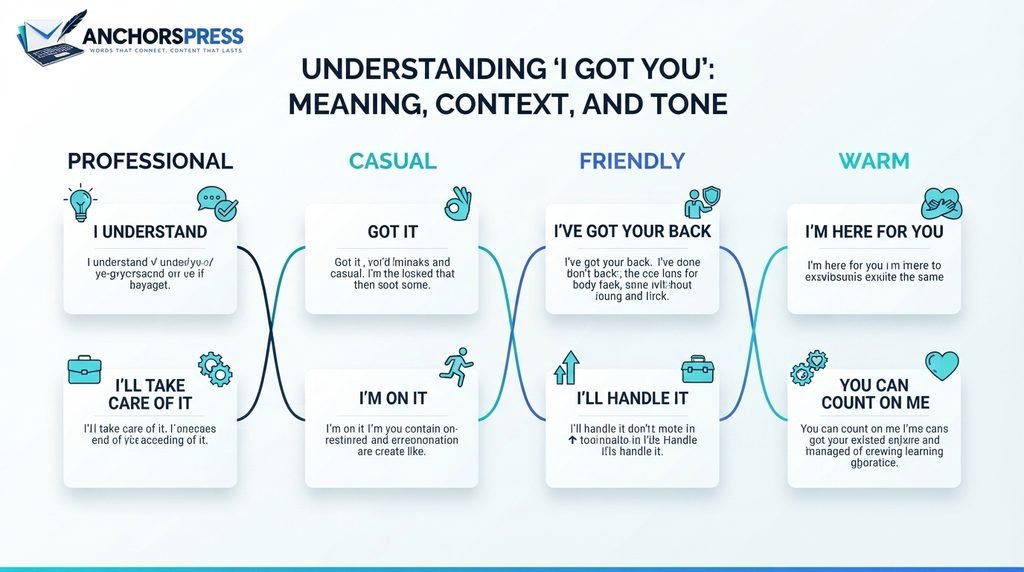
| Alternative | Best Used In | Tone |
| I Understand | Work, formal conversations | Clear, professional |
| Understood | Emails, instructions | Concise, professional |
| Gotcha | Friends, casual chats | Relaxed, friendly |
| Absolutely | Work, everyday conversations | Confident, enthusiastic |
| No Problem | Everyday requests | Casual, reassuring |
| Certainly | Customer service, work | Polite, polished |
| Consider It Done | Requests and tasks | Confident, proactive |
| I’m On It | Work and task assignments | Energetic, direct |
| Makes Sense | Explanations and discussions | Conversational, agreeable |
| You Can Count on Me | Commitments and promises | Warm, reliable |
Common Mistakes
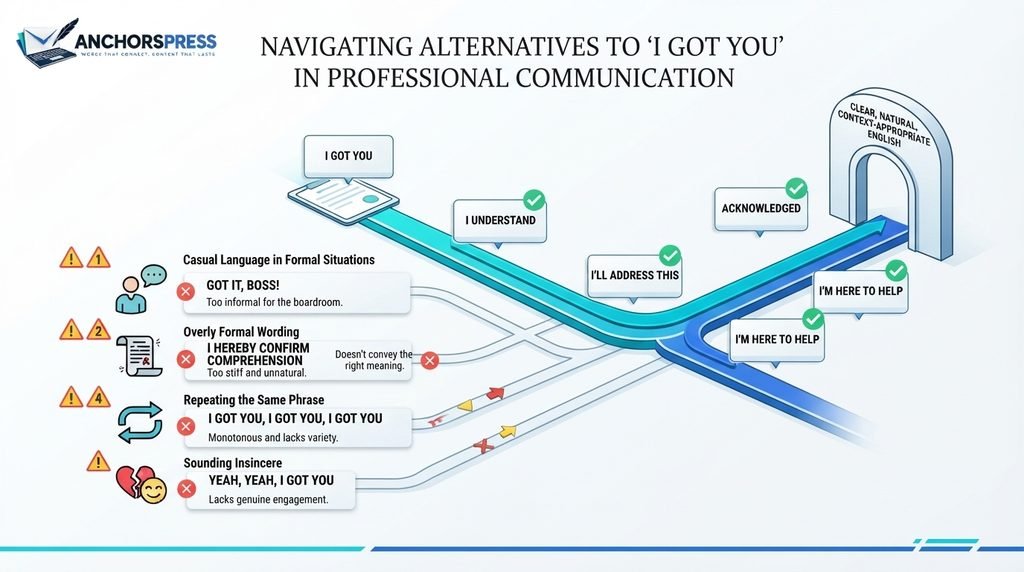
1. Using Casual Phrases in Professional Emails
Words such as “gotcha” can sound too relaxed in formal workplace communication. Choose “understood,” “certainly,” or “I understand” when professionalism matters.
2. Choosing Overly Formal Language
Not every conversation needs polished business language. Saying “Certainly” to a close friend may sound stiff when “Absolutely” or “No problem” would feel more natural.
3. Repeating the Same Phrase
Using “you got it” in every conversation can make your responses sound repetitive. Rotate between alternatives based on what you actually mean.
4. Forgetting Context
“I understand” confirms comprehension, while “I’m on it” suggests action. Make sure your phrase matches whether you are acknowledging information or agreeing to complete a task.
5. Sounding Insincere
Some expressions can feel automatic when used without thought. Choose a phrase that genuinely reflects your attitude and the situation.
Frequently Asked Questions
1. What is a professional way to say “you got it”?
“Understood,” “I understand,” and “Certainly” are strong professional alternatives. They clearly communicate acknowledgment without sounding overly casual. For workplace instructions, “Understood” is especially useful because it is brief, direct, and appropriate for emails, meetings, and professional messages.
2. What is a casual way to say “you got it”?
“Gotcha,” “No problem,” and “Absolutely” are natural casual alternatives. “Gotcha” is best when you mean “I understand,” while “No problem” works well when someone asks you to do something. “Absolutely” adds more enthusiasm and confidence.
3. Is “I understand” better than “you got it”?
It depends on the situation. “I understand” is clearer and more professional, while “you got it” sounds more conversational. If you are responding to a manager, client, or formal request, “I understand” is usually the safer choice.
4. Can I say “gotcha” in a work email?
You can use “gotcha” in a very casual workplace, especially when communicating with a close colleague. However, it may sound too informal with clients, executives, or unfamiliar contacts. In those situations, “Understood” or “I understand” creates a more professional impression.
5. What does “you got it” mean in a conversation?
“You got it” can mean two things. First, it can mean “I understand,” such as after someone explains a plan. Second, it can mean “I will do that,” especially when responding to a request or task.
6. What is a polite way to say “you got it”?
“Certainly,” “Absolutely,” and “I understand” are polite choices. The best option depends on your intended meaning. Use “I understand” for comprehension, “Certainly” for a polite agreement, and “Absolutely” when you want to sound positive and willing.
7. What is another way to say “you got it” in a text?
For a text message, you can say “Gotcha,” “Absolutely,” “No problem,” or “I’m on it.” Choose based on the situation. “Gotcha” feels relaxed, while “I’m on it” tells the person you are actively handling the task.
8. What is a confident way to say “you got it”?
“Consider it done” and “You can count on me” are confident alternatives. Both suggest more than simple understanding. They reassure the other person that you accept the responsibility and intend to follow through.
Conclusion
Finding another way to say “you got it” can make your communication more natural and precise. The best phrase depends on whether you are confirming understanding, agreeing to a request, or promising to take action.
The key is to match the phrase to the situation instead of using one expression every time. Choose words that reflect your meaning, relationship, and desired tone for clearer [professional communication].

The Anchors Press Editorial Team writes and reviews every guide on this site. We check each alternative phrase against standard dictionaries and real usage, explain when it fits, and update articles when readers point out errors.