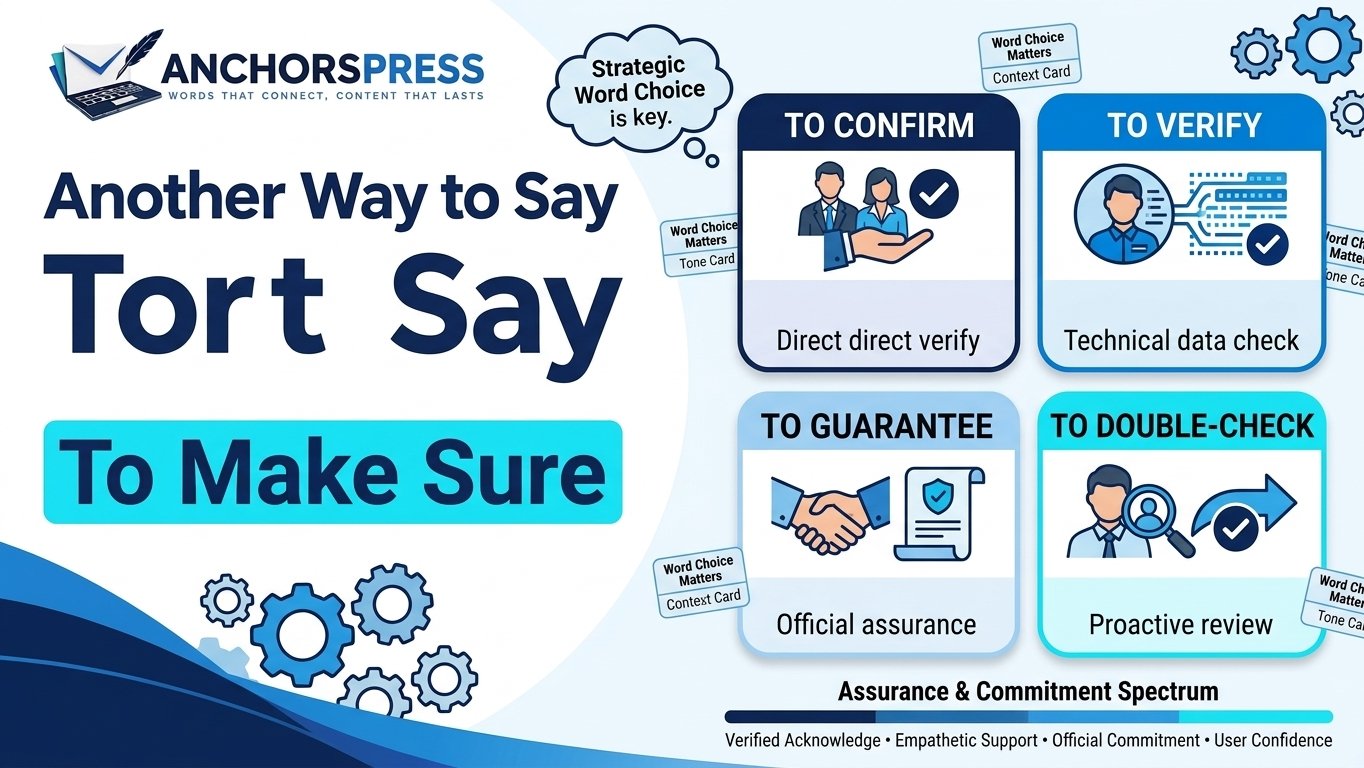

Looking for another way to say “to make sure” can help you write and speak more naturally. This common phrase appears in emails, conversations, instructions, business writing, and everyday situations.
While “to make sure” is clear and correct, repeating it too often can make your writing sound predictable. Choosing a different phrase can improve your tone and help you communicate more precisely.
Below are 10 useful alternatives, along with their meanings, examples, and practical tips.
What Does “To Make Sure” Mean?
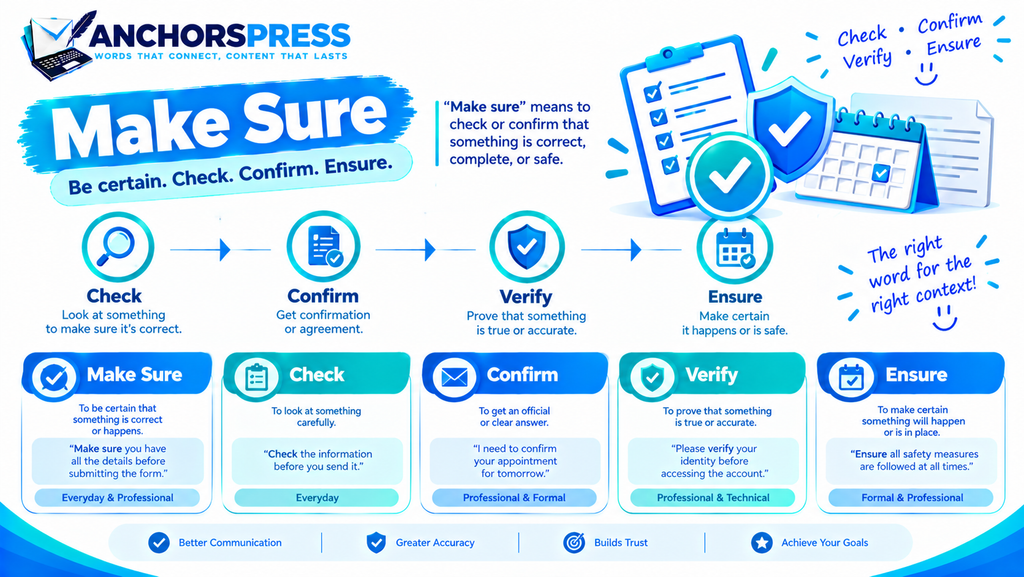
“To make sure” means taking steps to confirm that something is correct, complete, true, or likely to happen. It often involves checking information or doing something carefully to avoid mistakes.
People use this phrase when giving instructions, confirming details, or expressing the need for certainty. You may hear it in workplaces, schools, emails, customer service, and casual conversations.
For example: “Please check the address to make sure it is correct.”
Why Use Other Ways to Say “To Make Sure”?
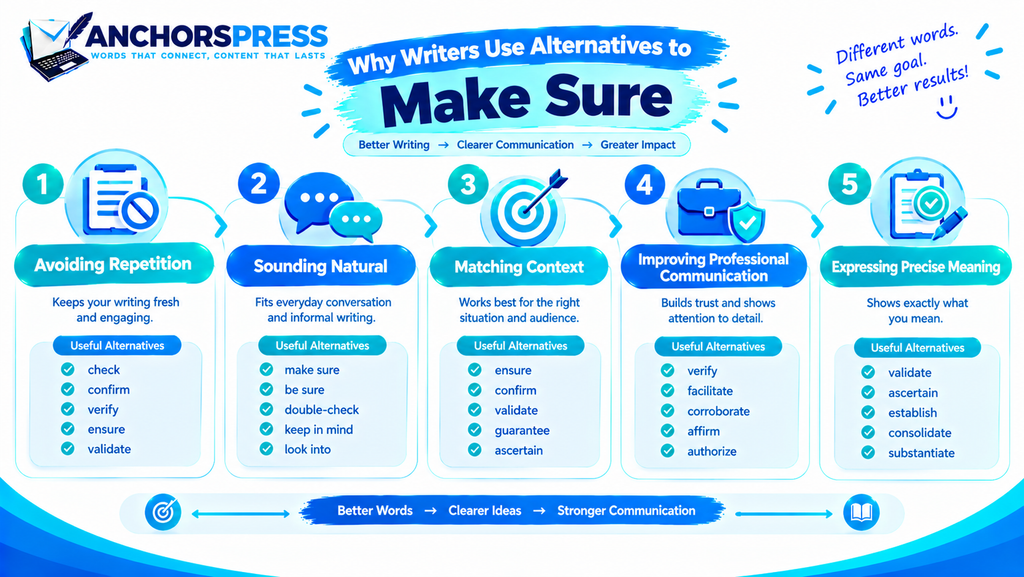
Using alternatives to “to make sure” can make your communication clearer and more varied. Some phrases also fit certain situations better than others.
Using different wording can help you:
- Avoid repeating the same phrase.
- Sound more natural and confident.
- Match your language to formal or casual situations.
- Improve professional communication.
- Be more specific about what you want someone to do.
The best alternative depends on whether you are checking information, confirming a plan, preventing a problem, or expressing certainty.
10 Best Other Ways to Say “To Make Sure”

1. To Ensure
Meaning
“To ensure” means to make certain that something happens or is done correctly. It is a strong and polished alternative that works especially well in professional and formal writing.
This phrase often focuses on achieving a desired result.
Best For
Professional, Formal
Example 1
Please review the final report to ensure that all the figures are accurate.
Example 2
The team added extra testing to ensure the website worked properly before launch.
Quick Tip
Use “ensure” when you want a professional alternative in business emails, reports, or instructions.
2. To Confirm
Meaning
“To confirm” means to verify that information, plans, or details are correct. It is especially useful when you need someone to give clear approval or acknowledgment.
This phrase works naturally in both professional and everyday communication.
Best For
Professional, Polite, Friendly
Example 1
Could you confirm your appointment time before Friday?
Example 2
I called the restaurant to confirm our reservation for Saturday night.
Quick Tip
Use “confirm” when checking whether a specific detail or arrangement is correct.
3. To Verify
Meaning
“To verify” means to check facts, information, or details for accuracy. It is slightly more formal and often suggests checking something against reliable evidence.
This word is common in technical, financial, legal, and professional settings.
Best For
Professional, Formal
Example 1
Please verify your account information before submitting the form.
Example 2
The editor verified each statistic before publishing the article.
Quick Tip
Choose “verify” when accuracy and factual checking are especially important.
4. To Double-Check
Meaning
“To double-check” means to check something again to catch possible mistakes. It is a natural and common phrase in American English.
It usually suggests that an initial check has already happened.
Best For
Casual, Professional, Friendly
Example 1
I’m going to double-check the meeting date before I add it to my calendar.
Example 2
Please double-check your order before clicking the checkout button.
Quick Tip
Use “double-check” when asking someone to review something one more time.
5. To Be Certain
Meaning
“To be certain” means to have no doubt about something or to take action so that you have confidence in the result. It sounds natural and slightly more careful than “to make sure.”
It works well when certainty is the main goal.
Best For
Professional, Formal, Polite
Example 1
I wanted to call early to be certain you received my message.
Example 2
Read the instructions carefully to be certain you understand each step.
Quick Tip
Use this phrase when you want to emphasize confidence or remove uncertainty.
6. To Check
Meaning
“To check” means to examine something to see whether it is correct, complete, or working properly. It is simple, direct, and useful in almost any situation.
Sometimes the shortest wording is also the clearest.
Best For
Casual, Professional, Friendly
Example 1
Check the shipping address before placing your order.
Example 2
I’ll check the schedule and let you know if anything has changed.
Quick Tip
Use “check” when you want a simple and direct alternative without sounding overly formal.
7. To Be Sure
Meaning
“To be sure” is a close and natural alternative to “to make sure.” It means taking a step to gain confidence that something is correct or will happen.
It is common in everyday American English and sounds friendly.
Best For
Casual, Friendly, Polite
Example 1
I sent you a reminder just to be sure you saw the update.
Example 2
Let me review the list once more to be sure nothing is missing.
Quick Tip
Add “just” before “to be sure” when you want a softer and more conversational tone.
8. To Make Certain
Meaning
“To make certain” means to take steps to guarantee or confirm something. It is very close in meaning to “to make sure” but can sound slightly more formal.
This phrase works well when clarity and certainty matter.
Best For
Professional, Formal, Polite
Example 1
The manager reviewed every document to make certain the information was complete.
Example 2
Please make certain that the doors are locked before leaving the building.
Quick Tip
Use “make certain” when you want a formal alternative without changing the meaning too much.
9. To Check That
Meaning
“To check that” means to examine something and confirm that it meets a particular condition. It is especially useful when you need to mention exactly what should be checked.
The phrase is clear and easy to understand.
Best For
Professional, Casual, Polite
Example 1
Check that your name is spelled correctly on the application.
Example 2
Before sending the package, check that the label is attached securely.
Quick Tip
Use “check that” when you want to clearly identify the specific detail that needs attention.
10. To Guarantee
Meaning
“To guarantee” means to promise or make something certain. It is stronger than “to make sure” and should be used only when there is real confidence or responsibility behind the statement.
It can sound authoritative and confident.
Best For
Professional, Formal
Example 1
Regular maintenance helps guarantee that the equipment performs reliably.
Example 2
We followed the checklist to guarantee that every required step was completed.
Quick Tip
Avoid using “guarantee” when you cannot realistically promise the result.
Comparison Table
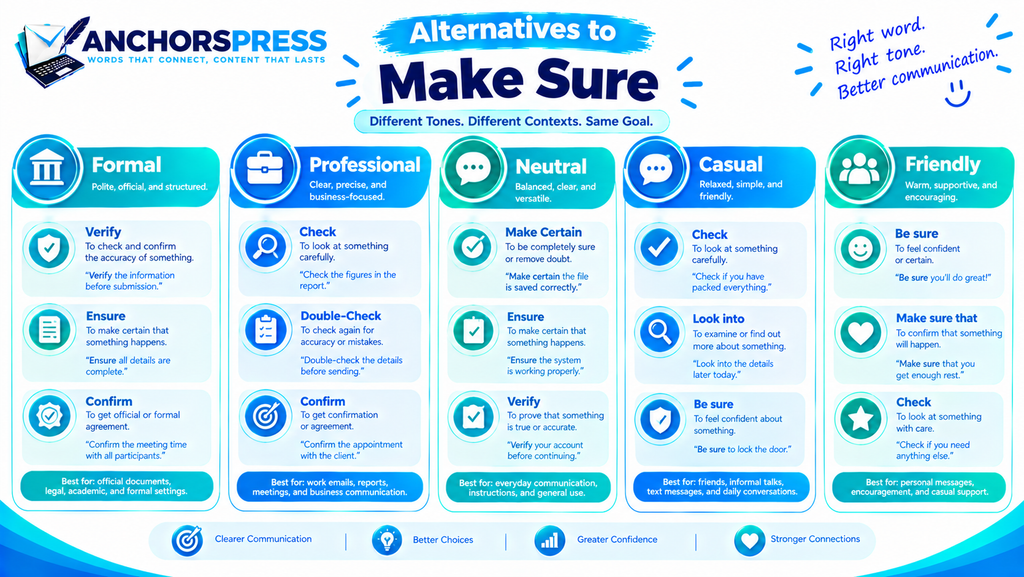
| Alternative | Best Used In | Tone |
| To ensure | Business writing and instructions | Professional |
| To confirm | Plans and important details | Polite |
| To verify | Facts and accuracy checks | Formal |
| To double-check | Reviewing work | Friendly |
| To be certain | Situations requiring confidence | Careful |
| To check | Everyday instructions | Neutral |
| To be sure | Casual communication | Friendly |
| To make certain | Formal instructions | Professional |
| To check that | Specific details or conditions | Clear |
| To guarantee | Strong promises or assured outcomes | Authoritative |
Common Mistakes
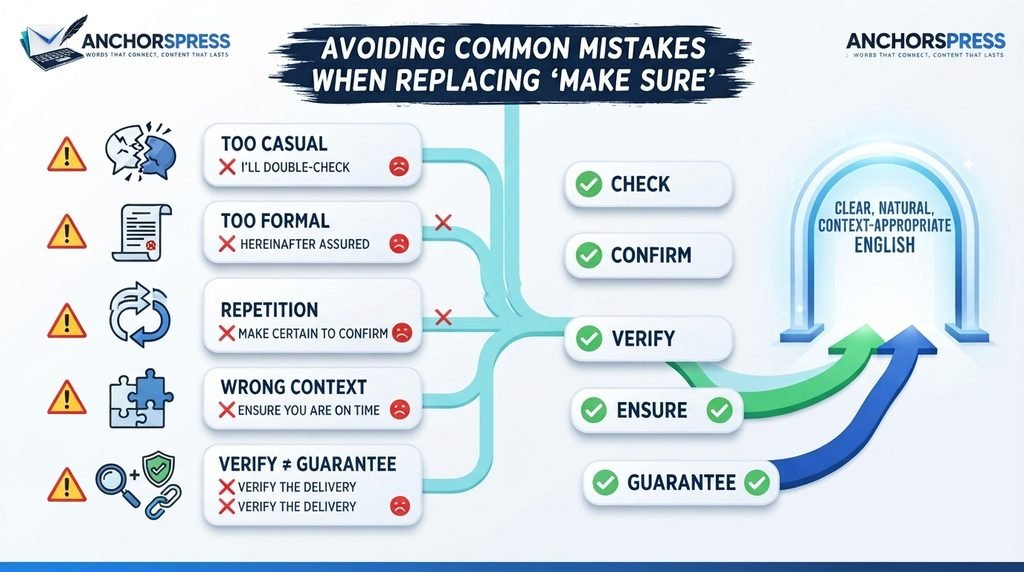
1. Using “Guarantee” Too Freely
“Guarantee” is stronger than “to make sure.” Do not use it unless you can genuinely promise the outcome.
2. Choosing Casual Language in Formal Writing
“Double-check” works in many workplaces, but “verify” or “ensure” may sound better in formal reports and official documents.
3. Repeating the Same Phrase Too Often
Using “to make sure” in every paragraph can make your writing feel repetitive. Mix in alternatives when they fit naturally.
4. Ignoring the Context
Different alternatives have slightly different meanings. For example, “confirm” focuses on verifying details, while “ensure” focuses on achieving a result.
5. Sounding More Formal Than Necessary
Complex language does not always improve communication. In many situations, simple phrases such as “check” or “be sure” are clearer.
Frequently Asked Questions
What is another word for “to make sure”?
Common alternatives include “to ensure,” “to confirm,” “to verify,” “to double-check,” and “to be certain.” The best choice depends on what you are trying to check. “Ensure” is usually best for professional writing, while “double-check” sounds more casual and conversational.
What is a formal way to say “to make sure”?
“To ensure” and “to verify” are strong formal alternatives. “Ensure” is best when you want something to happen correctly, while “verify” is better when you are checking facts or information. “To make certain” is another polished option for formal communication.
What can I say instead of “make sure” in an email?
In a professional email, you can use “ensure,” “confirm,” or “verify.” For example, instead of saying, “Make sure you receive the document,” you could write, “Please confirm that you received the document.” The right option depends on the purpose of your message.
Is “ensure” the same as “make sure”?
The two phrases have very similar meanings, but they are not always used in exactly the same way. “Ensure” sounds more formal and often focuses on producing a desired outcome. “Make sure” is more flexible and common in everyday conversation.
Is “double-check” a good replacement for “make sure”?
Yes, but only when you mean checking something again. “Double-check” suggests a second review, while “make sure” can refer to any action taken to gain confidence. For example, you can double-check a date, but you may ensure that a project stays on schedule.
What is a polite way to say “make sure”?
Polite alternatives include “please confirm,” “please check,” and “please ensure,” depending on the situation. Adding words such as “could you” or “would you please” can also make your request sound more courteous without making the sentence unnecessarily formal.
How do you say “make sure” professionally?
“To ensure” is one of the most professional alternatives. You can also use “to confirm” when checking details or “to verify” when checking facts. Choose language that clearly explains the action you want without sounding overly complicated.
What is the difference between “confirm” and “verify”?
“Confirm” usually means establishing that a detail, plan, or statement is correct. “Verify” often involves checking information against evidence or another reliable source. For example, you might confirm an appointment but verify an account number.
Conclusion
Finding another way to say “to make sure” can help you communicate more clearly and avoid unnecessary repetition. “Ensure” is one of the best choices for professional and formal writing, while “confirm” works well when checking plans or details. “Verify” is useful when accuracy matters, and “double-check” is a natural choice when reviewing something again.
For more options, you can also explore these synonyms of “ensure” to find the word that best matches your context and tone.

The Anchors Press Editorial Team writes and reviews every guide on this site. We check each alternative phrase against standard dictionaries and real usage, explain when it fits, and update articles when readers point out errors.