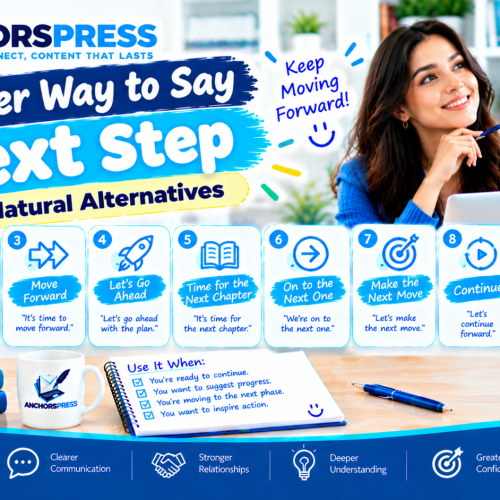
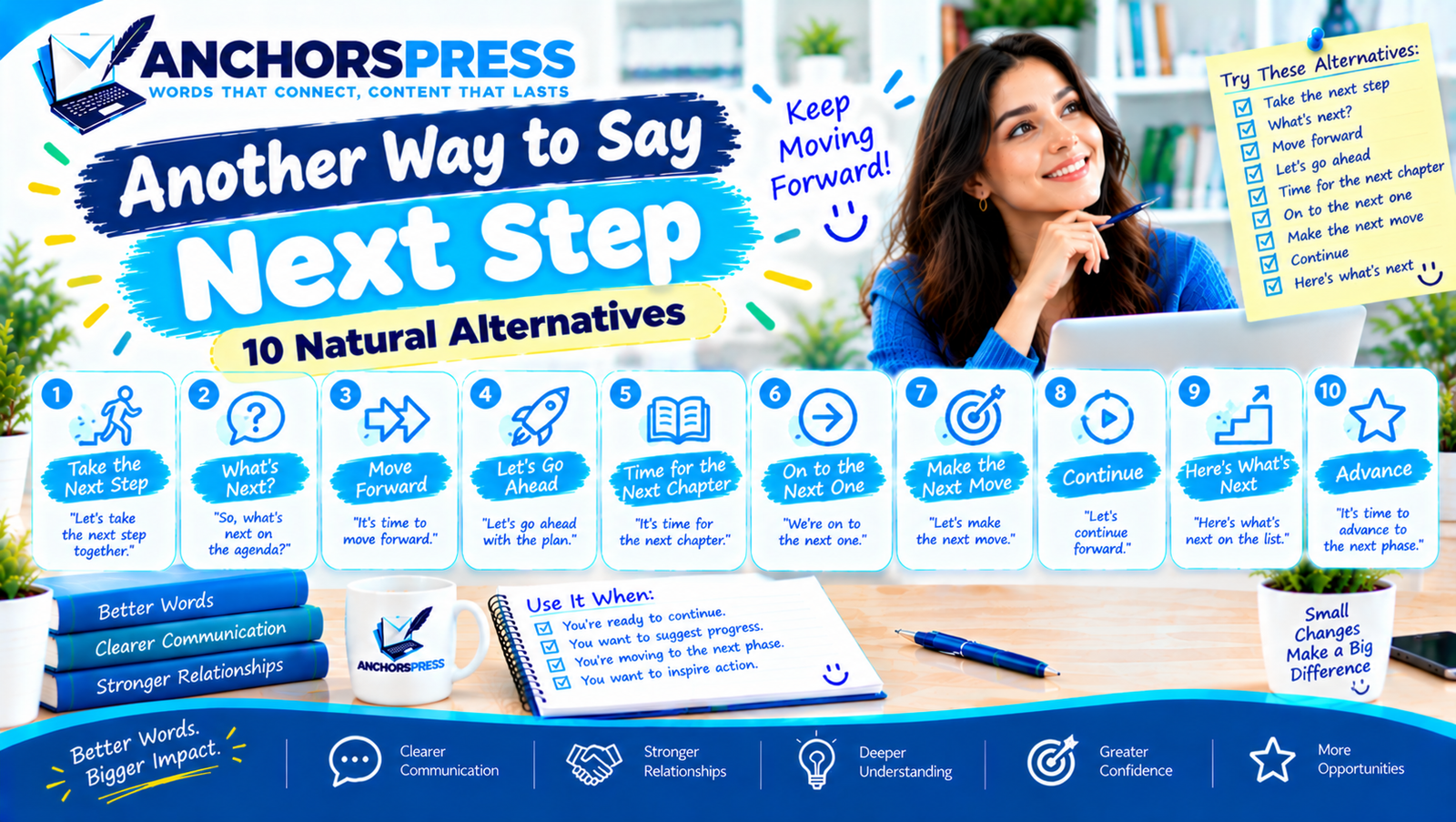
Finding another way to say next step can make your writing sound more natural and precise. Whether you are writing a business email, giving instructions, discussing a project, or having a casual conversation, several alternatives can fit the situation better.
The right phrase depends on what you mean. Some options focus on action, while others describe progress, planning, or the next stage in a process.
What Does “Next Step” Mean?

The phrase next step means the action, decision, or stage that should happen after the current one. It helps show what comes next in a process or plan.
People commonly use it in business meetings, project planning, instructions, emails, and everyday conversations. For example, someone might ask, “What’s the next step?” when they want to know what to do after completing a task.
Why Use Other Ways to Say “Next Step”?
Using different phrases can make your communication more specific and engaging. The best alternative can also help you match your tone to the situation.
Other ways to say next step can help you:
- Avoid repeating the same phrase.
- Make instructions easier to understand.
- Sound more natural in conversation.
- Match a professional or formal setting.
- Explain progress more clearly.
- Add variety to your writing.
10 Best Other Ways to Say “Next Step”

1. Next Move
Meaning
Next move refers to the action someone plans to take next. It is especially common when discussing decisions, strategy, or problem-solving.
This phrase can sound more active and conversational than next step.
Best For
- Professional
- Casual
- Friendly
Example 1
Our next move is to review the client’s feedback before changing the proposal.
Example 2
Now that we have the results, we need to decide on our next move.
Quick Tip
Use next move when the situation involves making a decision or choosing a direction.
2. The Way Forward
Meaning
The way forward refers to the best direction or plan for moving ahead. It often focuses on solving a problem or making progress.
The phrase sounds thoughtful and works well when discussing future plans.
Best For
- Professional
- Formal
- Polite
Example 1
The team agreed that open communication is the best way forward.
Example 2
After reviewing the options, we now have a clearer idea of the way forward.
Quick Tip
Use this phrase when discussing a solution, strategy, or long-term direction.
3. Next Course of Action
Meaning
Next course of action means the action or set of actions that should be taken next. It is more formal than simply saying next step.
This phrase works particularly well in business, legal, and official communication.
Best For
- Professional
- Formal
Example 1
We will discuss the next course of action during Monday’s meeting.
Example 2
The report outlines the recommended next course of action for the company.
Quick Tip
Choose this phrase when you want your writing to sound formal and structured.
4. What Happens Next
Meaning
What happens next asks about the event or action that follows the current situation. It is simple, direct, and easy to understand.
Unlike some alternatives, it focuses on what will occur rather than what someone must do.
Best For
- Casual
- Friendly
- Professional
Example 1
I submitted the application yesterday, so what happens next?
Example 2
The presentation explained what happens next after customers complete their purchase.
Quick Tip
Use this phrase when asking about the next event in a process.
5. The Next Stage
Meaning
The next stage refers to the following phase of a process, project, or development. It is useful when something moves through several clear stages.
This alternative focuses more on progress than on one specific action.
Best For
- Professional
- Formal
Example 1
The next stage of the project involves testing the new system.
Example 2
Once production is complete, the next stage is quality control.
Quick Tip
Use the next stage for projects, processes, and developments with multiple phases.
6. The Following Action
Meaning
The following action refers to the action that should take place after the current one. It creates a clear sequence and is often used in instructions or formal documents.
It sounds more structured than next step.
Best For
- Professional
- Formal
Example 1
After receiving approval, the following action is to notify the project manager.
Example 2
Each completed task should lead directly to the following action in the process.
Quick Tip
Use this phrase when explaining actions in a specific order.
7. What Comes Next
Meaning
What comes next refers to whatever follows the current event, action, or stage. It is a natural and flexible alternative that works in many situations.
It sounds slightly more conversational than what happens next.
Best For
- Casual
- Friendly
- Professional
Example 1
We have finished the planning phase, so let’s talk about what comes next.
Example 2
The guide explains what comes next after you create your account.
Quick Tip
Use what comes next when you want a simple and natural phrase.
8. The Next Phase
Meaning
The next phase means the upcoming part of a larger process or project. It is similar to the next stage, but it often sounds more structured and formal.
This phrase is common in business, development, research, and planning.
Best For
- Professional
- Formal
Example 1
The next phase of the campaign will focus on reaching new customers.
Example 2
Our research team is preparing for the next phase of the study.
Quick Tip
Choose the next phase when describing a large process divided into separate periods.
9. The Path Ahead
Meaning
The path ahead describes the future direction, challenges, or opportunities that lie in front of someone. It is broader and more reflective than next step.
The phrase can work well when discussing personal, professional, or organizational progress.
Best For
- Professional
- Formal
- Warm
Example 1
The path ahead may be challenging, but the team has a strong plan.
Example 2
We are excited about the path ahead and the opportunities it may bring.
Quick Tip
Use this phrase when discussing the broader future rather than one immediate action.
10. The Next Thing to Do
Meaning
The next thing to do clearly identifies the action that should happen immediately after the current task. It is direct, simple, and easy to understand.
This phrase works especially well in everyday conversations and straightforward instructions.
Best For
- Casual
- Friendly
- Professional
Example 1
The next thing to do is send the completed form to the HR department.
Example 2
We fixed the main issue, and the next thing to do is test the update.
Quick Tip
Use this option when you want to give clear and practical instructions.
Comparison Table
| Alternative | Best Used In | Tone |
| Next move | Strategy and conversations | Casual, professional |
| The way forward | Planning and problem-solving | Professional, thoughtful |
| Next course of action | Formal business communication | Formal, professional |
| What happens next | Questions and explanations | Casual, friendly |
| The next stage | Multi-stage processes | Professional, formal |
| The following action | Instructions and procedures | Formal, professional |
| What comes next | General conversations | Casual, friendly |
| The next phase | Projects and development | Professional, formal |
| The path ahead | Future planning | Professional, warm |
| The next thing to do | Clear instructions | Casual, professional |
Common Mistakes

1. Using Casual Language in Formal Writing
Phrases like what’s next? may sound too informal in a formal business document. Consider using next course of action or the next phase instead.
2. Choosing an Overly Formal Phrase
Formal alternatives can sound unnatural in everyday conversation. Match the phrase to your audience and situation.
3. Repeating “Next Step” Too Often
Using the same phrase repeatedly can make your writing feel dull. Mix in suitable alternatives where they make sense.
4. Forgetting the Context
Not every alternative means exactly the same thing. The path ahead, for example, describes a broader future rather than one immediate action.
5. Making Instructions Unclear
A replacement phrase should still help the reader understand what happens next. Choose clarity over complicated wording.
Frequently Asked Questions

What is another way to say next step?
Common alternatives include next move, the way forward, what comes next, the next stage, the next phase, and next course of action. The best choice depends on whether you are speaking casually, writing professionally, or describing a formal process.
What can I say instead of next steps?
You can say upcoming actions, the next phase, the next course of action, what comes next, or the way forward. If you are referring to several actions instead of one, make sure your replacement phrase also clearly suggests multiple tasks or stages.
What is a professional way to say next step?
Professional alternatives include next course of action, the next phase, the following action, and the way forward. These phrases work well in business emails, meetings, reports, and project discussions because they sound clear and organized.
What is a formal synonym for next step?
A formal synonym for next step is next course of action. Other formal options include the following action and the next phase. These phrases are useful in official documents, business reports, policies, and structured plans.
How do you say next step in an email?
In an email, you might write, “The next course of action is to schedule a meeting,” or “The next phase will begin next week.” For a less formal email, what comes next or the next thing to do can sound natural and clear.
Can I say next move instead of next step?
Yes. Next move is a natural alternative, especially when discussing strategy, decisions, or problem-solving. It can sound more conversational and active than next step, although it may be less suitable for highly formal documents.
What is the difference between next step and next phase?
A next step usually refers to one specific action that should happen next. A next phase describes a larger part of a process that may contain several actions. For example, sending a proposal is a step, while beginning a new project stage is a phase.
Is “what comes next” professional?
Yes, what comes next can be professional, especially in clear and straightforward communication. However, more formal settings may call for phrases such as the next course of action or the next phase, depending on the context.
Conclusion
Finding another way to say next step can help you communicate more clearly and avoid repetition. Next move is a strong choice for strategy and decision-making, while the way forward works well when discussing plans and solutions. In formal or professional settings, next course of action, the next phase, and the following action can sound more structured.
When your wording matches the context, your message becomes easier to understand and more effective. You can also explore more synonyms for “next” to find alternatives that best match your intended meaning.
Daniel Cho writes about professional communication, drawing on years spent training teams on clear, confident workplace writing — from emails to performance reviews.