The word agenda is useful, but repeating it can make your writing sound stiff or repetitive. Fortunately, several natural alternatives can work better depending on what you are describing.
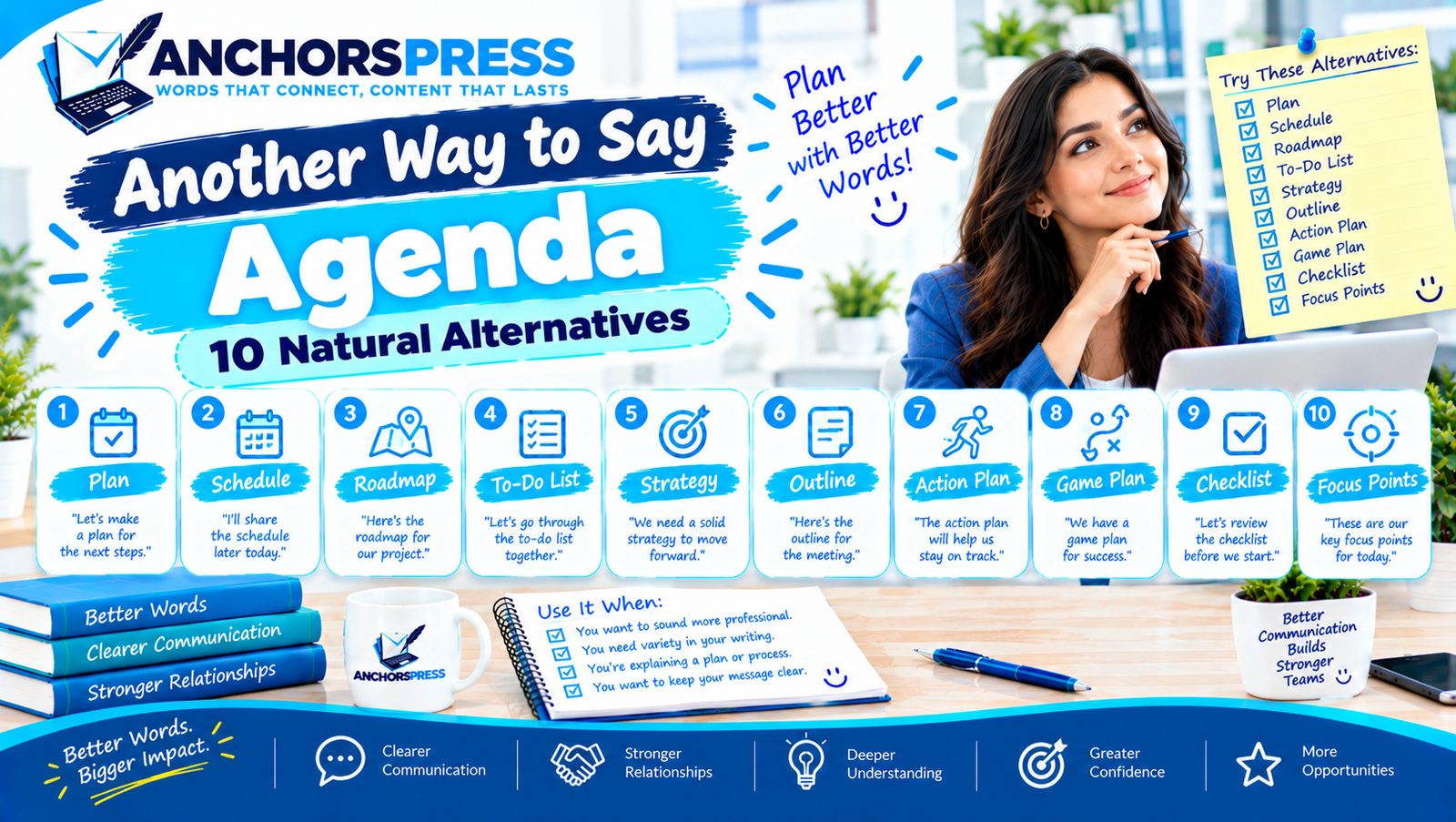
You might need a word for a business meeting, a conference, a travel plan, or a project. In each case, the best alternative may be slightly different. Below are 10 strong ways to say agenda, along with meanings, examples, and practical tips.
What Does “Another Way to Say Agenda” Mean?
Searching for another way to say agenda means looking for alternative words or phrases that express a list of planned activities, topics, goals, or items to discuss.
People often use alternatives to make their writing sound more natural or to better match a specific situation. The word is commonly used in business meetings, events, school settings, project planning, and everyday communication.
Why Use Other Ways to Say “Agenda”?

Using different words instead of agenda can make your communication more precise and easier to understand. The best alternative often depends on the purpose and setting.
Other ways to say agenda can help you:
- Avoid repeating the same word.
- Match the tone of a professional or casual situation.
- Make meeting communication clearer.
- Describe plans more accurately.
- Sound more natural in American English.
10 Best Other Ways to Say Agenda
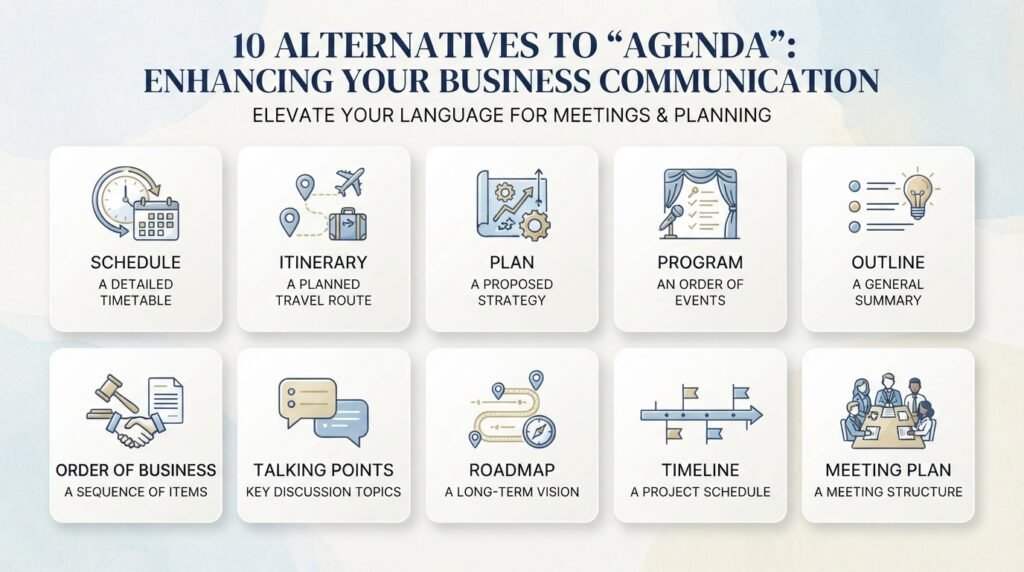
1. Schedule
Meaning
A schedule is a planned list of activities, appointments, or events arranged by time. It is especially useful when timing is an important part of the plan.
Best For
- Professional
- Formal
- Casual
Example 1
The conference schedule includes three keynote presentations and several afternoon workshops.
Example 2
Please review tomorrow’s meeting schedule before you arrive at the office.
Quick Tip
Use schedule when the order of events is connected to specific times.
2. Itinerary
Meaning
An itinerary is a detailed plan that shows where someone will go and what they will do. It is most commonly used for travel, trips, tours, and organized events.
Best For
- Professional
- Formal
Example 1
Our travel itinerary includes stops in Boston, New York, and Washington, D.C.
Example 2
The event coordinator emailed everyone a complete itinerary for the weekend.
Quick Tip
Choose itinerary when your agenda involves travel or a detailed sequence of activities.
3. Plan
Meaning
A plan is a broad and flexible alternative to agenda. It can describe what you intend to do, discuss, or accomplish without sounding overly formal.
Best For
- Professional
- Casual
- Friendly
Example 1
Let’s review the plan for the team meeting before everyone joins the call.
Example 2
Do you have a plan for what you want to discuss with the client?
Quick Tip
Use plan when you want simple, everyday language.
4. Program
Meaning
A program is a structured list of activities or presentations for an event. It often appears at ceremonies, conferences, performances, and formal gatherings.
Best For
- Professional
- Formal
Example 1
The graduation program begins with opening remarks at 10 a.m.
Example 2
Guests received a printed program when they entered the awards ceremony.
Quick Tip
Use program when referring to a planned event with multiple scheduled activities.
5. Outline
Meaning
An outline presents the main points or topics in an organized way. Unlike a detailed agenda, it usually focuses more on key ideas than exact timing.
Best For
- Professional
- Formal
- Casual
Example 1
The manager shared an outline of the topics for Friday’s discussion.
Example 2
I created a short outline before preparing the presentation.
Quick Tip
Choose outline when you want to emphasize main topics rather than a complete schedule.
6. Order of Business
Meaning
Order of business refers to the official sequence of items that will be handled during a meeting. It is a traditional phrase often used in formal organizations and professional settings.
Best For
- Professional
- Formal
- Polite
Example 1
The chairperson reviewed the order of business before the board meeting began.
Example 2
The first item on today’s order of business is approving last month’s report.
Quick Tip
Use this phrase for formal meetings, boards, committees, or official discussions.
7. Talking Points
Meaning
Talking points are the important subjects, ideas, or messages someone plans to discuss. They are usually less formal than a complete meeting agenda.
Best For
- Professional
- Casual
Example 1
The marketing director sent the team several talking points before the interview.
Example 2
Let’s agree on the main talking points before we meet with the customer.
Quick Tip
Use talking points when the focus is on discussion topics rather than a full meeting schedule.
8. Roadmap
Meaning
A roadmap is a strategic plan that shows how a project or organization expects to move toward a goal. It usually focuses on progress and future direction.
Best For
- Professional
- Formal
Example 1
The company shared its product roadmap for the next twelve months.
Example 2
Our roadmap shows the major steps needed to complete the project.
Quick Tip
Choose roadmap for long-term projects, business strategies, or future goals.
9. Timeline
Meaning
A timeline shows when important events, tasks, or milestones will happen. It is useful when deadlines and dates matter more than discussion topics.
Best For
- Professional
- Formal
- Casual
Example 1
The project timeline shows that the final report is due in October.
Example 2
We need to update the timeline before announcing the product launch.
Quick Tip
Use timeline when you want to highlight dates, deadlines, or project milestones.
10. Meeting Plan
Meaning
A meeting plan is a clear and straightforward description of how a meeting will be organized. It can include topics, goals, participants, and expected outcomes.
Best For
- Professional
- Friendly
- Polite
Example 1
I sent the meeting plan to the team so everyone could prepare in advance.
Example 2
Our meeting plan includes time for updates, questions, and next steps.
Quick Tip
Use meeting plan when you want a simple alternative that everyone can understand immediately.
Comparison Table
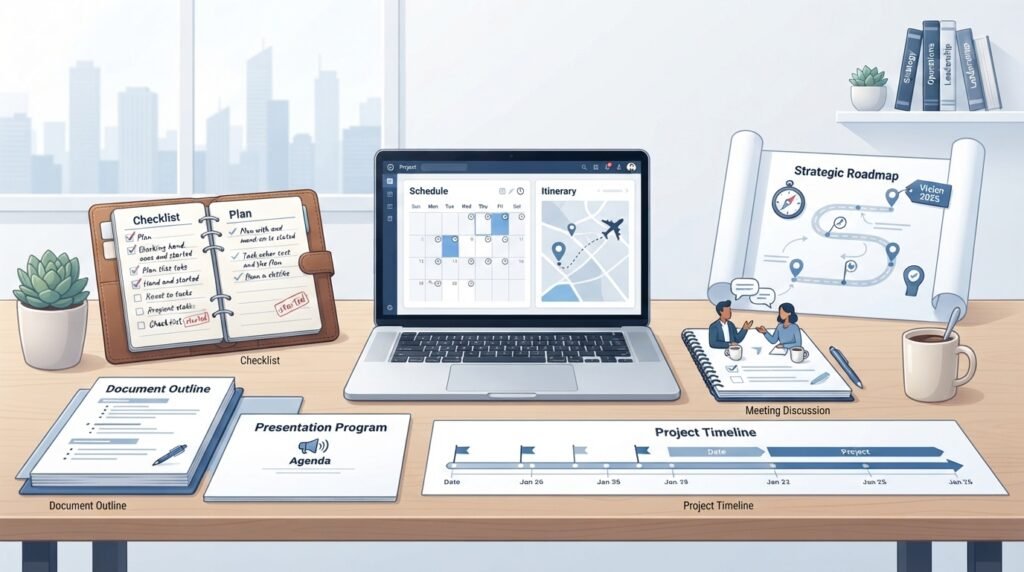
| Alternative | Best Used In | Tone |
| Schedule | Timed activities and appointments | Professional, neutral |
| Itinerary | Travel and organized events | Formal, organized |
| Plan | General activities or goals | Flexible, natural |
| Program | Events and ceremonies | Formal |
| Outline | Topics and key ideas | Clear, professional |
| Order of Business | Official meetings | Formal |
| Talking Points | Discussions and interviews | Professional, conversational |
| Roadmap | Strategy and long-term projects | Professional |
| Timeline | Deadlines and milestones | Clear, organized |
| Meeting Plan | Business meetings | Professional, straightforward |
Common Mistakes

1. Using “Itinerary” for Every Type of Meeting
An itinerary usually works best for travel or events with several activities. For a standard office meeting, agenda or meeting plan may sound more natural.
2. Choosing an Overly Formal Phrase
Order of business can sound too official in a casual team meeting. Match your wording to the people and setting.
3. Using “Schedule” When Topics Matter More Than Time
A schedule focuses on when things happen. If you mainly want to list subjects for discussion, outline or talking points may be better.
4. Repeating the Same Alternative
Using agenda or any substitute too often can make your writing feel repetitive. Switch terms only when the context supports the change.
5. Forgetting the Purpose of the Plan
Different words emphasize different things. Think about whether you are describing times, discussion topics, goals, travel, or deadlines before choosing an alternative.
Frequently Asked Questions
What is another word for agenda?
Another word for agenda can be schedule, plan, itinerary, outline, program, or roadmap. The best option depends on the situation. For example, use schedule for timed activities and talking points for subjects planned for discussion.
What is a professional way to say agenda?
Professional alternatives include meeting plan, schedule, outline, order of business, and roadmap. In most workplace situations, meeting agenda remains clear and standard, but outline or meeting plan can sound more natural depending on the purpose.
What can I say instead of meeting agenda?
You can say meeting plan, meeting outline, schedule, discussion topics, or order of business. For a casual team meeting, discussion topics may work well. For a formal board meeting, order of business is often a stronger choice.
Is a schedule the same as an agenda?
Not exactly. A schedule focuses on when activities happen, while an agenda usually focuses on what will be discussed or completed. However, the two terms can overlap when a meeting agenda includes specific times for each item.
What is another word for agenda in a business meeting?
For a business meeting, good alternatives include meeting plan, outline, talking points, discussion items, and order of business. Choose talking points for key subjects and meeting plan when you want a simple, clear phrase.
What is a formal synonym for agenda?
A formal synonym for agenda is order of business. Other formal alternatives include program, schedule, and outline. The right option depends on whether you are discussing a meeting, official event, or structured presentation.
What is the difference between an agenda and an itinerary?
An agenda usually lists topics or activities planned for a meeting or event. An itinerary provides a detailed plan for travel or a trip, often including locations, transportation, accommodations, and scheduled activities.
Can I use roadmap instead of agenda?
Yes, but only in the right context. A roadmap usually describes a strategic path toward future goals or milestones. It works well for business strategy and long-term projects but may not fit a simple meeting agenda.
Conclusion
Finding another way to say agenda can make your communication clearer and more appropriate for the situation. Schedule works well when timing matters, while itinerary is ideal for travel and organized events. For meetings, meeting plan, outline, talking points, and order of business can provide more specific alternatives.
The key is to think about what your plan actually includes. Are you organizing topics, events, travel, deadlines, or future goals? Choose the word that best describes that purpose, and your writing will sound more natural, precise, and professional. You can also explore more synonyms for agenda to find the word that best fits your specific context.
Sarah Whitfield is the founder and lead editor of Anchors Press. With a background in copyediting and content strategy, she reviews every guide for accuracy, tone, and everyday usefulness before it’s published.