

The word “culture” has a broad meaning, so replacing it with one exact synonym is not always easy. It can describe traditions, beliefs, values, social behavior, history, identity, or the everyday way people live.
Choosing a more specific phrase can make your writing clearer. Whether you are writing an essay, professional email, article, or casual conversation, the right alternative helps readers understand exactly what you mean.
What Does “Another Way to Say Culture” Mean?
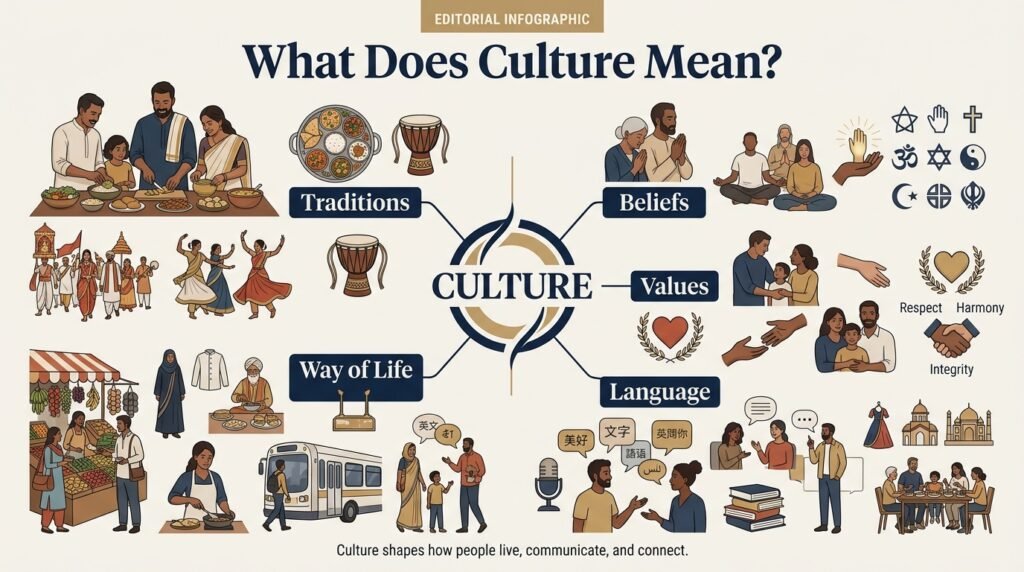
“Another way to say culture” means finding a different word or phrase that communicates the same or a closely related idea. The best choice depends on which part of culture you want to emphasize.
For example, “traditions” focuses on practices passed from one generation to another, while “heritage” highlights historical or ancestral connections. “Social norms” focuses more on expected behavior within a group.
People often look for alternatives to “culture” to avoid repetition, make writing more precise, or choose language that better fits a particular audience. These alternatives commonly appear in academic writing, business communication, travel content, journalism, and everyday speech.
Why Use Other Ways to Say “Culture”?
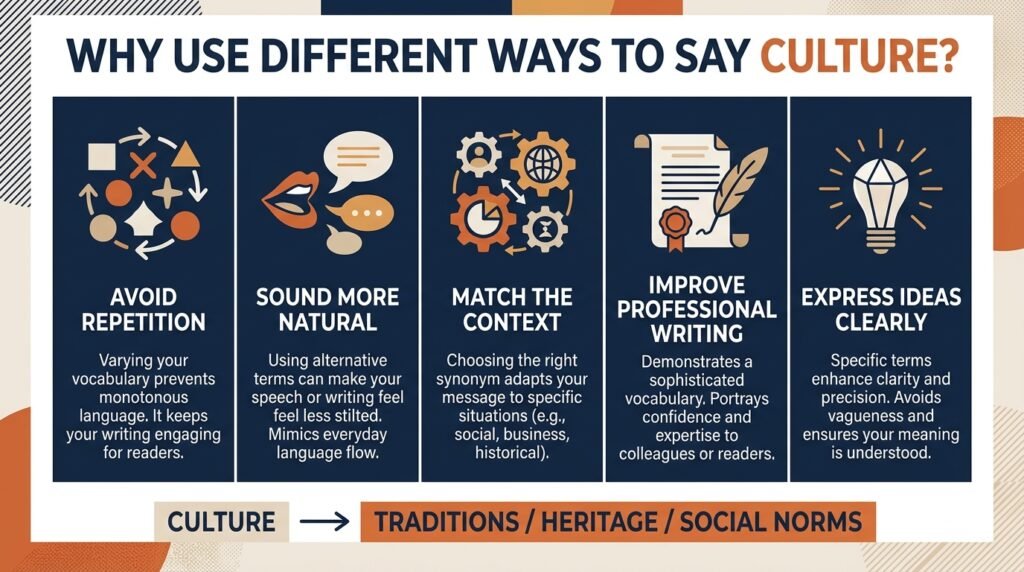
Using a more specific expression can make your writing sound natural and precise. Instead of relying on the broad word “culture” every time, you can select a phrase that describes the exact idea.
Common reasons include:
- Avoiding repetition in articles and essays.
- Making your meaning clearer to readers.
- Matching the situation, from casual conversation to formal writing.
- Improving professional communication by choosing precise language.
- Adding emotional or historical meaning when discussing identity and heritage.
10 Best Other Ways to Say “Culture”
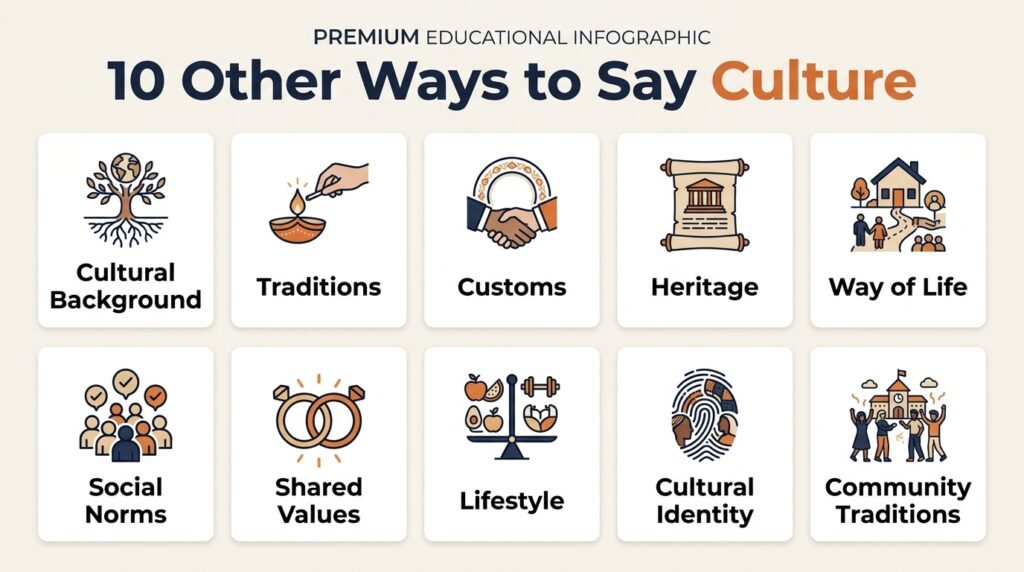
1. Cultural Background
Meaning
Cultural background refers to the traditions, beliefs, experiences, and social influences that shape a person or group. It is especially useful when discussing someone’s upbringing or connection to a particular community.
Best For
- Professional
- Formal
- Friendly
Example 1
Her cultural background has influenced the way she approaches family celebrations.
Example 2
The company values employees from a wide range of cultural backgrounds.
Quick Tip
Use “cultural background” when talking about a person’s or group’s origins rather than describing a specific tradition.
2. Traditions
Meaning
Traditions are customs, practices, or beliefs that people pass from one generation to another. The word is more specific than “culture” when you are talking about ceremonies, celebrations, family practices, or long-standing habits.
Best For
- Casual
- Friendly
- Warm
- Formal
Example 1
Our family traditions include preparing the same meal every Thanksgiving.
Example 2
The festival celebrates local traditions through music, food, and dance.
Quick Tip
Choose “traditions” when your sentence focuses on practices that have been preserved over time.
3. Customs
Meaning
Customs are commonly accepted ways of behaving or doing things within a particular society or community. The term often appears when discussing social practices, ceremonies, greetings, or cultural expectations.
Best For
- Formal
- Professional
- Polite
Example 1
Visitors should learn local customs before attending a traditional ceremony.
Example 2
The book explains the customs surrounding weddings in the region.
Quick Tip
Use “customs” when you want to emphasize established social practices rather than a group’s overall identity.
4. Heritage
Meaning
Heritage refers to the history, traditions, values, and cultural elements passed down through generations. It often carries a strong connection to ancestry, history, and identity.
Best For
- Formal
- Warm
- Professional
Example 1
The museum helps young people connect with their cultural heritage.
Example 2
The town is proud of its rich musical heritage.
Quick Tip
Use “heritage” when the idea involves history, ancestry, or something preserved for future generations.
5. Way of Life
Meaning
Way of life describes how people generally live, including their habits, values, routines, relationships, and beliefs. It is a natural and conversational alternative when “culture” feels too broad or academic.
Best For
- Casual
- Friendly
- Warm
Example 1
Fishing is an important part of the coastal community’s way of life.
Example 2
Moving abroad introduced him to a completely different way of life.
Quick Tip
Choose “way of life” when discussing everyday living rather than a single custom or tradition.
6. Social Norms
Meaning
Social norms are the behaviors and expectations that a group or society generally considers acceptable. This phrase focuses on how people are expected to act rather than on cultural history or traditions.
Best For
- Formal
- Professional
Example 1
Understanding local social norms can make international business meetings easier.
Example 2
Children often learn social norms by observing the adults around them.
Quick Tip
Use “social norms” when your main topic is expected behavior, manners, or unwritten social rules.
7. Shared Values
Meaning
Shared values are beliefs or principles held by members of a group. The phrase works particularly well when “culture” refers to ideas such as respect, cooperation, responsibility, or community.
Best For
- Professional
- Formal
- Warm
Example 1
The organization was built around shared values of honesty and teamwork.
Example 2
Strong shared values can help bring a diverse community together.
Quick Tip
Use this phrase when you want to focus on beliefs and principles rather than traditions or lifestyle.
8. Lifestyle
Meaning
Lifestyle describes the way a person or group lives, including daily choices, habits, activities, and priorities. It can overlap with culture, but it usually focuses more on everyday living.
Best For
- Casual
- Friendly
- Professional
Example 1
The island’s relaxed lifestyle attracts people who want a slower pace of life.
Example 2
Remote work has changed the lifestyle of many professionals.
Quick Tip
Use “lifestyle” when discussing daily habits and choices, especially when the subject is not specifically about traditions or heritage.
9. Cultural Identity
Meaning
Cultural identity describes the sense of belonging a person or group has toward a particular culture. It can involve language, traditions, history, values, family background, and community connections.
Best For
- Formal
- Professional
- Warm
Example 1
Language plays an important role in her cultural identity.
Example 2
The program gives students an opportunity to explore their cultural identity.
Quick Tip
Choose “cultural identity” when your sentence is about belonging, self-understanding, or connection to a cultural group.
10. Community Traditions
Meaning
Community traditions refers to practices and celebrations shared by people in a particular local community. It is useful when you want to emphasize a group’s shared activities without using the broad word “culture.”
Best For
- Friendly
- Warm
- Formal
Example 1
The annual parade has become one of the town’s favorite community traditions.
Example 2
Local volunteers work together to preserve important community traditions.
Quick Tip
Use “community traditions” when discussing local events, celebrations, or practices shared by residents.
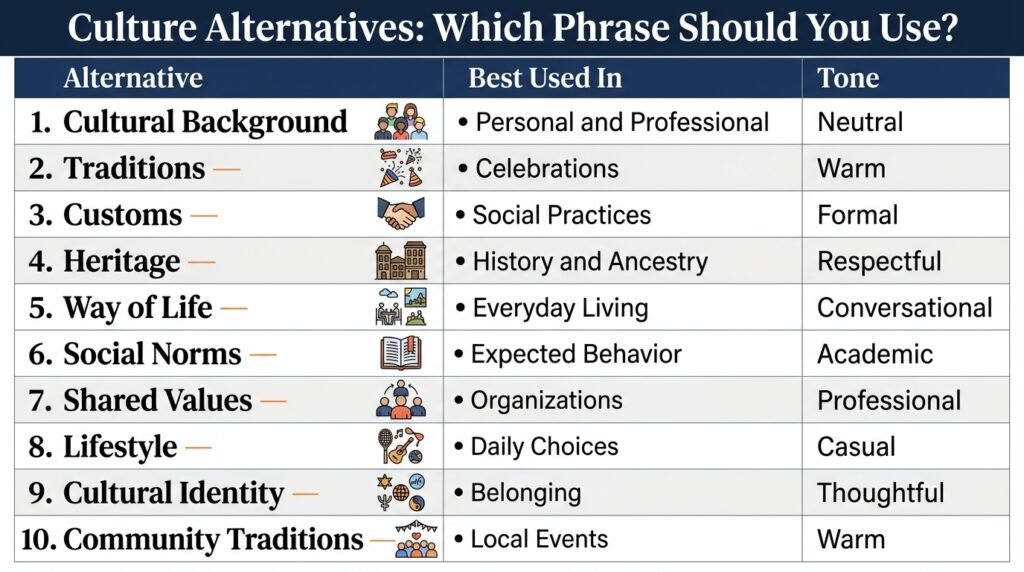
Comparison Table
| Alternative | Best Used In | Tone |
| Cultural background | Personal and professional contexts | Neutral |
| Traditions | Family, festivals, and celebrations | Warm |
| Customs | Social practices and formal discussions | Formal |
| Heritage | History, ancestry, and identity | Respectful |
| Way of life | Everyday living and communities | Conversational |
| Social norms | Behavior and expectations | Academic |
| Shared values | Organizations and communities | Professional |
| Lifestyle | Habits and everyday choices | Casual |
| Cultural identity | Belonging and personal identity | Thoughtful |
| Community traditions | Local practices and events | Warm |
Common Mistakes
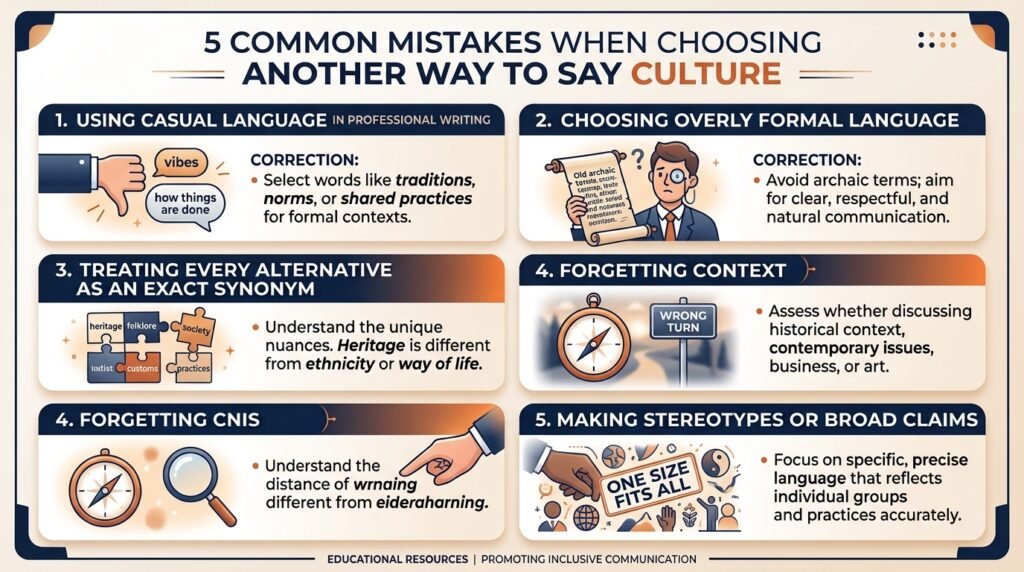
1. Using Casual Phrases in Professional Writing
Phrases such as “way of life” can sound conversational in some formal contexts. When writing an academic or professional document, “cultural background,” “social norms,” or “shared values” may be more precise.
2. Choosing an Overly Formal Expression
Not every sentence needs sophisticated vocabulary. Using “cultural identity” when you simply mean “traditions” can make an otherwise simple sentence unnecessarily complicated.
3. Treating Every Alternative as an Exact Synonym
These expressions are related to “culture,” but they do not always mean exactly the same thing. “Heritage” emphasizes history, while “lifestyle” focuses more on everyday living.
4. Forgetting the Context
The right phrase depends on what you are describing. A business might discuss shared values, while a travel article might naturally discuss local customs and traditions.
5. Sounding Insincere or Stereotypical
Be careful when describing a large or diverse group. Avoid making broad claims about how “everyone” in a culture behaves. Specific, respectful language usually creates more accurate writing.
Frequently Asked Questions
What is the best synonym for culture?
There is no single perfect synonym for “culture” because the word has several meanings. “Cultural background” is useful for personal origins, “traditions” works for established practices, and “way of life” fits everyday living. Choose the alternative based on the specific idea you want to communicate.
What is another way to say cultural background?
You can say “heritage,” “cultural identity,” or “background” depending on your meaning. “Heritage” emphasizes history and ancestry, while “cultural identity” focuses on a person’s sense of belonging. If you are describing someone’s experiences and upbringing, “cultural background” is often the clearest choice.
What is a simple word for culture?
A simple alternative depends on the context. “Traditions,” “customs,” “lifestyle,” and “way of life” are easy-to-understand options. However, none is a complete replacement in every sentence because culture can include beliefs, values, language, history, behavior, and social practices.
What is another way to say different cultures?
You can use phrases such as “diverse cultural backgrounds,” “different cultural traditions,” “varied cultural identities,” or “cultural diversity.” The best option depends on your sentence. For example, “people from diverse cultural backgrounds” sounds natural when describing a group with different origins and experiences.
What is another way to say cultural differences?
Useful alternatives include “differences in traditions,” “differences in social norms,” “cultural distinctions,” and “variations in customs.” If the differences involve behavior or expectations, “differences in social norms” may be more precise. For traditions, “differences in customs” is usually a natural choice.
Is “heritage” the same as “culture”?
Not exactly. Culture is a broad term covering beliefs, values, behavior, traditions, language, and social practices. Heritage focuses more strongly on history, ancestry, and things passed from previous generations. Heritage can be part of culture, but the two words are not interchangeable in every context.
Can I use “lifestyle” instead of “culture”?
Sometimes, but the words have different meanings. “Lifestyle” mainly describes how people live, including their routines, habits, and choices. “Culture” has a broader meaning that can include history, beliefs, language, traditions, and social values. Use “lifestyle” when everyday living is your main focus.
What is the best alternative to “culture” in professional writing?
The best professional alternative depends on the subject. “Shared values” works well for organizations, “cultural background” for people, and “social norms” for expected behavior. In academic writing, precise terms are usually stronger than repeatedly using the broad word “culture.”
Conclusion
Finding another way to say “culture” is mainly about choosing a phrase that expresses your exact meaning. If you are discussing someone’s origins, “cultural background” is a strong choice. For established practices, use “traditions” or “customs.” When history and ancestry matter, “heritage” fits naturally.
For everyday living, “way of life” or “lifestyle” can make your writing sound more conversational. In professional or academic contexts, “social norms,” “shared values,” or “cultural identity” may offer greater precision.
The key is not to replace “culture” simply for the sake of using a synonym. First decide what you mean, then choose the phrase that communicates that meaning clearly and naturally.