

The phrase “another way to say welcome to” refers to alternative expressions used when greeting someone or introducing them to a place, group, event, service, or experience.
For example, instead of saying “Welcome to our team,” you might say “We’re glad to have you on our team.” Instead of “Welcome to the event,” you could say “Thanks for joining us today.”
People often search for alternatives because “welcome to” can become repetitive. A different expression can also make a greeting sound more personal, professional, enthusiastic, or relaxed.
These alternatives are commonly used in emails, speeches, websites, presentations, workplaces, schools, customer service messages, events, and social settings.
Why Use Other Ways to Say “Welcome To”?

Using a variety of welcoming expressions helps you communicate with more precision. The same phrase does not always fit every audience or situation.
Here are some benefits:
- Avoid repetition: Keep greetings fresh and engaging.
- Sound natural: Choose wording that fits everyday conversation.
- Match the setting: Use formal language at work and relaxed language with friends.
- Improve professional communication: Make introductions sound polished without becoming stiff.
- Show genuine warmth: A thoughtful greeting can make people feel valued.
- Create the right impression: Your opening words can set the tone for the entire interaction.
10 Best Other Ways to Say “Welcome To”
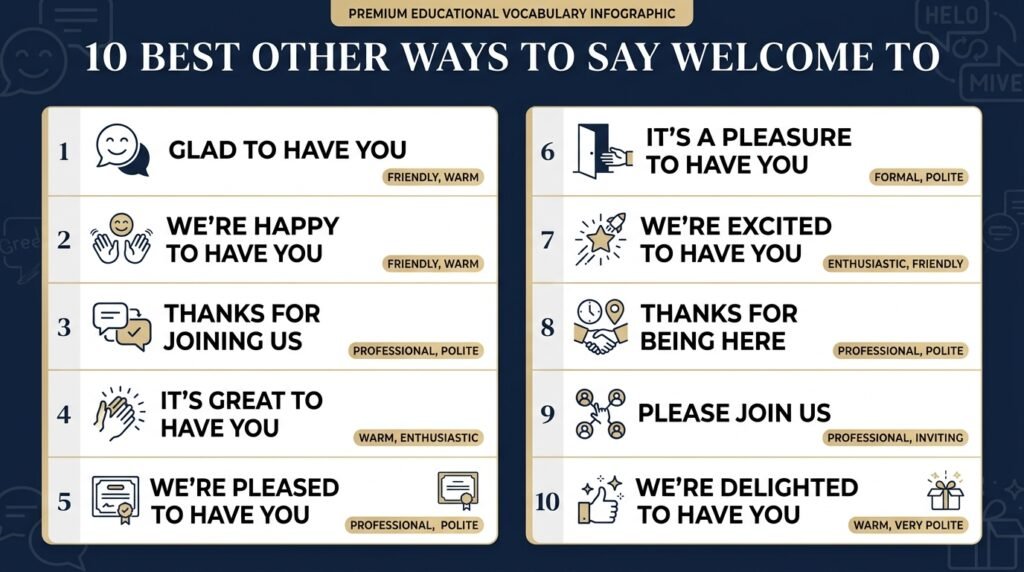
1. Glad to Have You
Meaning
“Glad to have you” is a warm way to tell someone that you are happy they have joined a group, organization, event, or activity. It sounds friendly without being overly casual.
Best For
- Friendly
- Warm
- Professional
- Casual
Example 1
“We’re glad to have you on the marketing team, Sarah.”
Example 2
“I’m glad to have you with us for this afternoon’s workshop.”
Quick Tip
Use this phrase when you want a personal and welcoming tone without sounding too formal.
2. We’re Happy to Have You
Meaning
“We’re happy to have you” clearly expresses pleasure about someone’s presence or participation. It works especially well when a group is speaking collectively.
Best For
- Friendly
- Warm
- Professional
- Polite
Example 1
“We’re happy to have you as part of our growing community.”
Example 2
“We’re happy to have you here for the annual conference.”
Quick Tip
This is a strong choice when welcoming someone on behalf of an entire team or organization.
3. Thanks for Joining Us
Meaning
“Thanks for joining us” combines gratitude with a welcoming message. It is especially useful when someone attends an event, meeting, webinar, class, or online community.
Best For
- Friendly
- Casual
- Professional
- Polite
Example 1
“Thanks for joining us for tonight’s live discussion.”
Example 2
“Thanks for joining us as we celebrate this important milestone.”
Quick Tip
Use it when you want to recognize that the person made an effort to participate.
4. It’s Great to Have You
- Friendly
- Warm
- Casual
- Polite
Example 1
“It’s great to have you here for your first day with the company.”
Example 2
“It’s great to have you back for another community meeting.”
Quick Tip
This phrase works particularly well in spoken greetings and informal professional communication.
5. We’re Pleased to Have You
Meaning
“We’re pleased to have you” has a more polished and formal tone. It is suitable for professional introductions, official events, and business communication.
Best For
- Professional
- Formal
- Polite
Example 1
“We’re pleased to have you join our leadership conference.”
Example 2
“We’re pleased to have you as a new member of our organization.”
Quick Tip
Choose this expression when you want your welcome to sound respectful and businesslike.
6. It’s a Pleasure to Have You
Meaning
“It’s a pleasure to have you” expresses sincere appreciation for someone’s presence. It has a gracious, respectful tone and is often appropriate for formal occasions.
Best For
- Formal
- Professional
- Warm
- Polite
Example 1
“It’s a pleasure to have you with us at this year’s awards ceremony.”
Example 2
“It’s a pleasure to have you speak with our students today.”
Quick Tip
Reserve this phrase for situations where a more polished or respectful greeting feels appropriate.
7. We’re Excited to Have You
Meaning
“We’re excited to have you” communicates enthusiasm and positive energy. It is useful when someone is joining a team, program, event, or project that the group is eager to share with them.
Best For
- Friendly
- Warm
- Casual
- Professional
Example 1
“We’re excited to have you join our summer internship program.”
Example 2
“We’re excited to have you participate in this year’s design challenge.”
Quick Tip
Use this expression when enthusiasm is more important than formality.
8. Thanks for Being Here
Meaning
“Thanks for being here” is simple, direct, and sincere. It acknowledges someone’s presence without using the word “welcome,” making it a natural choice for speeches and gatherings.
Best For
- Casual
- Friendly
- Warm
- Polite
Example 1
“Thanks for being here to support our local fundraiser.”
Example 2
“Thanks for being here as we share the results of our project.”
Quick Tip
This phrase is especially effective when you want your greeting to sound genuine and conversational.
9. Please Join Us
Meaning
“Please join us” invites someone to become part of an activity, event, group, or experience. Unlike some alternatives, it focuses more on participation than simply being present.
Best For
- Formal
- Professional
- Polite
- Friendly
Example 1
“Please join us for refreshments after the presentation.”
Example 2
“Please join us as we recognize this year’s outstanding volunteers.”
Quick Tip
Use it when the person is being invited to take part in something rather than simply being introduced.
10. We’re Delighted to Have You
Meaning
“We’re delighted to have you” expresses strong happiness about someone’s presence. It has a warm but polished tone and works well for special occasions and professional settings.
Best For
- Formal
- Professional
- Warm
- Polite
Example 1
“We’re delighted to have you with us for this special celebration.”
Example 2
“We’re delighted to have you join our panel of industry experts.”
Quick Tip
Choose this phrase when you want your welcome to feel especially gracious and enthusiastic.
Comparison Table
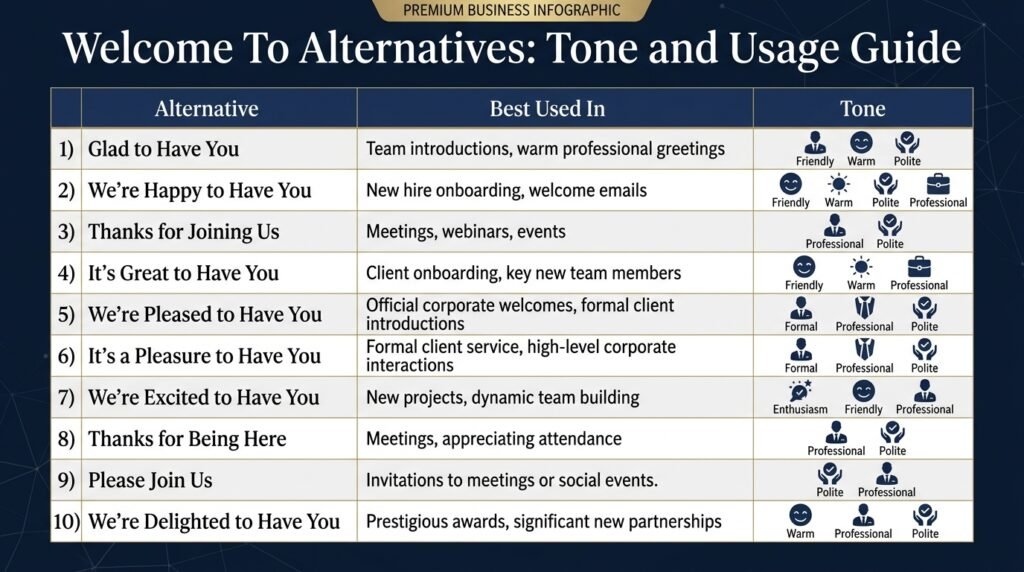
| Alternative | Best Used In | Tone |
| Glad to Have You | Teams, groups, everyday greetings | Warm |
| We’re Happy to Have You | Organizations, events, communities | Friendly |
| Thanks for Joining Us | Meetings, webinars, events | Polite |
| It’s Great to Have You | Conversations, teams, gatherings | Friendly |
| We’re Pleased to Have You | Business and formal events | Professional |
| It’s a Pleasure to Have You | Formal occasions and introductions | Formal |
| We’re Excited to Have You | Programs, teams, projects | Enthusiastic |
| Thanks for Being Here | Speeches, gatherings, community events | Warm |
| Please Join Us | Invitations and events | Polite |
| We’re Delighted to Have You | Special occasions and professional settings | Warm |
Common Mistakes
1. Using Casual Phrases in Professional Emails
Expressions such as “It’s great to have you” can work in friendly workplaces, but highly formal situations may call for “We’re pleased to have you.” Consider the relationship and purpose before choosing your wording.
2. Choosing Overly Formal Language
A phrase can sound unnatural if it is much more formal than the situation requires. For example, a casual online community probably does not need an elaborate formal greeting.
3. Repeating the Same Phrase
Using “welcome to” in every email, page, announcement, or speech can make your communication feel repetitive. Rotate your wording when the context allows it.
4. Forgetting Context
A greeting for a new employee is different from one for a conference attendee or website visitor. Choose language that reflects what the person is actually joining or experiencing.
5. Sounding Insincere
Avoid choosing an overly enthusiastic phrase when you do not genuinely want to convey excitement. A simple “thanks for being here” can sound more authentic than an exaggerated welcome.
Frequently Asked Questions
What is another way to say “welcome to”?
Some natural alternatives include “glad to have you,” “we’re happy to have you,” “thanks for joining us,” “it’s great to have you,” and “we’re pleased to have you.” The best choice depends on the audience, setting, and level of formality you want to convey.
What is a professional way to say “welcome to”?
For professional communication, try “we’re pleased to have you,” “it’s a pleasure to have you,” or “we’re delighted to have you.” These expressions work well in business emails, conferences, formal introductions, and workplace announcements without sounding too casual.
What is a friendly way to say “welcome to”?
“Glad to have you,” “it’s great to have you,” and “we’re happy to have you” are friendly alternatives. They sound natural in conversations, team messages, community groups, and informal workplace settings.
How can I say “welcome to our team” differently?
You could say “we’re glad to have you on the team,” “we’re excited to have you join us,” or “it’s great to have you as part of the team.” Each option gives the greeting a slightly different feeling, from warm and casual to enthusiastic and professional.
What is a formal alternative to “welcome to”?
Formal alternatives include “we’re pleased to have you,” “it’s a pleasure to have you,” and “we’re delighted to have you.” These phrases are suitable for official events, business correspondence, ceremonies, conferences, and other situations where polished language is expected.
Can I use “thanks for joining us” instead of “welcome to”?
Yes. “Thanks for joining us” is a natural alternative when someone has attended a meeting, event, webinar, class, or online group. It emphasizes appreciation for their participation rather than simply greeting them.
Is “glad to have you” professional?
Yes, “glad to have you” can be professional, especially in friendly workplaces and team communication. However, it is more conversational than “we’re pleased to have you.” For highly formal correspondence, the latter may be a better choice.
How do I choose the best alternative to “welcome to”?
Start by considering your audience and setting. Use “glad to have you” for warmth, “thanks for joining us” for appreciation, “we’re pleased to have you” for professionalism, and “we’re excited to have you” when you want to show enthusiasm.
Conclusion
Finding another way to say “welcome to” can make your greetings more natural, specific, and engaging. The best phrase depends on who you are addressing and the situation in which you are welcoming them.
For a warm and conversational message, “glad to have you” or “it’s great to have you” works well. If you are addressing an audience at an event, “thanks for joining us” feels friendly and appreciative. For business or formal communication, “we’re pleased to have you” or “it’s a pleasure to have you” provides a polished tone. When you want to express excitement, “we’re excited to have you” is a strong choice.
The key is to choose a greeting that sounds genuine and fits your audience. A well-matched welcome can make people feel comfortable, respected, and included from the very first sentence.