

What Does “Another Way to Say Welcome Aboard” Mean?

“Welcome aboard” is a friendly expression used when someone joins a team, company, organization, project, or group. It originally relates to welcoming someone onto a ship, but today it is commonly used in workplaces and other group settings.
People often use it when welcoming a new employee, coworker, member, volunteer, or participant. While “welcome aboard” is natural and upbeat, you may want another expression to avoid repetition or better match a specific situation.
Why Use Other Ways to Say “Welcome Aboard”?

Choosing a different expression can make your communication sound more natural and purposeful. The right phrase can also help you match the relationship and setting.
Other ways to say “welcome aboard” can help you:
- Avoid using the same phrase repeatedly.
- Sound more professional in workplace messages.
- Create a warmer first impression.
- Match formal or casual situations.
- Show genuine excitement about someone’s arrival.
- Make emails, announcements, and conversations feel more personal.
10 Best Other Ways to Say “Welcome Aboard”
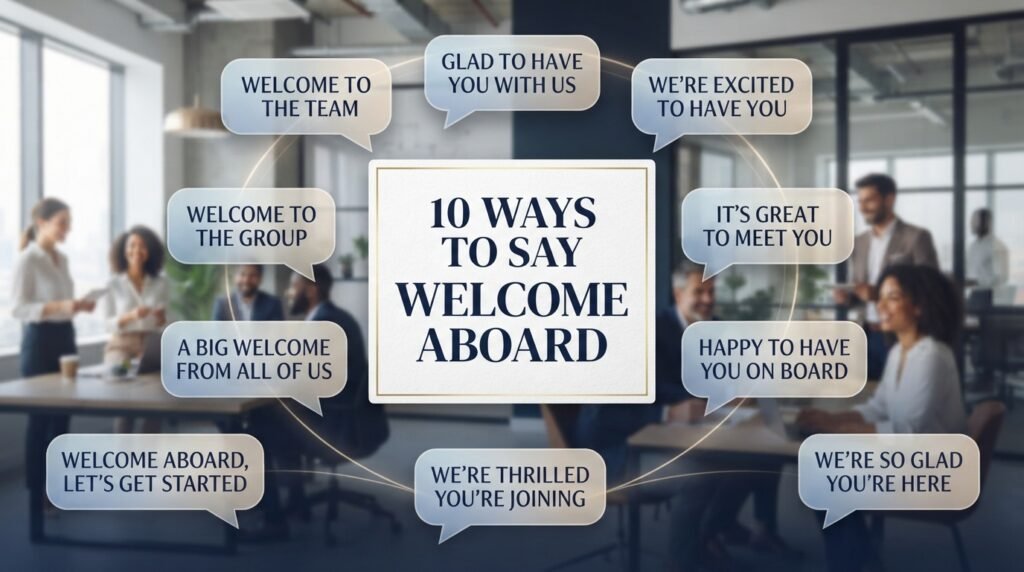
1. Welcome to the Team
Meaning
“Welcome to the team” is a clear and natural way to greet someone who has joined a group or workplace. It emphasizes that the person is now part of the team.
Best For
- Professional
- Friendly
- Polite
Example 1
Welcome to the team, Sarah! We’re looking forward to working with you.
Example 2
Welcome to the team, James. Your experience will be a great addition to the department.
Quick Tip
Use this phrase when welcoming a new employee, coworker, or team member.
2. Glad to Have You With Us
Meaning
“Glad to have you with us” expresses genuine appreciation for someone’s arrival. It sounds warm without being overly casual.
Best For
- Professional
- Warm
- Friendly
- Polite
Example 1
We’re glad to have you with us as we begin this new project.
Example 2
I’m glad to have you with us, and I hope you enjoy working with the group.
Quick Tip
This is a strong choice when you want your welcome to feel sincere and personal.
3. Happy to Have You Here
Meaning
“Happy to have you here” is a relaxed and positive expression of welcome. It works especially well when you want to sound approachable and friendly.
Best For
- Casual
- Friendly
- Warm
Example 1
We’re happy to have you here and can’t wait to see what you bring to the team.
Example 2
I’m happy to have you here for your first week with the company.
Quick Tip
Use it in friendly conversations, team chats, or informal workplace messages.
4. We’re Excited to Have You
Meaning
This phrase communicates enthusiasm about someone’s arrival. It is particularly effective when a new person is joining a company, project, or important initiative.
Best For
- Professional
- Friendly
- Warm
Example 1
We’re excited to have you join our marketing team.
Example 2
We’re excited to have you on board for this year’s community project.
Quick Tip
Choose this expression when you want your welcome to sound energetic and enthusiastic.
5. It’s Great to Have You With Us
Meaning
“It’s great to have you with us” offers a warm welcome while remaining professional. It suggests that the person’s presence is valued.
Best For
- Professional
- Formal
- Warm
- Polite
Example 1
It’s great to have you with us as we expand the customer support team.
Example 2
It’s great to have you with us for this important event.
Quick Tip
This works well for professional introductions, meetings, and group announcements.
6. Welcome to the Group
Meaning
“Welcome to the group” is useful when someone joins a club, community, class, online group, or informal organization. It focuses on belonging rather than employment.
Best For
- Casual
- Friendly
- Polite
Example 1
Welcome to the group, Maria! We’re glad you decided to join us.
Example 2
Welcome to the group. Feel free to introduce yourself and ask any questions.
Quick Tip
Use this instead of “welcome aboard” when the person is joining a community rather than a workplace team.
7. We’re Happy You’re Here
Meaning
“We’re happy you’re here” is simple, warm, and conversational. It communicates that the person’s presence matters to the group.
Best For
- Casual
- Friendly
- Warm
Example 1
We’re happy you’re here and hope you feel comfortable asking for help.
Example 2
We’re happy you’re here to help us celebrate this special occasion.
Quick Tip
This phrase is best when you want your message to sound genuine rather than corporate.
8. Welcome to the Organization
Meaning
“Welcome to the organization” is a more formal alternative that works for companies, nonprofits, associations, and institutions. It highlights the person’s connection to the larger organization.
Best For
- Formal
- Professional
- Polite
Example 1
Welcome to the organization, Daniel. We’re pleased to have you join our team.
Example 2
Welcome to the organization. We look forward to your contributions in the months ahead.
Quick Tip
Use this wording for formal announcements, onboarding materials, or official correspondence.
9. We’re Delighted to Have You
Meaning
“We’re delighted to have you” expresses strong appreciation and enthusiasm. It has a polished tone and can make a welcome feel especially thoughtful.
Best For
- Formal
- Professional
- Warm
- Polite
Example 1
We’re delighted to have you join our leadership team.
Example 2
We’re delighted to have you participate in this year’s conference.
Quick Tip
Reserve this phrase for situations where you want a polished, appreciative tone.
10. We’re Looking Forward to Working With You
Meaning
This phrase welcomes someone by focusing on the future relationship. Rather than simply acknowledging their arrival, it expresses enthusiasm about collaborating with them.
Best For
- Professional
- Formal
- Polite
- Warm
Example 1
Welcome to the department. We’re looking forward to working with you.
Example 2
Thank you for joining the project team. We’re looking forward to working with you.
Quick Tip
This is especially effective in professional emails because it combines a welcome with a positive statement about future collaboration.
Comparison Table
| Alternative | Best Used In | Tone |
| Welcome to the Team | New employees and coworkers | Professional, Friendly |
| Glad to Have You With Us | Workplace messages and introductions | Warm, Polite |
| Happy to Have You Here | Informal workplace conversations | Casual, Friendly |
| We’re Excited to Have You | New hires and projects | Energetic, Warm |
| It’s Great to Have You With Us | Meetings and group announcements | Professional, Warm |
| Welcome to the Group | Clubs, communities, and groups | Casual, Friendly |
| We’re Happy You’re Here | Personal or informal welcomes | Warm, Friendly |
| Welcome to the Organization | Formal workplace communication | Formal, Professional |
| We’re Delighted to Have You | Formal welcomes and announcements | Formal, Warm |
| We’re Looking Forward to Working With You | Professional emails and onboarding | Professional, Polite |
Common Mistakes

1. Using Casual Phrases in Professional Emails
Expressions such as “Happy to have you here” may sound too relaxed in highly formal correspondence. Choose wording like “Welcome to the organization” when the setting calls for greater formality.
2. Choosing Overly Formal Language
Not every welcome needs to sound official. Using a phrase such as “We’re delighted to have you” in a casual team chat may feel unnecessarily formal.
3. Repeating the Same Phrase
Using “welcome aboard” in every email or announcement can make your writing feel repetitive. Rotate your wording when several welcome messages appear in the same context.
4. Forgetting the Context
A new employee, conference attendee, volunteer, and online community member may need different wording. Consider why the person is joining before choosing your phrase.
5. Sounding Insincere
A welcome should feel genuine. Avoid overly enthusiastic language if it does not fit your relationship or the situation.
Frequently Asked Questions
What is another professional way to say “welcome aboard”?
“Welcome to the team” is one of the best professional alternatives to “welcome aboard.” You can also say “It’s great to have you with us,” “Welcome to the organization,” or “We’re looking forward to working with you.” These phrases work well in employee onboarding, workplace emails, meetings, and company announcements.
What is a friendly way to say “welcome aboard”?
For a friendly tone, try “Happy to have you here,” “Welcome to the group,” or “We’re happy you’re here.” These expressions sound relaxed and approachable while still making the new person feel included. They work well in team chats, community groups, clubs, and informal workplace conversations.
Is “welcome aboard” professional?
Yes, “welcome aboard” can be professional, especially in workplace communication. However, it has a friendly and slightly conversational feel. If you are writing a highly formal business email or official announcement, “Welcome to the organization” may be a more appropriate choice.
Can I say “welcome aboard” to a new employee?
Absolutely. “Welcome aboard” is commonly used when a new employee joins a company or team. It creates a positive and welcoming tone. For a more direct workplace expression, “Welcome to the team” is another excellent choice.
What is another way to say “welcome aboard” in an email?
In a professional email, you can say “Welcome to the team,” “We’re glad to have you with us,” or “We’re looking forward to working with you.” Your choice should depend on how formal the email is and how well you know the recipient.
What can I say instead of “welcome aboard” to a new team member?
“Welcome to the team” is the simplest alternative. If you want something warmer, try “We’re excited to have you” or “It’s great to have you with us.” For a more formal message, “Welcome to the organization” works well.
Is “glad to have you with us” formal or casual?
“Glad to have you with us” falls between formal and casual language. It is professional enough for many workplace situations but still sounds warm and personal. It is particularly useful when you want to welcome someone without sounding overly corporate or stiff.
What is the best alternative to “welcome aboard”?
The best alternative depends on the situation. “Welcome to the team” is ideal for new employees, while “Welcome to the group” suits clubs and communities. For professional emails, “We’re looking forward to working with you” adds a polished and collaborative tone.
Conclusion
Finding another way to say “welcome aboard” can help you make your communication more natural, personal, and appropriate for the situation. “Welcome to the team” is a reliable professional choice, while “glad to have you with us” adds warmth without becoming too casual.
For informal settings, “happy to have you here” and “welcome to the group” feel friendly and approachable. If you want to show enthusiasm, “we’re excited to have you” is a strong option. For formal communication, “welcome to the organization” or “we’re delighted to have you” may fit better. Choosing the right tone is an important part of effective workplace communication.

Daniel Cho writes about professional communication, drawing on years spent training teams on clear, confident workplace writing — from emails to performance reviews.