

If you are looking for another way to say open minded, you have several natural options. Although “open-minded” is common and useful, a more specific phrase can make your writing sound clearer and more intentional.
For example, someone who listens carefully to opinions that differ from their own may be willing to consider different perspectives. Someone who readily accepts new suggestions may be receptive to new ideas.
The right synonym depends on what you mean by being open-minded and where you plan to use the expression.
What Does “Another Way to Say Open Minded” Mean?
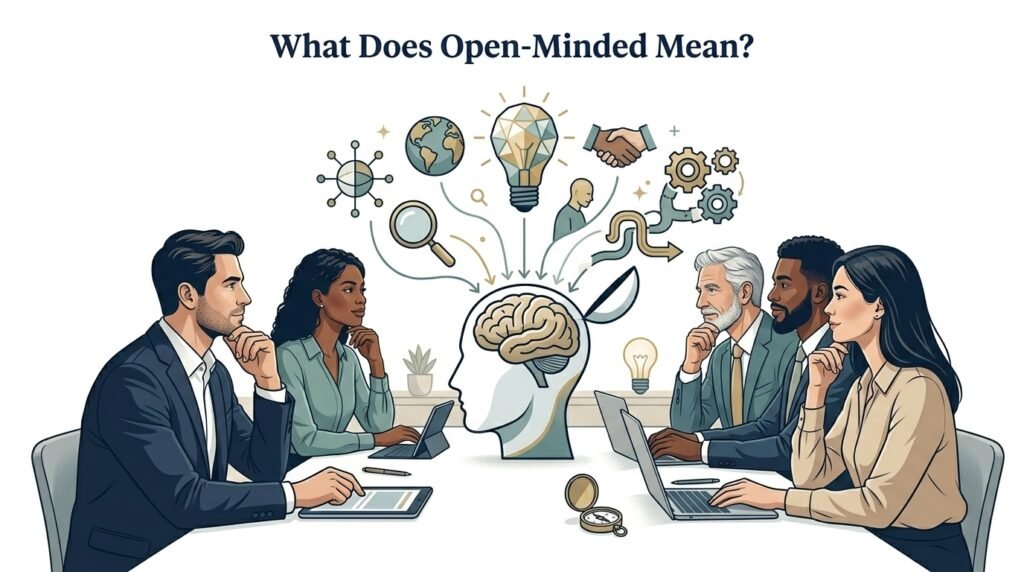
The phrase “another way to say open-minded” refers to alternative words or expressions that describe a person who is willing to consider new ideas, different opinions, unfamiliar experiences, or perspectives that differ from their own.
“Open-minded” is commonly used in everyday conversations, workplace communication, education, relationships, and personal descriptions. For instance, you might describe a coworker as open-minded because they listen to suggestions before making a decision.
People often search for alternatives because they want to avoid repetition, sound more precise, or choose a phrase that better fits a particular situation.
Why Use Other Ways to Say “Open Minded”?
Using different expressions can make your communication more precise and natural. Instead of repeatedly calling someone “open-minded,” you can describe the specific quality you want to highlight.
Other expressions can help you:
- Avoid repeating the same adjective.
- Sound more natural in different situations.
- Make professional writing more precise.
- Describe acceptance, flexibility, or curiosity more clearly.
- Match the tone of your audience.
- Explain someone’s attitude without relying on a general label.
10 Best Other Ways to Say “Open Minded”
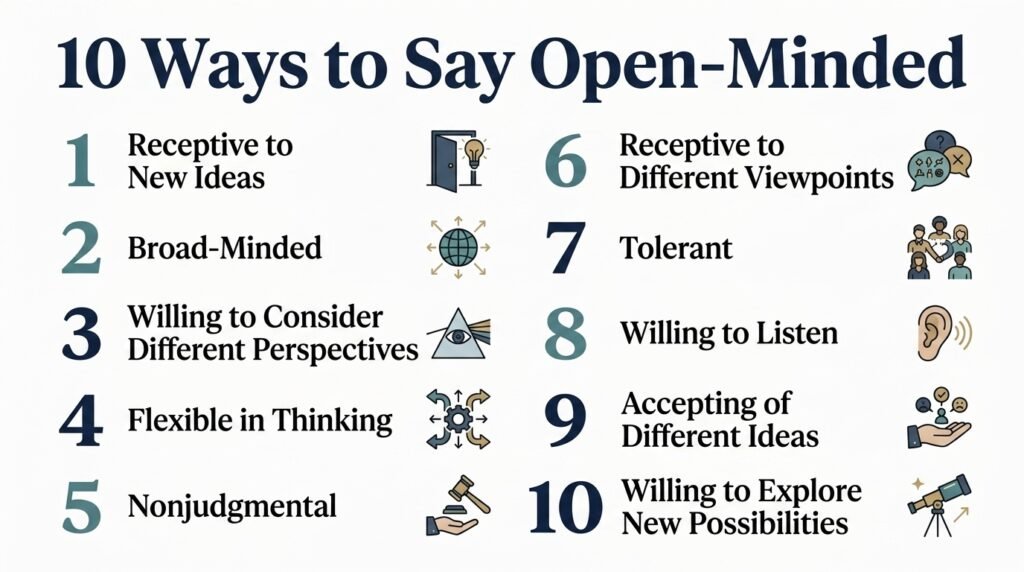
1. Receptive to New Ideas
Meaning
“Receptive to new ideas” describes someone who is willing to listen to, consider, and potentially accept unfamiliar suggestions. It focuses on curiosity and willingness rather than simply accepting everything.
Best For
- Professional
- Formal
- Polite
Example 1
Our manager is receptive to new ideas, so everyone feels comfortable suggesting improvements.
Example 2
She was receptive to the proposal even though it challenged the team’s usual approach.
Quick Tip
Use this phrase when describing someone at work, especially when discussing collaboration, innovation, or problem-solving.
2. Broad-Minded
Meaning
“Broad-minded” describes someone who is willing to accept ideas, behaviors, or viewpoints that may differ from their own. It often suggests a wider and less restrictive way of thinking.
Best For
- Casual
- Friendly
- Formal
Example 1
My grandfather is surprisingly broad-minded and enjoys hearing younger people discuss new ideas.
Example 2
A broad-minded teacher can make students feel comfortable expressing different opinions.
Quick Tip
“Broad-minded” is useful when you want to emphasize acceptance of different viewpoints or ways of life.
3. Willing to Consider Different Perspectives
Meaning
This phrase clearly explains what being open-minded involves: listening to viewpoints that may not match your own. It is especially useful when you want your meaning to be unmistakable.
Best For
- Professional
- Formal
- Polite
Example 1
A strong leader is willing to consider different perspectives before making an important decision.
Example 2
The committee was willing to consider different perspectives during the policy review.
Quick Tip
Choose this expression when clarity matters more than brevity, particularly in academic or professional writing.
4. Flexible in Thinking
Meaning
“Flexible in thinking” describes someone who can adjust their ideas when presented with new information or a convincing argument. It emphasizes adaptability rather than simple acceptance.
Best For
- Professional
- Formal
- Friendly
Example 1
He is flexible in his thinking and does not insist on using the same solution every time.
Example 2
Successful entrepreneurs often need to remain flexible in their thinking as markets change.
Quick Tip
Use this phrase when discussing adaptability, decision-making, leadership, or problem-solving.
5. Nonjudgmental
Meaning
“Nonjudgmental” describes a person who avoids quickly criticizing or condemning others. It is particularly appropriate when being open-minded means accepting people and their experiences without unfair assumptions.
Best For
- Friendly
- Warm
- Polite
Example 1
Her nonjudgmental attitude made it easier for new employees to talk about their concerns.
Example 2
He is a nonjudgmental friend who listens before offering advice.
Quick Tip
Use “nonjudgmental” when the focus is on accepting people rather than considering new ideas.
6. Receptive to Different Viewpoints
Meaning
Someone who is receptive to different viewpoints listens to opinions that may conflict with their own. The expression suggests an active willingness to hear and understand other sides of an issue.
Best For
- Professional
- Formal
- Polite
Example 1
The discussion was productive because everyone remained receptive to different viewpoints.
Example 2
A good interviewer should be receptive to different viewpoints instead of making assumptions about guests.
Quick Tip
This is a strong choice for meetings, discussions, essays, and workplace communication.
7. Tolerant
Meaning
“Tolerant” can describe someone who accepts differences in opinions, beliefs, behaviors, or lifestyles. However, it usually emphasizes acceptance of differences rather than enthusiasm for new ideas.
Best For
- Formal
- Professional
- Polite
Example 1
The organization promotes a tolerant environment where employees can express different opinions.
Example 2
He is tolerant of cultural differences and enjoys learning about unfamiliar traditions.
Quick Tip
Use “tolerant” when your main point is acceptance of differences, not necessarily curiosity about them.
8. Willing to Listen
Meaning
“Willing to listen” presents open-mindedness in a simple and conversational way. It suggests that someone gives others a fair chance to explain their ideas before forming an opinion.
Best For
- Casual
- Friendly
- Warm
Example 1
Even when we disagree, she’s always willing to listen to my side of the story.
Example 2
You do not have to agree with everyone to be willing to listen to their concerns.
Quick Tip
This phrase sounds natural in everyday American English and works well when you want to avoid sounding overly formal.
9. Accepting of Different Ideas
Meaning
“Accepting of different ideas” describes someone who does not automatically reject thoughts that differ from their own. It emphasizes acceptance and respect for intellectual differences.
Best For
- Friendly
- Professional
- Polite
Example 1
The professor is accepting of different ideas and encourages students to challenge conventional thinking.
Example 2
Our team needs people who are accepting of different ideas when developing new products.
Quick Tip
Use this phrase when you want to highlight respect for disagreement or unconventional thinking.
10. Willing to Explore New Possibilities
Meaning
This expression describes someone who is curious about alternatives and prepared to investigate options before deciding what works best. It gives “open-minded” a more active and forward-looking meaning.
Best For
- Professional
- Friendly
- Formal
Example 1
The company is willing to explore new possibilities instead of relying only on traditional methods.
Example 2
She is willing to explore new possibilities when planning her career.
Quick Tip
This phrase works especially well when discussing creativity, opportunities, innovation, or future decisions.
Comparison Table
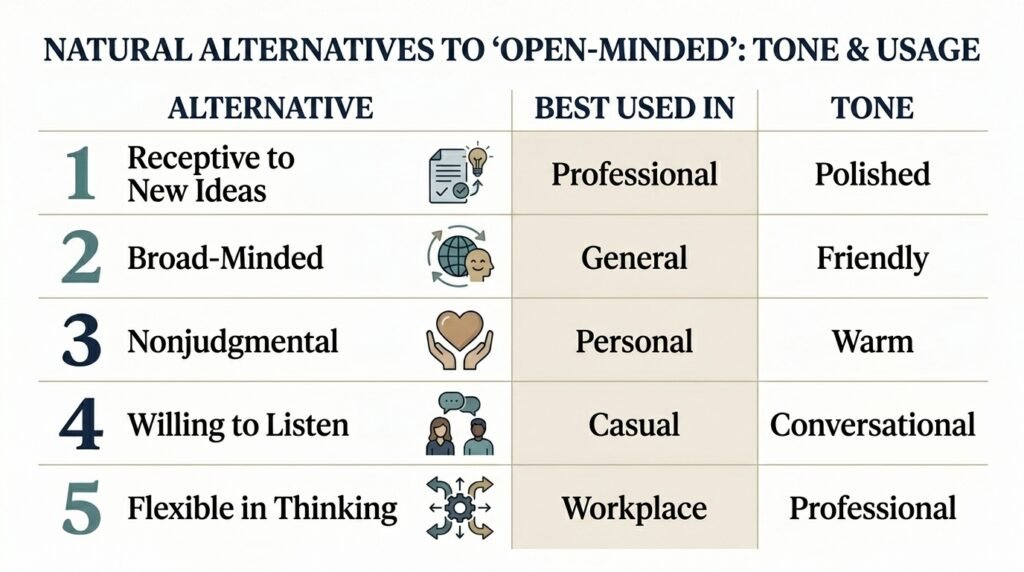
| Alternative | Best Used In | Tone |
| Receptive to new ideas | Workplace, business, professional writing | Professional |
| Broad-minded | General conversation, personal descriptions | Friendly |
| Willing to consider different perspectives | Academic, workplace, formal writing | Formal |
| Flexible in thinking | Leadership, problem-solving, business | Professional |
| Nonjudgmental | Relationships, personal descriptions | Warm |
| Receptive to different viewpoints | Discussions, meetings, essays | Formal |
| Tolerant | Social, cultural, professional contexts | Polite |
| Willing to listen | Everyday conversations, relationships | Casual |
| Accepting of different ideas | Education, teamwork, discussions | Friendly |
| Willing to explore new possibilities | Business, creativity, future planning | Positive |
Common Mistakes
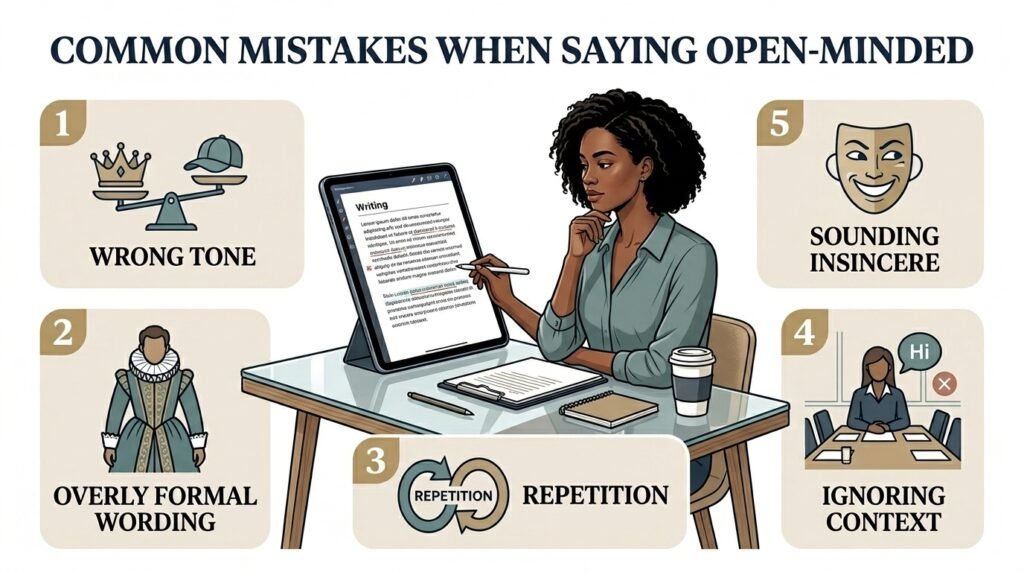
1. Using Casual Phrases in Professional Emails
Not every synonym sounds appropriate in a workplace setting. “Willing to listen” may sound natural in conversation, while “receptive to new ideas” often sounds more polished in a professional email.
2. Choosing an Overly Formal Expression
A formal phrase can sound unnatural in a casual conversation. If you are describing a friend, “broad-minded” or “willing to listen” may feel more comfortable than a long expression such as “willing to consider different perspectives.”
3. Treating Every Synonym as Identical
These alternatives have slightly different meanings. “Nonjudgmental” focuses on accepting people, while “flexible in thinking” focuses on changing or adapting your ideas.
4. Forgetting the Context
Think about your audience before choosing an alternative. A phrase that works well in an academic essay may sound stiff in a text message or casual conversation.
5. Sounding Insincere
Avoid describing someone as open-minded simply because it sounds positive. Choose a phrase that accurately reflects the person’s behavior, such as listening to opposing views or considering unfamiliar solutions.
Frequently Asked Questions
What is another way to say open-minded?
Some natural alternatives include receptive to new ideas, broad-minded, flexible in thinking, nonjudgmental, tolerant, and willing to consider different perspectives. The best choice depends on the meaning you want to emphasize. For professional writing, “receptive to new ideas” is particularly useful because it sounds clear and polished.
What is a professional way to say open-minded?
A professional way to say “open-minded” is “receptive to new ideas” or “willing to consider different perspectives.” Both expressions work well in resumes, workplace evaluations, business communication, and professional discussions. They also explain the specific behavior behind open-mindedness rather than relying on a broad adjective.
What is a synonym for open-minded in a person?
Good synonyms include broad-minded, receptive, tolerant, nonjudgmental, flexible, and accepting. The right synonym depends on the person’s behavior. For example, “nonjudgmental” is appropriate when someone accepts others without criticism, while “receptive” works better when someone readily considers new suggestions.
What is another word for someone who is open-minded?
You can describe an open-minded person as receptive, broad-minded, flexible, tolerant, accepting, or nonjudgmental. You can also use a longer phrase such as “someone who is willing to hear different opinions.” These options let you describe the person’s specific quality instead of simply repeating “open-minded.”
What is a better word than open-minded?
There is no single word that is always better than “open-minded.” Receptive is excellent when discussing ideas, nonjudgmental works for attitudes toward people, and flexible fits changing opinions or approaches. Choose the word that matches the exact quality you want to communicate.
Is “broad-minded” the same as “open-minded”?
“Broad-minded” and “open-minded” are very similar, but they can carry slightly different emphasis. “Open-minded” commonly refers to considering new ideas or opinions, while “broad-minded” can suggest acceptance of different lifestyles, beliefs, or ways of thinking. Both are natural in American English.
What is a positive way to describe an open-minded person?
You can say someone is receptive, curious, flexible, accepting, broad-minded, or willing to hear different perspectives. For a professional description, “receptive to new ideas” sounds especially positive without exaggerating. For a personal description, “nonjudgmental” or “willing to listen” may sound warmer.
How do you say open-minded in a resume?
On a resume, avoid simply writing “open-minded” unless it is supported by context. Stronger alternatives include “receptive to new ideas,” “adaptable,” “collaborative,” or “willing to consider diverse perspectives.” These phrases can communicate the underlying quality while sounding more specific and professional.
Conclusion
Knowing another way to say open minded can help you make your writing more precise, natural, and appropriate for the situation. While “open-minded” is a useful everyday expression, a more specific alternative can communicate your meaning more clearly.
Use “receptive to new ideas” when discussing professional settings or collaboration. Choose “broad-minded” for general descriptions, “nonjudgmental” when emphasizing acceptance of people, and “flexible in thinking” when describing adaptability. If you want simple, conversational language, “willing to listen” is an excellent choice.
The key is to focus on the quality you actually want to describe. Instead of choosing a synonym just because it sounds sophisticated, select the phrase that best matches the person’s attitude, behavior, and situation.