
The phrase “it doesn’t matter” usually means that something is not important, does not affect the outcome, or is not worth worrying about. People use it when they want to show that a detail, choice, mistake, or situation has little significance.
For example, if someone asks whether you want coffee or tea, you might say, “It doesn’t matter.” This tells the other person that either option is acceptable.
The phrase can also express reassurance. If someone apologizes for making a small mistake, saying “It doesn’t matter” can mean that you are not upset about it.
However, the phrase can sometimes sound dismissive. Using a more specific alternative can make your meaning clearer and help you choose the right tone.
Why Use Other Ways to Say “It Doesn’t Matter”?
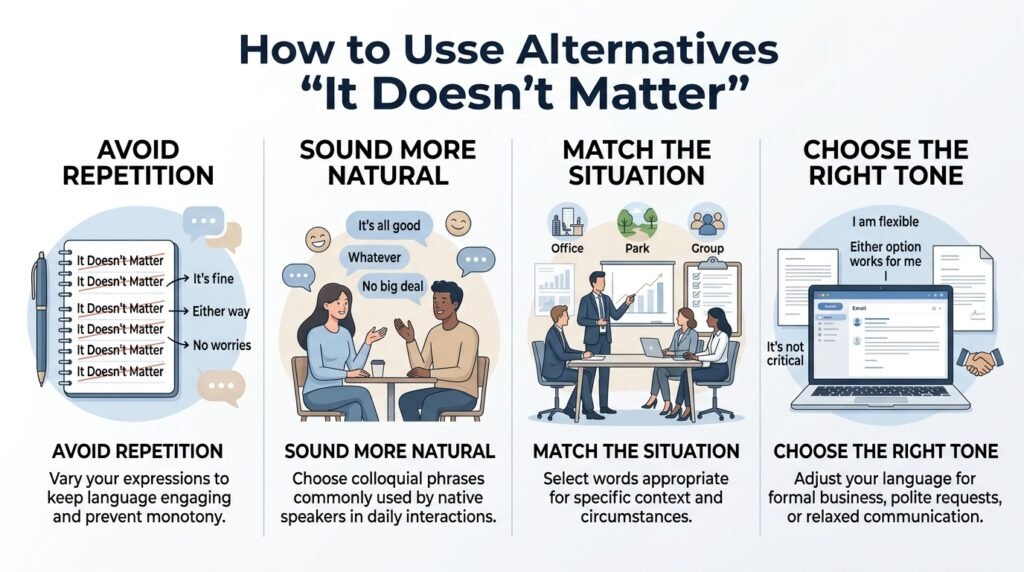
Using different expressions can make your communication more precise and natural. The best alternative depends on whether you want to sound relaxed, reassuring, professional, or completely neutral.
Other phrases can help you:
- Avoid repeating “it doesn’t matter.”
- Make your meaning more specific.
- Sound more natural in conversation.
- Choose an appropriate professional tone.
- Reassure someone without sounding dismissive.
- Explain that two choices have the same outcome.
10 Best Other Ways to Say “It Doesn’t Matter”
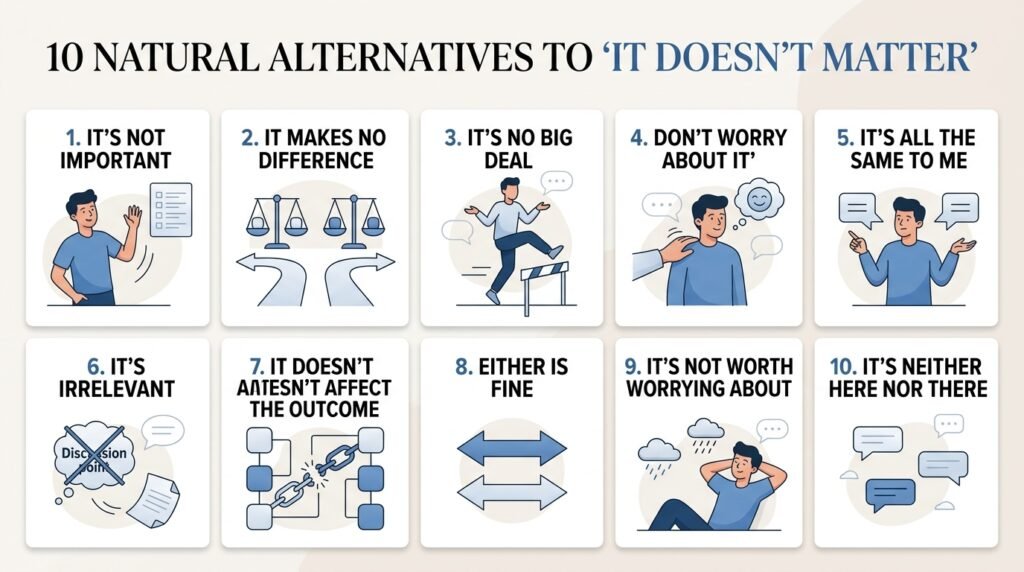
1. It’s Not Important
Meaning
“It’s not important” is a straightforward way to say that something has little significance. It is neutral and easy to understand, making it useful in both everyday speech and many professional situations.
Best For
- Professional
- Formal
- Polite
- Casual
Example 1
The exact color of the folder isn’t important as long as the documents are organized.
Example 2
The delay is not important because we still have plenty of time.
Quick Tip
Use this phrase when you want to emphasize that something lacks importance rather than simply saying you have no preference.
2. It Makes No Difference
Meaning
“It makes no difference” means that one option, action, or outcome will not change the final result. It is especially useful when two or more choices are equally acceptable.
Best For
- Professional
- Formal
- Casual
- Polite
Example 1
You can send the report today or tomorrow; it makes no difference to me.
Example 2
Whether we meet online or in person makes no difference to the project.
Quick Tip
Choose this phrase when you specifically mean that the outcome will remain the same.
3. It’s No Big Deal
Meaning
“It’s no big deal” is a relaxed and friendly expression. It tells someone that a problem, mistake, or inconvenience is minor and does not deserve much concern.
Best For
- Casual
- Friendly
- Warm
Example 1
You forgot to bring the charger? It’s no big deal; I have an extra one.
Example 2
Thanks for being a few minutes late. It’s no big deal.
Quick Tip
Keep this expression for casual conversations because it can sound too informal in formal business writing.
4. Don’t Worry About It
Meaning
“Don’t worry about it” is often used to reassure someone that you are not upset or that a problem does not need further attention. It can also be used after someone apologizes or offers thanks.
Best For
- Casual
- Friendly
- Warm
- Polite
Example 1
You accidentally spilled some water on the table, but don’t worry about it.
Example 2
“Sorry I missed your call.” “Don’t worry about it. We can talk later.”
Quick Tip
Use this expression when your goal is to comfort or reassure someone rather than simply describe something as unimportant.
5. It’s All the Same to Me
Meaning
“It’s all the same to me” means that you have no strong preference between available choices. It focuses more on personal preference than importance.
Best For
- Casual
- Friendly
- Polite
Example 1
We can eat at six or seven; it’s all the same to me.
Example 2
Take whichever seat you prefer. It’s all the same to me.
Quick Tip
Use this phrase when you genuinely do not care which option is selected.
6. It’s Irrelevant
Meaning
“It’s irrelevant” means that something has no connection to the issue being discussed or does not affect the decision. The word is precise but can sound more formal or direct.
Best For
- Professional
- Formal
Example 1
The supplier’s location is irrelevant if the product meets our quality standards.
Example 2
That detail is irrelevant to the question we are trying to answer.
Quick Tip
Use “irrelevant” when you mean that something is unrelated, not merely unimportant.
7. It Doesn’t Affect the Outcome
Meaning
This phrase explains that a particular choice or event will not change the final result. It is more specific than “it doesn’t matter” and works especially well when discussing decisions or results.
Best For
- Professional
- Formal
- Polite
Example 1
The order in which you complete these two tasks doesn’t affect the outcome.
Example 2
Choosing either format doesn’t affect the outcome of the test.
Quick Tip
Use this option when you want to explain exactly why a detail is unimportant.
8. Either Is Fine
Meaning
“Either is fine” shows that two choices are acceptable to you. It is concise, natural, and commonly used when someone asks you to choose between two options.
Best For
- Casual
- Friendly
- Polite
- Professional
Example 1
Would you prefer the morning or afternoon appointment? Either is fine with me.
Example 2
We can use the blue design or the gray one. Either is fine.
Quick Tip
Use “either is fine” when there are two clear options and you have no preference between them.
9. It’s Not Worth Worrying About
Meaning
“It’s not worth worrying about” tells someone that a problem is too minor to cause concern. It has a reassuring tone and is often used when someone feels anxious about a small issue.
Best For
- Friendly
- Warm
- Polite
- Casual
Example 1
The package may arrive an hour late, but it’s not worth worrying about.
Example 2
You made a small typo in the message. It’s not worth worrying about.
Quick Tip
Use this expression when someone is concerned about an issue and you want to put their mind at ease.
10. It’s Neither Here Nor There
Meaning
“It’s neither here nor there” means that a particular point is not relevant to the current discussion or decision. It can sound conversational but may also carry a slightly dismissive tone.
Best For
- Casual
- Friendly
- Formal
Example 1
Whether he liked the old design is neither here nor there; we need to focus on the new version.
Example 2
Her personal opinion about the schedule is neither here nor there when the deadline is fixed.
Quick Tip
Use this phrase carefully because it can sound dismissive if you use it to brush aside someone’s concern.
Comparison Table
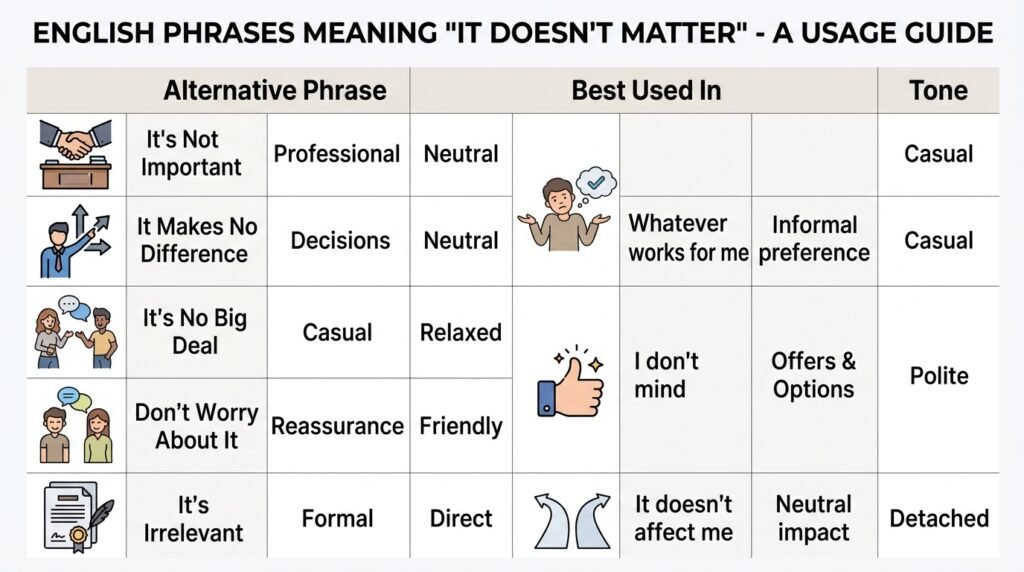
| Alternative | Best Used In | Tone |
| It’s not important | Professional, everyday conversations | Neutral |
| It makes no difference | Decisions and choices | Neutral |
| It’s no big deal | Casual conversations | Relaxed |
| Don’t worry about it | Reassurance | Friendly |
| It’s all the same to me | Personal preferences | Casual |
| It’s irrelevant | Formal or professional contexts | Direct |
| It doesn’t affect the outcome | Decisions and results | Precise |
| Either is fine | Choosing between two options | Polite |
| It’s not worth worrying about | Reassuring someone | Warm |
| It’s neither here nor there | Off-topic or unrelated points | Conversational |
Common Mistakes
1. Using Casual Phrases in Professional Emails
Expressions such as “it’s no big deal” may sound too relaxed in a formal workplace. Choose “it’s not important” or “it makes no difference” when a more professional tone is appropriate.
2. Choosing “Irrelevant” When You Mean “Unimportant”
“Irrelevant” means unrelated to the matter being discussed. If something is relevant but simply has little importance, “it’s not important” is usually more accurate.
3. Reassuring Someone Too Quickly
Saying “don’t worry about it” can sometimes minimize another person’s concern. Consider whether they need reassurance or whether they simply need an explanation.
4. Ignoring the Number of Choices
“Either is fine” works naturally for two options. If there are several choices, “any option is fine” or “I have no preference” may be clearer.
5. Sounding Dismissive
“It doesn’t matter” and some alternatives can sound cold depending on your tone. If someone is sharing a personal concern, a warmer phrase such as “it’s not worth worrying about” may communicate more care.
Frequently Asked Questions
What is a polite way to say “it doesn’t matter”?
A polite alternative is “it makes no difference to me” or “either option is fine with me.” These expressions show that you do not have a preference without sounding dismissive. In professional situations, “it makes no difference” is especially useful when discussing choices, schedules, or decisions.
What is a professional way to say “it doesn’t matter”?
In professional communication, you can say “it’s not important,” “it makes no difference,” or “it doesn’t affect the outcome.” The last option is especially clear when discussing a business decision or process because it explains why the detail does not require attention.
What is a casual way to say “it doesn’t matter”?
Common casual alternatives include “it’s no big deal,” “don’t worry about it,” and “it’s all the same to me.” These expressions work well with friends, family members, and coworkers you know well. Your choice should depend on whether you are dismissing a problem or expressing no preference.
How do you say “it doesn’t matter” without sounding rude?
Try to make your meaning specific. Instead of simply saying “it doesn’t matter,” you could say, “Either option works for me,” “It makes no difference to me,” or “You don’t need to worry about it.” These alternatives make your intention clearer and can sound more considerate.
Is “it doesn’t matter” a rude phrase?
Not necessarily. The phrase itself is neutral, but it can sound dismissive depending on the situation and tone. For example, telling someone “it doesn’t matter” after they share a serious concern may seem insensitive. A more specific or reassuring expression can prevent that misunderstanding.
What is another way to say “it doesn’t matter to me”?
You can say “I have no preference,” “either is fine with me,” “it makes no difference to me,” or “I’m fine with either option.” These phrases are useful when someone asks you to choose between alternatives and you genuinely do not have a preference.
What is another way to say “it doesn’t matter” in an email?
For a professional email, consider phrases such as “either option works for me,” “it makes no difference,” or “the choice does not affect the outcome.” These alternatives sound clearer and more professional than repeatedly using “it doesn’t matter.”
What is the difference between “it doesn’t matter” and “it’s irrelevant”?
“It doesn’t matter” generally means that something is unimportant or does not affect a situation. “It’s irrelevant” is more specific: it means the information is not related to the issue being discussed. Because “irrelevant” can sound blunt, use it carefully in conversations.
Conclusion
Finding another way to say “it doesn’t matter” can make your communication clearer, more natural, and better suited to the situation. The best alternative depends on what you actually mean.
Use “it’s not important” for a simple, neutral statement. Choose “it makes no difference” when two choices lead to the same result, or “either is fine” when you have no preference. For casual conversations, “it’s no big deal” works well, while “don’t worry about it” is helpful when reassuring someone.
In professional or formal writing, more precise options such as “it doesn’t affect the outcome” or “it’s irrelevant” may be better. The key is to match your words to your meaning, audience, and tone. A small change in wording can make your message much more effective.