

When you want to remember someone who has died, “in memory of” is one of the most common phrases in American English. You may see it on memorial plaques, funeral programs, donation pages, sympathy cards, social media posts, and tribute messages.
However, repeating the same phrase can make your writing feel predictable. Choosing another way to say “in memory of” can help you express respect, love, gratitude, or remembrance in a way that fits the occasion.
What Does “Another Way to Say In Memory Of” Mean?

“In memory of” means that something is being done, given, created, or dedicated to remember a person who has died. For example, someone might donate to a charity “in memory of” a loved one.
The phrase is especially common in memorial messages, obituaries, inscriptions, funeral announcements, and charitable donations. Depending on the situation, you may want a phrase that sounds more formal, personal, warm, or celebratory.
Why Use Other Ways to Say “In Memory Of”?
Using alternatives gives you more flexibility when writing about someone’s life and legacy. The right phrase can make a tribute sound more sincere and appropriate.
You might choose another expression to:
- Avoid repeating the same phrase.
- Make a memorial message more personal.
- Match a formal or professional setting.
- Express affection and gratitude.
- Celebrate someone’s life and accomplishments.
- Create a more natural tribute or dedication.
10 Best Other Ways to Say “In Memory Of”
1. In Remembrance Of
Meaning
“In remembrance of” is one of the closest alternatives to “in memory of.” It emphasizes keeping someone’s life, character, or impact in your thoughts.
Best For
- Formal
- Warm
- Polite
- Professional
Example 1
The family established a scholarship in remembrance of their beloved teacher.
Example 2
We gathered together in remembrance of those who touched our lives.
Quick Tip
Use this phrase when you want a respectful expression that works naturally in memorials and formal tributes.
2. In Honor Of
Meaning
“In honor of” expresses respect or admiration for someone. Unlike “in memory of,” it can also be used for people who are still living.
Best For
- Formal
- Professional
- Warm
- Friendly
Example 1
The community planted a garden in honor of her years of service.
Example 2
The organization created an annual award in honor of its longtime director.
Quick Tip
Choose this option when you want to emphasize someone’s achievements, influence, or positive qualities.
3. To Honor the Memory Of
Meaning
“To honor the memory of” clearly communicates both remembrance and respect. It has a formal, thoughtful tone and works particularly well in written tributes.
Best For
- Formal
- Professional
- Polite
Example 1
The family created a foundation to honor the memory of their son.
Example 2
The event was organized to honor the memory of community members who made a lasting difference.
Quick Tip
This phrase is especially useful when you want your message to sound dignified and intentional.
4. Remembering
Meaning
“Remembering” is shorter and more conversational than many traditional memorial phrases. It creates a personal feeling without sounding overly formal.
Best For
- Casual
- Friendly
- Warm
Example 1
Remembering a wonderful friend whose kindness will never be forgotten.
Example 2
Remembering Grandpa and all the stories he shared with us.
Quick Tip
Use “remembering” for social media tributes, personal notes, photo captions, and heartfelt messages.
5. In Loving Memory Of
Meaning
“In loving memory of” adds affection to the traditional phrase. It is especially common when remembering a close family member, friend, or partner.
Best For
- Warm
- Friendly
- Formal
Example 1
In loving memory of Sarah, whose laughter brought joy to everyone around her.
Example 2
This memorial garden was created in loving memory of our beloved father.
Quick Tip
Use this phrase when the relationship was close and you want the tribute to express love as well as remembrance.
6. In Tribute To
Meaning
“In tribute to” highlights appreciation, respect, or admiration for someone’s life or contributions. It can be used for deceased people and, in some contexts, living people.
Best For
- Formal
- Professional
- Polite
Example 1
The museum opened a special exhibit in tribute to the artist’s remarkable career.
Example 2
The concert was held in tribute to a musician who inspired generations.
Quick Tip
This phrase works especially well when the person’s accomplishments or influence are the main focus.
7. As a Tribute to
Meaning
“As a tribute to” describes an action taken to show appreciation or respect. It is useful when explaining why a donation, event, award, or memorial was created.
Best For
- Formal
- Professional
- Polite
Example 1
The family donated the books as a tribute to their mother, an avid reader.
Example 2
The school named the library as a tribute to its former principal.
Quick Tip
Use this phrase when you want to explain the purpose behind a memorial gesture.
8. To Remember
Meaning
“To remember” is simple and direct. It avoids the formal sound of traditional memorial language while still communicating the purpose of a dedication.
Best For
- Casual
- Friendly
- Warm
Example 1
We planted these flowers to remember a friend who loved gardening.
Example 2
She made a donation to remember her father and support a cause he cared about.
Quick Tip
This is a good choice when you want your writing to sound natural and straightforward.
9. In Remembrance
Meaning
“In remembrance” is a concise alternative that conveys respect and reflection. It works well as a standalone phrase, especially in headings, event names, and memorial messages.
Best For
- Formal
- Warm
- Polite
Example 1
The community held a candlelight ceremony in remembrance.
Example 2
The organization hosted a special service in remembrance of those we lost.
Quick Tip
Because it is concise, “in remembrance” works particularly well in titles, captions, and ceremonial language.
10. Honoring the Life Of
Meaning
“Honoring the life of” shifts attention from death to the person’s life and legacy. It can create a more positive and celebratory tone.
Best For
- Warm
- Formal
- Friendly
Example 1
The family gathered for a celebration honoring the life of their beloved grandmother.
Example 2
The scholarship was established honoring the life of a teacher who encouraged countless students.
Quick Tip
Choose this phrase when you want to focus on what the person accomplished, loved, or contributed during their lifetime.
Comparison Table
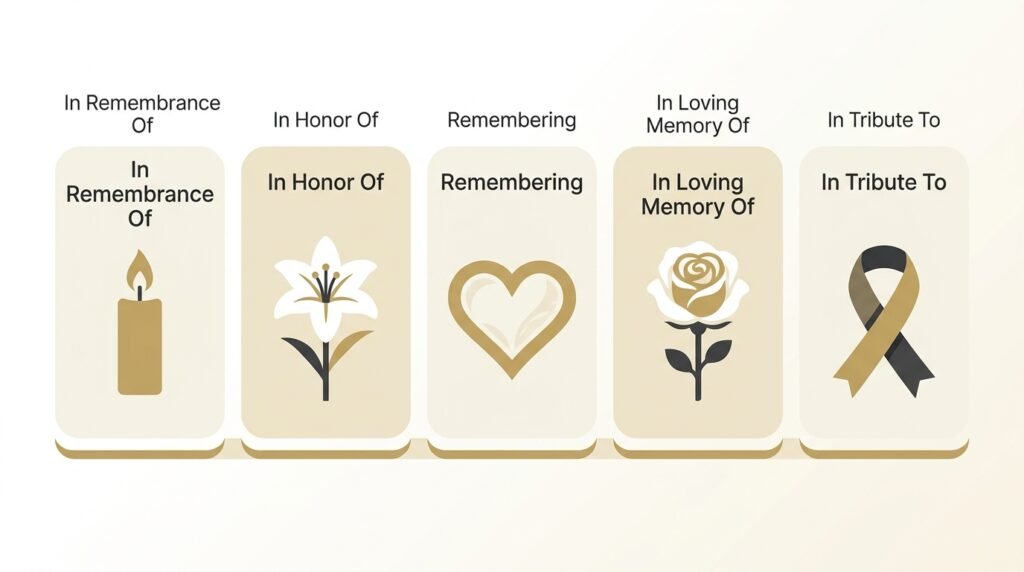
| Alternative | Best Used In | Tone |
| In remembrance of | Memorials and tributes | Respectful |
| In honor of | Awards and dedications | Appreciative |
| To honor the memory of | Formal tributes | Dignified |
| Remembering | Personal messages | Warm |
| In loving memory of | Family tributes | Affectionate |
| In tribute to | Events and commemorations | Respectful |
| As a tribute to | Donations and dedications | Formal |
| To remember | Personal writing | Simple |
| In remembrance | Ceremonies and headings | Solemn |
| Honoring the life of | Celebrations of life | Positive |
Common Mistakes

1. Using Casual Phrases in Formal Tributes
A very casual expression may feel inappropriate on a memorial plaque, funeral program, or official announcement. Choose language that respects the seriousness of the occasion.
2. Choosing “In Honor Of” Automatically
“In honor of” is not always interchangeable with “in memory of.” It can refer to living people, so use it carefully when specifically discussing someone who has died.
3. Repeating the Same Phrase
Using “in memory of” several times in one article or tribute can sound repetitive. Varying your wording can make the writing smoother and more personal.
4. Forgetting the Context
A phrase suitable for a social media caption may not work equally well in a formal obituary. Consider the audience, relationship, and purpose before selecting an alternative.
5. Making the Message Sound Insincere
Avoid choosing complicated language simply to sound sophisticated. A simple phrase such as “remembering” can often feel more genuine than an overly formal expression.
Frequently Asked Questions
What is another way to say “in memory of”?
Common alternatives include “in remembrance of,” “in honor of,” “to honor the memory of,” “remembering,” and “in loving memory of.” The best option depends on your message. “In remembrance of” is close in meaning, while “in honor of” places more emphasis on respect and recognition.
What is a formal way to say “in memory of”?
“To honor the memory of” is a strong formal alternative. “In remembrance of” is another excellent choice for memorials, ceremonies, obituaries, and official tributes. Both phrases sound respectful without being unnecessarily complicated.
What is a heartfelt way to say “in memory of”?
“In loving memory of” is one of the most heartfelt options. It adds a sense of affection and closeness, making it especially appropriate for family members, close friends, partners, and other people who had a meaningful personal connection with the writer.
Can I say “in honor of” instead of “in memory of”?
Yes, but the meanings are not always identical. “In honor of” focuses on respect, recognition, or celebration and can describe living people. “In memory of” specifically signals that the person being remembered has died.
What is a short alternative to “in memory of”?
“Remembering” is a simple, natural alternative. “In remembrance” is another short option with a more formal or ceremonial tone. The choice depends on whether you want the message to sound personal and conversational or solemn and traditional.
What should I write instead of “in memory of” on a donation?
For a donation, “in memory of” remains perfectly natural, but “in remembrance of” and “as a tribute to” can also work. If the donation celebrates someone’s influence or values, “in honor of” may be a particularly appropriate choice.
Is “honoring the life of” appropriate for someone who died?
Yes. “Honoring the life of” is often used for celebrations of life and memorial events. It places emphasis on the person’s experiences, accomplishments, relationships, and legacy rather than focusing only on their death.
What is the difference between “in remembrance of” and “in honor of”?
“In remembrance of” focuses primarily on remembering someone who has died. “In honor of” emphasizes respect or recognition and can be used for both living and deceased people. For a traditional memorial message, “in remembrance of” is usually the more precise choice.
Conclusion
Finding another way to say “in memory of” can help you create a tribute that feels more natural, personal, and appropriate for the occasion. “In remembrance of” is the closest formal alternative, while “in loving memory of” adds warmth and affection. If you want to celebrate someone’s accomplishments or influence, “in honor of” or “honoring the life of” may be better choices.
For personal messages, “remembering” and “to remember” sound simple and sincere. For formal events, plaques, or official tributes, choose language that feels dignified without becoming overly complicated. The best phrase is ultimately the one that reflects the person, the occasion, and the emotion you want to communicate.
Helpful takeaway: When in doubt, use “in remembrance of” for a respectful memorial and “in honor of” when emphasizing someone’s impact or achievements.