
What Does “Another Way to Say Death in the Family” Mean?

“Death in the family” refers to the death of a relative or close family member. People often use the phrase when explaining an absence, requesting time off, offering condolences, or discussing a difficult personal situation.
Because death is a sensitive subject, many people prefer softer expressions. Words such as “loss,” “passing,” and “bereavement” can communicate the same basic idea while sounding more compassionate or appropriate for the situation.
Why Use Other Ways to Say “Death in the Family”?
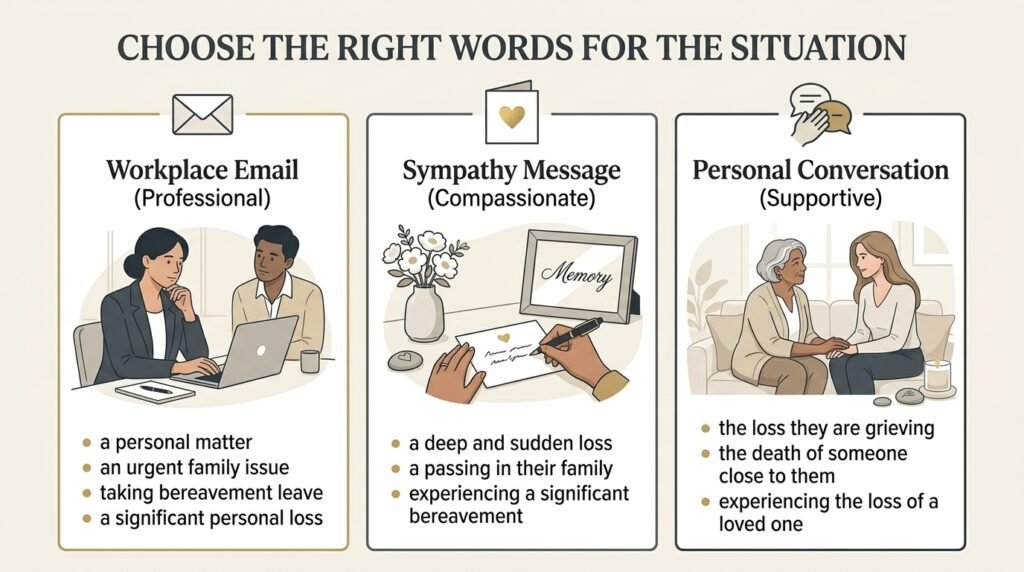
Different situations call for different levels of formality and emotion. A workplace email may need respectful, direct wording, while a conversation with a close friend may sound warmer and more personal.
Using alternatives can help you:
- Avoid repeating the same expression.
- Sound more natural and considerate.
- Match professional and personal situations.
- Communicate sensitive news with care.
- Express sympathy without sounding cold or overly formal.
10 Best Other Ways to Say “Death in the Family”
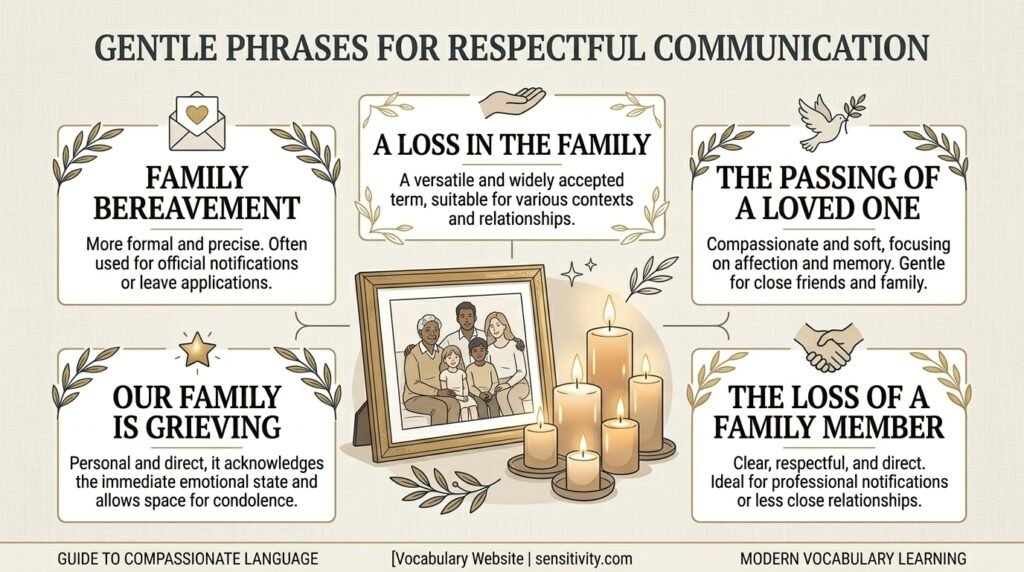
1. A Loss in the Family
Meaning
“A loss in the family” is one of the most natural alternatives to “death in the family.” It communicates that someone has died without stating the death as directly.
Best For
- Professional
- Polite
- Warm
- Friendly
Example 1
I need to take tomorrow off because there has been a loss in my family.
Example 2
She has been away from work following a recent loss in the family.
Quick Tip
Use this phrase when you want to explain a situation respectfully without sharing personal details.
2. The Passing of a Loved One
Meaning
“The passing of a loved one” is a gentle expression for someone’s death. It places emphasis on the person who died rather than the event itself.
Best For
- Warm
- Polite
- Formal
- Friendly
Example 1
He is taking some time to grieve after the passing of a loved one.
Example 2
We were sorry to hear about the passing of your loved one.
Quick Tip
This expression works especially well when offering condolences or writing a sympathy message.
3. A Family Loss
Meaning
“A family loss” is a concise way to describe the death of a relative. It sounds natural while leaving the specific circumstances private.
Best For
- Professional
- Polite
- Casual
Example 1
I may need to travel home because of a family loss.
Example 2
She requested several days away from work after a family loss.
Quick Tip
Choose this option when you need to be brief and do not want to explain who died.
4. Family Bereavement
Meaning
“Family bereavement” is a more formal term for experiencing the death of a family member. It is commonly associated with workplace policies, leave requests, and official communication.
Best For
- Professional
- Formal
Example 1
I am requesting bereavement leave due to a death in my immediate family.
Example 2
The company provides paid leave for family bereavement.
Quick Tip
This phrase is useful in professional settings, but it may sound too formal for a casual conversation.
5. The Loss of a Family Member
Meaning
“The loss of a family member” clearly communicates that a relative has died while maintaining a respectful tone. It is more direct than “a loss in the family.”
Best For
- Formal
- Professional
- Polite
- Warm
Example 1
She is taking time away from work following the loss of a family member.
Example 2
We understand that the loss of a family member can be incredibly difficult.
Quick Tip
Use this wording when clarity matters but you still want to sound compassionate.
6. The Passing of a Family Member
Meaning
“The passing of a family member” is a softer alternative to directly saying that a relative died. It is especially appropriate when discussing someone’s grief with sensitivity.
Best For
- Warm
- Polite
- Formal
Example 1
He returned home after learning about the passing of a family member.
Example 2
The team sent its condolences after the passing of her family member.
Quick Tip
This phrase is suitable for sympathy notes, workplace messages, and other sensitive conversations.
7. A Death in the Family
Meaning
“A death in the family” is actually the original expression, but it remains a useful choice when you need clear and direct wording. It is neither overly technical nor unnecessarily indirect.
Best For
- Professional
- Formal
- Casual
- Polite
Example 1
I won’t be able to attend the meeting because of a death in the family.
Example 2
He had to return home unexpectedly following a death in the family.
Quick Tip
There is nothing wrong with using the original phrase when direct, respectful language is appropriate.
8. A Recent Family Bereavement
Meaning
“A recent family bereavement” sounds formal and emphasizes that the family is currently dealing with grief. It is particularly suitable for official or workplace communication.
Best For
- Formal
- Professional
Example 1
I am currently dealing with a recent family bereavement and need additional time away.
Example 2
Her recent family bereavement affected her ability to attend the event.
Quick Tip
Use this phrase for formal correspondence rather than casual conversations with friends.
9. The Loss of Someone Close to Me
Meaning
“The loss of someone close to me” provides a personal and compassionate way to describe a death. It does not specify whether the person was a relative, friend, or partner.
Best For
- Warm
- Friendly
- Polite
- Casual
Example 1
I have been dealing with the loss of someone close to me.
Example 2
Because of the loss of someone close to me, I need some time to be with my family.
Quick Tip
This is a good choice when the relationship is personal but you prefer not to identify the person.
10. We’re Grieving a Family Member’s Passing
Meaning
“We’re grieving a family member’s passing” focuses on the emotional experience of the family rather than simply announcing a death. It has a warm and compassionate tone.
Best For
- Warm
- Friendly
- Polite
Example 1
We’re grieving a family member’s passing, so we may not be available this weekend.
Example 2
Our family is grieving a family member’s passing and appreciates everyone’s support.
Quick Tip
Use this wording when you want to acknowledge both the death and the family’s emotional response.
Comparison Table
| Alternative | Best Used In | Tone |
| A loss in the family | Work, everyday conversation | Respectful |
| The passing of a loved one | Condolences, personal messages | Gentle |
| A family loss | Brief explanations | Neutral |
| Family bereavement | Workplace, official communication | Formal |
| The loss of a family member | Professional and personal settings | Compassionate |
| The passing of a family member | Sympathy messages | Gentle |
| A death in the family | Direct explanations | Clear |
| A recent family bereavement | Formal correspondence | Formal |
| The loss of someone close to me | Personal conversations | Warm |
| We’re grieving a family member’s passing | Family and personal messages | Compassionate |
Common Mistakes
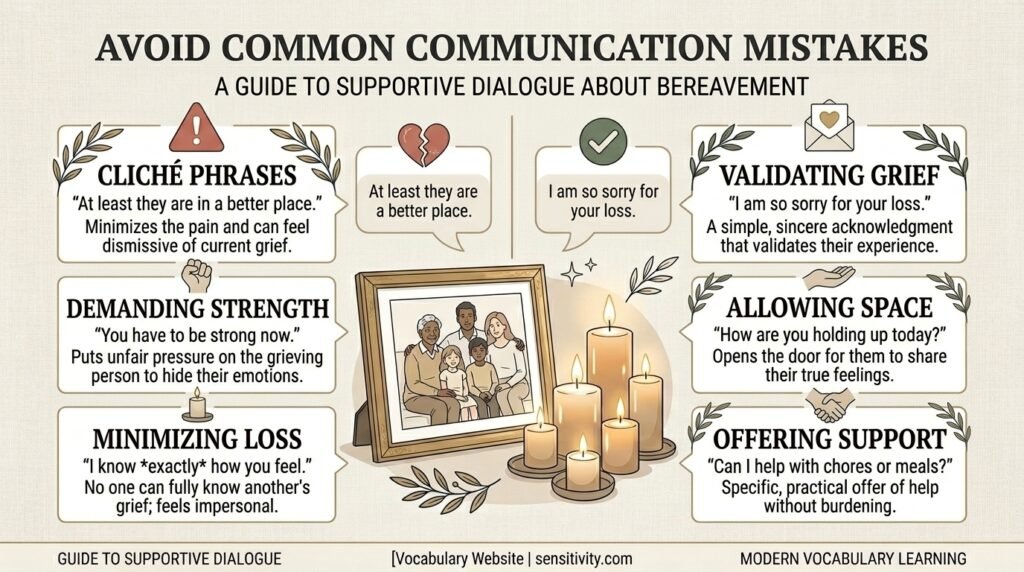
1. Using Casual Phrases in Professional Emails
Avoid slang or overly relaxed expressions when informing a manager, client, or colleague about a death. Sensitive news deserves clear and respectful wording.
2. Choosing Overly Formal Language
“Family bereavement” may be appropriate at work but can sound stiff when speaking with a close friend. Match the expression to your relationship and setting.
3. Repeating the Same Phrase
Using “death in the family” several times can make a message feel repetitive. A natural alternative such as “a family loss” can provide variety without changing the meaning.
4. Forgetting Context
Not every alternative means exactly the same thing. For example, “someone close to me” does not necessarily mean a family member, so choose your wording carefully.
5. Sounding Insincere
Avoid phrases that feel unnecessarily complicated or detached. Simple expressions such as “a loss in the family” often sound more genuine than overly elaborate wording.
Frequently Asked Questions
What is a polite way to say “death in the family”?
“A loss in the family” is one of the most polite and natural alternatives. You can also say “the passing of a loved one” when you want a gentler expression. For workplace communication, either phrase can explain the situation without requiring you to provide private details.
What is a professional way to say “death in the family”?
For professional communication, “a loss in the family,” “the loss of a family member,” or “family bereavement” are good options. “Family bereavement” is especially appropriate when discussing bereavement leave or other formal workplace matters.
How do you say “death in the family” without saying death?
You can use phrases such as “a loss in the family,” “the passing of a family member,” or “the passing of a loved one.” These expressions communicate the situation without using the word “death,” which some people prefer to avoid in sensitive conversations.
What is another way to say “family emergency” when someone has died?
If the emergency involves a death, “a loss in the family” is usually more accurate than simply saying “a family emergency.” You could say, “I need to leave early because of a loss in my family.” This gives enough information while keeping the message respectful and private.
Can I say “family bereavement” at work?
Yes. “Family bereavement” is appropriate in professional settings, especially when requesting bereavement leave. However, “a loss in the family” may sound more natural in a regular email to a manager or coworker because it is less formal.
What is a gentle way to tell someone about a family death?
“The passing of a family member” or “the loss of a loved one” can sound gentle and compassionate. If you are offering condolences, you might say, “I’m very sorry for your loss.” This keeps the focus on sympathy rather than the details of the death.
Is “passed away” more polite than “died”?
“Passed away” is often perceived as softer than “died,” so many people use it in sensitive conversations. However, “died” is not inherently rude or inappropriate. The best choice depends on the speaker, audience, relationship, and context.
What should I say in an email about a death in my family?
Keep the message brief and clear. For example, you can say that you have experienced “a loss in the family” and need time away. You do not need to explain who died, what happened, or provide personal details unless you feel comfortable doing so.
Conclusion
Knowing another way to say “death in the family” can help you communicate difficult news with greater care and confidence. The best expression depends on the setting, your relationship with the audience, and how much information you want to share.
When discussing grief, simple and sincere language usually works best. Choose words that respect both the situation and the person experiencing the loss. For additional context, see this guide to understanding grief and bereavement from the American Psychological Association.

Sarah Whitfield is the founder and lead editor of Anchors Press. With a background in copyediting and content strategy, she reviews every guide for accuracy, tone, and everyday usefulness before it’s published.