

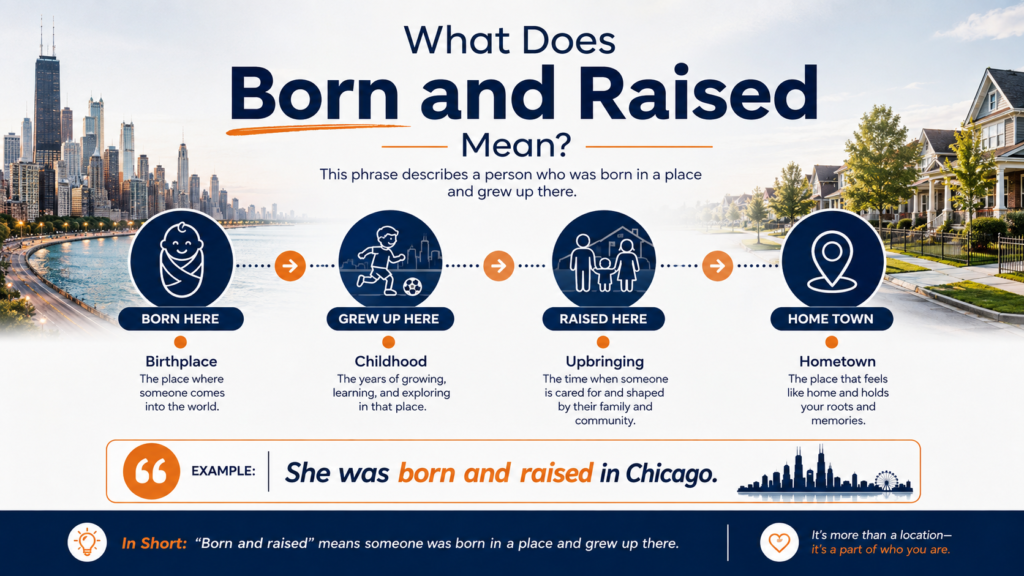
The phrase “born and raised” describes someone who was born in a particular place and spent their childhood there. For example, “She was born and raised in Chicago” means Chicago is both her birthplace and the place where she grew up.
People often search for another way to say “born and raised” because the original phrase can become repetitive. Different alternatives can also make a sentence sound more natural, personal, professional, or descriptive.
These expressions are commonly used in introductions, biographies, resumes, interviews, social media profiles, personal statements, articles, and everyday conversations.
Why Use Other Ways to Say “Born and Raised”?
Using alternatives can make your writing more flexible and natural. The best phrase depends on exactly what you want to communicate.
- Avoid repeating “born and raised.”
- Make personal introductions sound more conversational.
- Create a more professional biography.
- Emphasize someone’s childhood or hometown.
- Describe someone’s roots with greater warmth.
- Match the tone of a resume, article, interview, or conversation.
10 Best Other Ways to Say “Born and Raised”
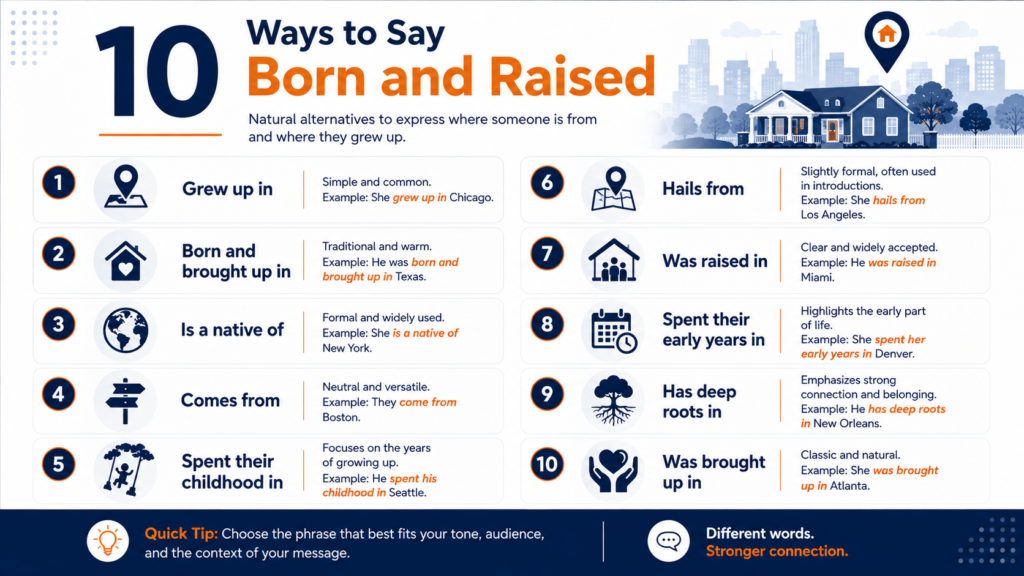
1. Grew Up In
Meaning
“Grew up in” is the most common and natural alternative to “born and raised.” It focuses on the place where someone spent their childhood and developed their early experiences.
Best For
- Casual
- Friendly
- Professional
- Warm
Example 1
I grew up in Austin and spent most of my childhood exploring the city with my family.
Example 2
My mother grew up in a small town outside Denver before moving to California.
Quick Tip
Use “grew up in” when you want a simple, natural phrase for everyday conversation, profiles, and introductions.
2. Born and Brought Up In
Meaning
“Born and brought up in” has almost the same meaning as “born and raised.” It emphasizes both the person’s birthplace and the place where they were brought up.
Best For
- Formal
- Professional
- Friendly
- Warm
Example 1
He was born and brought up in Boston before relocating to Seattle for work.
Example 2
She was born and brought up in a close-knit community in western Pennsylvania.
Quick Tip
This phrase is a strong direct replacement when you want to preserve the original meaning without simply repeating “born and raised.”
3. Is a Native of
Meaning
“Is a native of” identifies someone’s place of origin or hometown. It sounds slightly more formal than “grew up in” and works especially well in biographies and professional writing.
Best For
- Formal
- Professional
- Polite
Example 1
The award-winning chef is a native of New Orleans and began cooking with her grandmother.
Example 2
James is a native of Cleveland who later built his career in Los Angeles.
Quick Tip
Use this phrase when the person’s connection to a particular city, state, or region is important to the context.
4. Comes From
Meaning
“Comes from” is a flexible expression that can describe someone’s hometown, family background, or general roots. It does not always mean the person was born and raised in that location.
Best For
- Casual
- Friendly
- Warm
Example 1
She comes from a small farming community in Iowa.
Example 2
Marcus comes from Atlanta and credits his hometown with inspiring his interest in music.
Quick Tip
Be careful with this phrase because “comes from” can describe background without confirming that someone was born and raised there.
5. Spent Their Childhood In
Meaning
“Spent their childhood in” focuses specifically on where someone lived during their childhood. Unlike “born and raised,” it does not suggest that the person was necessarily born in the same place.
Best For
- Formal
- Professional
- Warm
Example 1
She spent her childhood in Portland before moving to New York for college.
Example 2
He spent his childhood in rural Vermont, where he developed a love for the outdoors.
Quick Tip
Choose this expression when you want to emphasize childhood experiences rather than birthplace.
6. Hails From
Meaning
“Hails from” is a lively way to identify someone’s hometown or place of origin. It is common in journalism, introductions, sports writing, and entertainment profiles.
Best For
- Friendly
- Casual
- Professional
Example 1
The talented pitcher hails from a small town in northern California.
Example 2
Our guest today hails from Miami and has worked in the technology industry for more than a decade.
Quick Tip
Use “hails from” when you want your writing to sound energetic or polished without becoming overly formal.
7. Was Raised In
Meaning
“Was raised in” emphasizes the environment where someone was brought up. It is useful when discussing family, childhood influences, culture, education, or personal development.
Best For
- Professional
- Formal
- Warm
Example 1
She was raised in San Diego by parents who encouraged her to pursue creative work.
Example 2
Daniel was raised in a bilingual household in New Jersey.
Quick Tip
Use “was raised in” when the person’s upbringing matters more than where they were born.
8. Spent Their Early Years In
Meaning
“Spent their early years in” gives a more specific and descriptive sense of someone’s childhood. It works particularly well in biographies and storytelling.
Best For
- Formal
- Professional
- Warm
Example 1
The author spent her early years in Charleston before moving to Washington, D.C.
Example 2
He spent his early years in a coastal town where he developed a passion for photography.
Quick Tip
This phrase is useful when you want to describe someone’s formative years without claiming that they were born in that location.
9. Has Deep Roots In
Meaning
“Has deep roots in” highlights a strong personal, family, or cultural connection to a place. It is more emotional than a direct substitute for “born and raised.”
Best For
- Warm
- Friendly
- Formal
Example 1
The family has deep roots in Philadelphia dating back several generations.
Example 2
Although she now lives in Seattle, she has deep roots in rural Kentucky.
Quick Tip
Use this phrase when you want to emphasize heritage, family history, or a lasting connection, rather than simply describing someone’s childhood.
10. Was Brought Up In
Meaning
“Was brought up in” describes the place or environment where someone was raised. It can also draw attention to family values, traditions, or circumstances that shaped the person.
Best For
- Formal
- Professional
- Warm
Example 1
He was brought up in a small Ohio town and learned the value of community from an early age.
Example 2
She was brought up in northern Virginia in a family that valued education and service.
Quick Tip
Use “was brought up in” when the sentence discusses someone’s upbringing, family environment, or childhood values.
Comparison Table

| Alternative | Best Used In | Tone |
| Grew up in | Everyday conversation, profiles | Casual and natural |
| Born and brought up in | Introductions, biographies | Formal and warm |
| Is a native of | Professional biographies | Formal and polished |
| Comes from | Conversations, personal profiles | Casual and friendly |
| Spent their childhood in | Biographies, storytelling | Warm and descriptive |
| Hails from | Journalism, introductions | Energetic and polished |
| Was raised in | Professional and personal writing | Warm and neutral |
| Spent their early years in | Biographies and narratives | Formal and descriptive |
| Has deep roots in | Family and cultural contexts | Warm and emotional |
| Was brought up in | Personal and professional writing | Formal and warm |
Common Mistakes
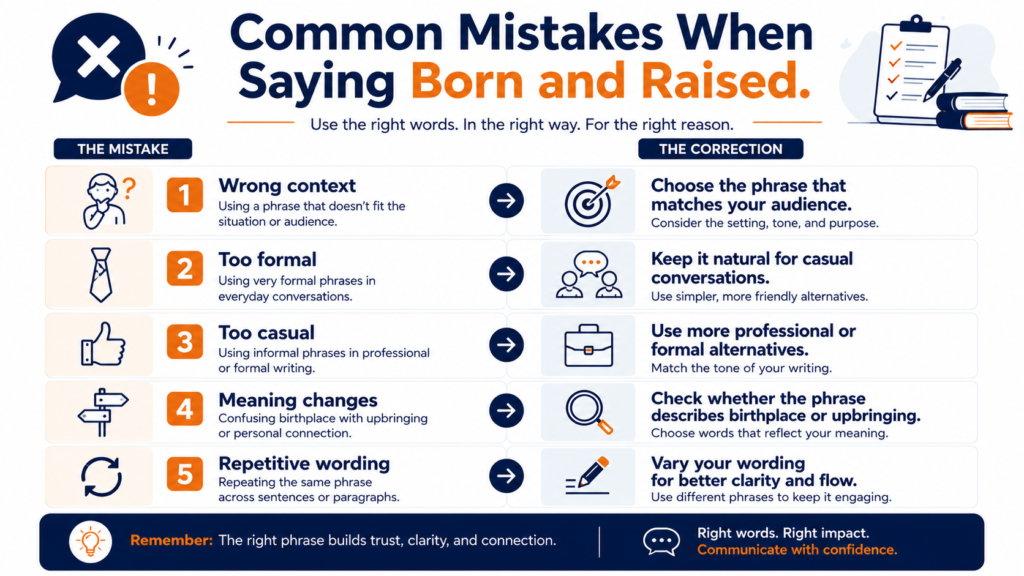
1. Using a casual phrase in professional writing
Phrases such as “comes from” may sound too conversational in certain professional biographies. For formal writing, “is a native of” or “was raised in” may be a better fit.
2. Assuming every alternative means exactly the same thing
Not every expression confirms that someone was born in the location. “Spent their childhood in”, for example, only describes where they lived during childhood.
3. Choosing overly formal language
Using “is a native of” in a casual conversation can sound stiff. If you’re introducing yourself to someone informally, “I grew up in…” usually sounds more natural.
4. Ignoring the emotional context
If you’re discussing family heritage or cultural identity, “has deep roots in” can communicate more meaning than a simple geographical phrase.
5. Repeating the same expression
Even accurate wording can become boring when repeated throughout an article or biography. Vary your language while making sure each alternative still matches the intended meaning.
Frequently Asked Questions
1. What is the most natural way to say “born and raised”?
The most natural alternative is usually “grew up in.” It sounds conversational and works in many situations, from introductions to personal profiles. However, “grew up in” does not always confirm that someone was born in the same place, so use “born and brought up in” when you need the exact original meaning.
2. What is another professional way to say “born and raised”?
For professional writing, “is a native of” and “was raised in” are strong choices. “Is a native of” highlights someone’s place of origin, while “was raised in” focuses on their upbringing. Both can work well in professional biographies, company profiles, speaker introductions, and resumes.
3. Is “grew up in” the same as “born and raised”?
Not exactly. “Born and raised” specifically suggests that someone was born in a place and grew up there. “Grew up in” only tells readers where the person spent their childhood. Someone could have been born in one city but grown up somewhere else.
4. Can I use “hails from” instead of “born and raised”?
Yes, but the meaning is slightly different. “Hails from” identifies someone’s hometown or place of origin without necessarily stating that they were born and raised there. It is especially common in journalism, sports articles, introductions, and entertainment profiles.
5. How do I say “born and raised” in a resume?
For a resume, you usually do not need to mention where you were born and raised unless it directly relates to the position. If it matters, a concise phrase such as “Raised in Dallas” or “A native of Dallas” can sound professional without taking up unnecessary space.
6. What is a warm way to say “born and raised”?
“Grew up in” is warm and natural, while “has deep roots in” creates a stronger emotional connection. Choose “has deep roots in” when you’re discussing family history, cultural identity, hometown pride, or a long-standing relationship with a community.
7. What is a formal synonym for “born and raised”?
“Is a native of” is one of the clearest formal alternatives. Depending on the sentence, “was raised in,” “was brought up in,” and “spent their early years in” can also provide a polished alternative while emphasizing different aspects of someone’s upbringing.
8. How can I avoid repeating “born and raised” in an article?
Replace it according to the meaning you need. Use “grew up in” for everyday contexts, “was raised in” for upbringing, “spent their childhood in” for childhood experiences, and “has deep roots in” for heritage. This creates variety without changing the intended message.
Conclusion
Finding another way to say “born and raised” is mostly about choosing language that fits your meaning and audience. For everyday American English, “grew up in” is usually the easiest and most natural option.
For professional or formal writing, “is a native of,” “was raised in,” or “was born and brought up in” may work better. If you want to highlight childhood experiences, choose “spent their childhood in.” For family heritage or a lasting connection to a community, “has deep roots in” adds a warmer touch.
The key is not to treat every alternative as an exact synonym. Consider whether you want to emphasize birthplace, childhood, hometown, upbringing, or heritage, then choose the phrase that communicates that idea clearly.