

Finding another way to say best wishes for the future can help your message sound more personal and appropriate. Although “best wishes for the future” is polite and positive, it can feel repetitive when used in farewell messages, emails, cards, or professional notes.
The best alternative depends on the situation. A coworker leaving a company may need a professional expression, while a friend starting a new chapter may appreciate something warmer and more personal.
What Does “Another Way to Say Best Wishes for the Future” Mean?

“Best wishes for the future” is a positive expression used when you want someone to have success, happiness, or good experiences in the years ahead. It is commonly used when someone is leaving a job, graduating, moving away, starting a new career, or entering a new stage of life.
People look for other ways to say it because they may want their message to sound less generic. A thoughtful alternative can also make a farewell, congratulations message, or professional email feel more natural.
For example, “I wish you continued success” focuses on achievement, while “wishing you a bright future” emphasizes hope and optimism.
Why Use Other Ways to Say “Best Wishes for the Future”?
Using a different phrase can make your writing more specific and meaningful. Instead of relying on one familiar expression, you can choose words that fit the person and occasion.
Other benefits include:
- Avoiding repetitive language in emails and cards.
- Making farewell messages feel more sincere.
- Choosing a tone that suits professional or personal situations.
- Showing encouragement during a major life change.
- Expressing success, happiness, or hope more clearly.
10 Best Other Ways to Say “Best Wishes for the Future”
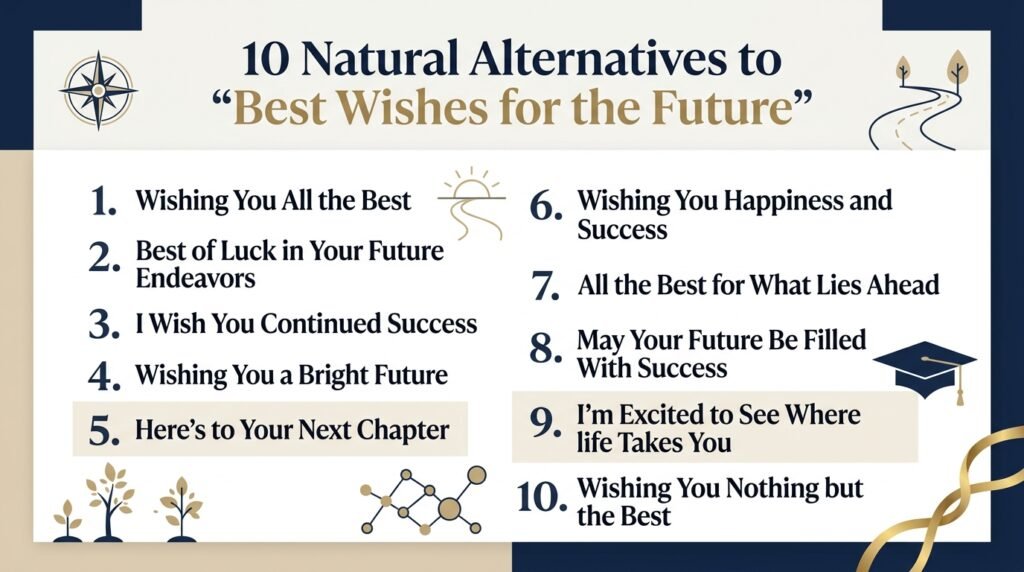
1. Wishing You All the Best
Meaning
“Wishing you all the best” is one of the most natural alternatives to “best wishes for the future.” It expresses genuine hope that someone experiences good things in the next stage of their life.
Best For
- Friendly
- Warm
- Polite
- Professional
Example 1
Wishing you all the best as you begin this exciting new chapter.
Example 2
It was wonderful working with you, and I’m wishing you all the best in what comes next.
Quick Tip
Use this phrase when you want a safe, flexible option that works in both personal and professional messages.
2. Best of Luck in Your Future Endeavors
Meaning
“Best of luck in your future endeavors” expresses encouragement for someone’s upcoming goals, projects, or career plans. It has a professional and slightly formal tone.
Best For
- Professional
- Formal
- Polite
Example 1
Best of luck in your future endeavors, and I hope your new role brings you great opportunities.
Example 2
Thank you for your contributions to the team, and best of luck in your future endeavors.
Quick Tip
This works especially well in farewell emails, workplace messages, and professional cards.
3. I Wish You Continued Success
Meaning
“I wish you continued success” focuses specifically on future achievements. It is especially appropriate when someone has already accomplished something and is moving toward a new goal.
Best For
- Professional
- Formal
- Polite
Example 1
Congratulations on your promotion, and I wish you continued success in your new position.
Example 2
Your dedication has been inspiring, and I wish you continued success in everything ahead.
Quick Tip
Choose this phrase when career growth, business, education, or achievement is the main focus.
4. Wishing You a Bright Future
Meaning
“Wishing you a bright future” conveys optimism and hope about what lies ahead. It feels more uplifting and personal than a standard professional farewell.
Best For
- Warm
- Friendly
- Polite
- Formal
Example 1
You have worked hard to reach this point, and I’m wishing you a bright future.
Example 2
Congratulations on your graduation, and wishing you a bright future filled with exciting opportunities.
Quick Tip
This is a strong choice for graduations, major life changes, and encouraging personal messages.
5. Here’s to Your Next Chapter
Meaning
“Here’s to your next chapter” compares a new stage of life to the next part of a book. It sounds optimistic and suggests that exciting experiences are ahead.
Best For
- Casual
- Friendly
- Warm
Example 1
You’ve made some great memories here—here’s to your next chapter!
Example 2
A new city and a new adventure await you, so here’s to your next chapter.
Quick Tip
Use this expression with friends, classmates, or coworkers when a relaxed and upbeat tone is appropriate.
6. Wishing You Happiness and Success
Meaning
“Wishing you happiness and success” combines two common hopes for someone’s future. It covers both personal well-being and professional or academic achievement.
Best For
- Warm
- Friendly
- Polite
- Formal
Example 1
Wishing you happiness and success as you start your new career.
Example 2
May your new journey bring you plenty of happiness and success.
Quick Tip
Choose this phrase when you want your message to recognize both someone’s personal and professional future.
7. All the Best for What Lies Ahead
Meaning
“All the best for what lies ahead” expresses positive feelings about the future without being overly formal. It suggests that new experiences and opportunities are coming.
Best For
- Friendly
- Warm
- Polite
- Professional
Example 1
Thank you for being such a great teammate, and all the best for what lies ahead.
Example 2
You’re ready for this new opportunity, and I’m sending all the best for what lies ahead.
Quick Tip
This is useful when you want a farewell message that feels natural without sounding overly sentimental.
8. May Your Future Be Filled With Success
Meaning
“May your future be filled with success” is a more formal and thoughtful expression. It directly communicates hope that the person achieves their goals.
Best For
- Formal
- Professional
- Warm
- Polite
Example 1
May your future be filled with success as you pursue your professional goals.
Example 2
After years of dedication, may your future be filled with success and rewarding opportunities.
Quick Tip
Use this wording for formal cards, speeches, graduation messages, or professional congratulations.
9. I’m Excited to See Where Life Takes You
Meaning
“I’m excited to see where life takes you” sounds personal, encouraging, and conversational. It shows that you care about the person’s journey rather than simply offering a standard farewell.
Best For
- Casual
- Friendly
- Warm
Example 1
You’ve always been willing to take on new challenges, and I’m excited to see where life takes you.
Example 2
Moving across the country is a big step, but I’m excited to see where life takes you next.
Quick Tip
Save this phrase for people you know well because its personal tone may feel too casual in formal correspondence.
10. Wishing You Nothing but the Best
Meaning
“Wishing you nothing but the best” is a warm expression of sincere goodwill. It suggests that you hope the person’s future brings positive experiences and opportunities.
Best For
- Friendly
- Warm
- Casual
- Polite
Example 1
We’ll miss having you around, and we’re wishing you nothing but the best.
Example 2
Thank you for all the wonderful memories, and wishing you nothing but the best in your new adventure.
Quick Tip
Use this phrase for heartfelt farewells when you want your message to sound genuine and friendly.
Comparison Table
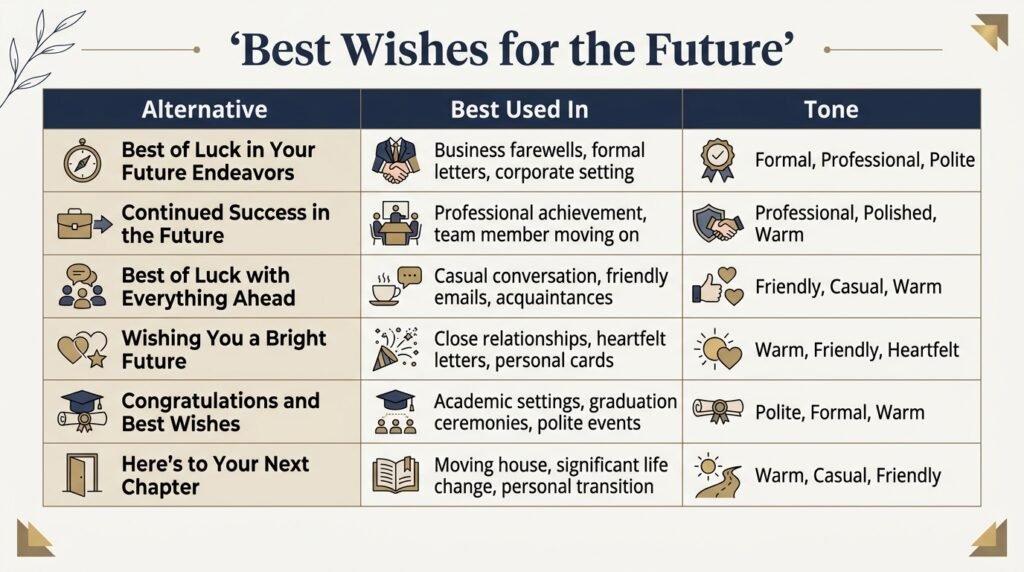
| Alternative | Best Used In | Tone |
| Wishing You All the Best | General farewells, emails | Warm, polite |
| Best of Luck in Your Future Endeavors | Workplace messages | Professional, formal |
| I Wish You Continued Success | Career and business | Professional |
| Wishing You a Bright Future | Graduations, life changes | Warm, optimistic |
| Here’s to Your Next Chapter | Friends and coworkers | Friendly, casual |
| Wishing You Happiness and Success | Personal and professional milestones | Warm, positive |
| All the Best for What Lies Ahead | Farewell messages | Friendly, polite |
| May Your Future Be Filled With Success | Formal messages and speeches | Formal, encouraging |
| I’m Excited to See Where Life Takes You | Close friends and personal messages | Casual, warm |
| Wishing You Nothing but the Best | Heartfelt farewells | Warm, friendly |
Common Mistakes
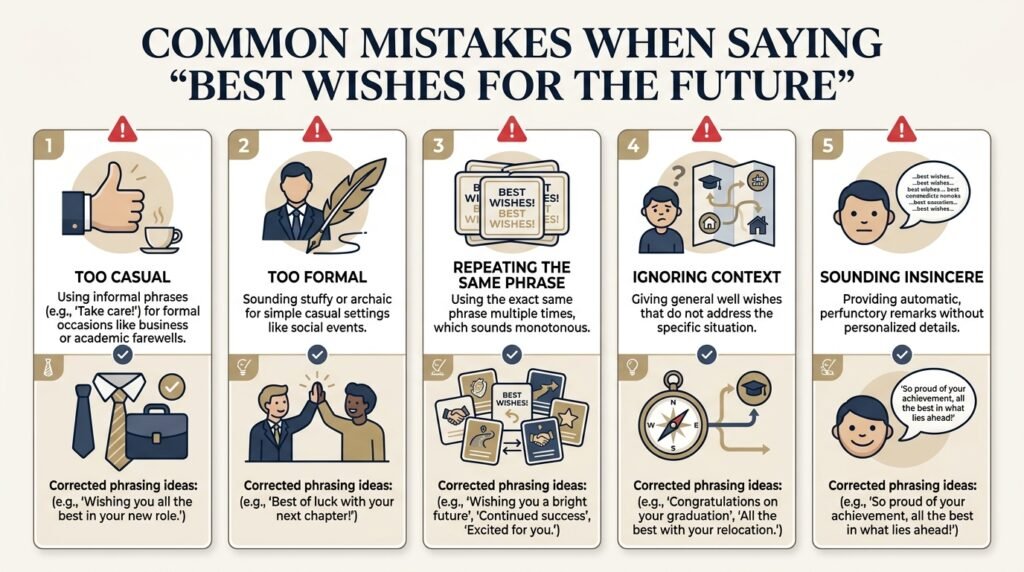
1. Using Casual Phrases in Professional Emails
Expressions such as “Here’s to your next chapter” can sound too relaxed in formal business communication. Choose a professional alternative when addressing a manager, client, or senior colleague.
2. Choosing Overly Formal Language
A phrase can sound unnatural when it is more formal than the situation requires. For example, a close friend may prefer “I’m excited to see where life takes you” over a formal-sounding farewell.
3. Repeating the Same Phrase
Using “best wishes” several times in the same message can make your writing feel generic. Replace repeated expressions with a more specific phrase related to success, happiness, or future plans.
4. Forgetting the Context
Not every alternative works for every occasion. A graduation message, resignation email, retirement card, and personal farewell may require different wording.
5. Sounding Insincere
Even a polite phrase can feel empty if it does not match the relationship. Add a short personal sentence when appropriate to make your good wishes feel more genuine.
Frequently Asked Questions
What is another way to say “best wishes for the future”?
Common alternatives include “wishing you all the best,” “I wish you continued success,” “wishing you a bright future,” and “all the best for what lies ahead.” The best option depends on the occasion and tone. For most situations, “wishing you all the best” is the simplest and most versatile choice.
What is a professional way to say “best wishes for the future”?
For a professional setting, try “I wish you continued success” or “best of luck in your future endeavors.” Both phrases sound respectful and appropriate for coworkers, clients, managers, and professional contacts. “I wish you continued success” is particularly useful when the person’s career or business achievements are the focus.
How do you wish someone well for the future?
You can wish someone well by mentioning what you hope they experience next. For example, say “Wishing you happiness and success” or “Wishing you a bright future.” Adding a personal sentence about their accomplishments or your time together can make the message more meaningful.
What is a warm way to say “best wishes”?
“Wishing you nothing but the best” is a warm and sincere alternative. You can also say “wishing you all the best” or “I’m excited to see where life takes you.” These phrases work particularly well in personal messages, farewell cards, and conversations with friends or close colleagues.
What can I say instead of “best wishes” in a farewell message?
For a farewell message, you can say “all the best for what lies ahead,” “wishing you all the best,” or “here’s to your next chapter.” Your choice should reflect the relationship. A professional farewell may call for a more polished expression, while a close friend may appreciate something more personal.
Is “best of luck in your future endeavors” formal?
Yes. “Best of luck in your future endeavors” has a formal and professional tone. It is commonly suitable for workplace farewells, professional correspondence, and congratulatory messages. However, it can sound somewhat traditional, so a simpler phrase such as “wishing you all the best” may feel more natural in casual communication.
Can I use “wishing you a bright future” for a graduation?
Absolutely. “Wishing you a bright future” is especially appropriate for graduation because it expresses optimism about the opportunities ahead. You can make it more personal by mentioning the graduate’s hard work or next step, such as starting college, beginning a career, or pursuing a personal goal.
What is the best alternative to “best wishes for the future”?
“Wishing you all the best” is the best general alternative because it is natural, flexible, and suitable for many situations. For professional communication, “I wish you continued success” may be stronger. For a heartfelt personal message, “wishing you nothing but the best” can sound more sincere.
Conclusion
Knowing another way to say best wishes for the future gives you more flexibility when writing farewell messages, professional emails, graduation cards, and personal notes. The best expression depends on what you want your message to communicate.
Knowing another way to say best wishes for the future gives you more flexibility when writing farewell messages, professional emails, graduation cards, and personal notes. The best expression depends on what you want your message to communicate. Best wishes is a common expression used to convey good hopes for someone’s future.

Daniel Cho writes about professional communication, drawing on years spent training teams on clear, confident workplace writing — from emails to performance reviews.