
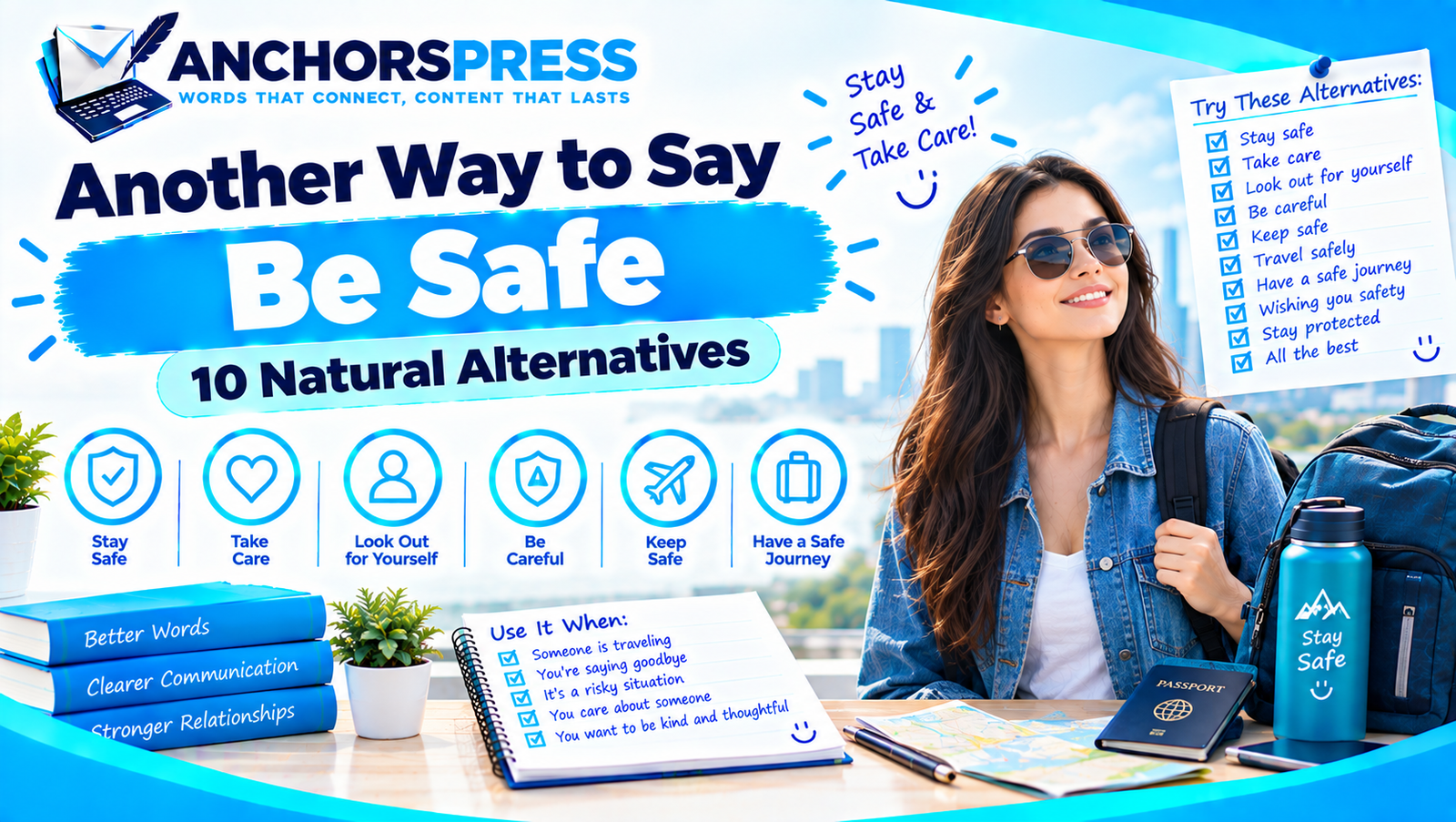
What Does “Another Way to Say Be Safe” Mean?
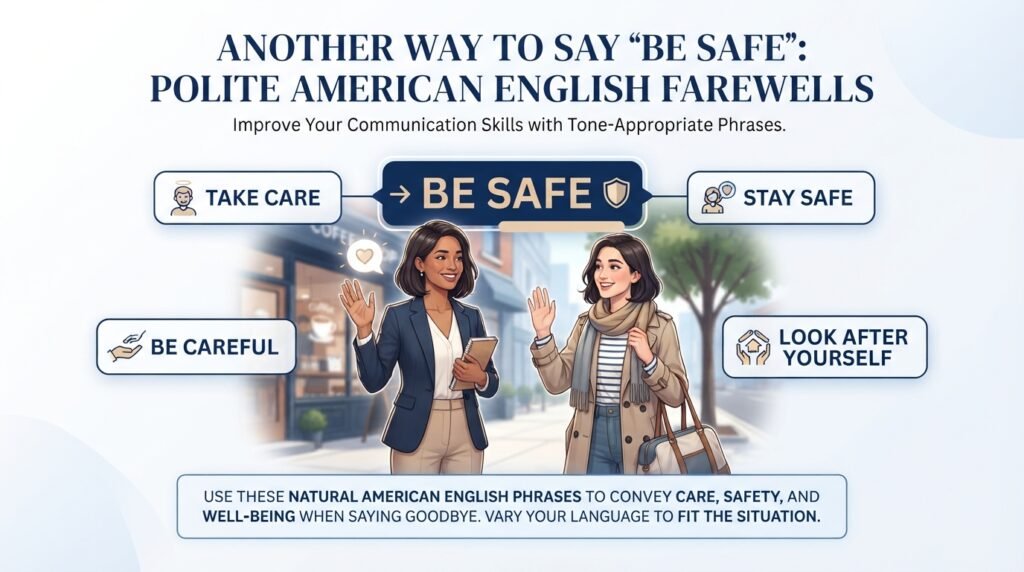
“Be safe” is a common expression used to show concern for someone’s well-being. People often say it when someone is leaving, traveling, working in a risky environment, or heading into a situation where caution matters.
For example, you might tell a friend, “Be safe on your drive home,” or say it to a coworker who is working late. The phrase is short, caring, and appropriate in many everyday situations.
Why Use Other Ways to Say “Be Safe”?
Although “be safe” is perfectly natural, using different expressions can help you communicate more precisely.
You may want another phrase to:
- Sound warmer or more personal.
- Match a professional or casual situation.
- Avoid repeating the same expression.
- Show stronger concern about a specific risk.
- Make a goodbye sound more natural.
- Express care without sounding overly serious.
10 Best Other Ways to Say “Be Safe”
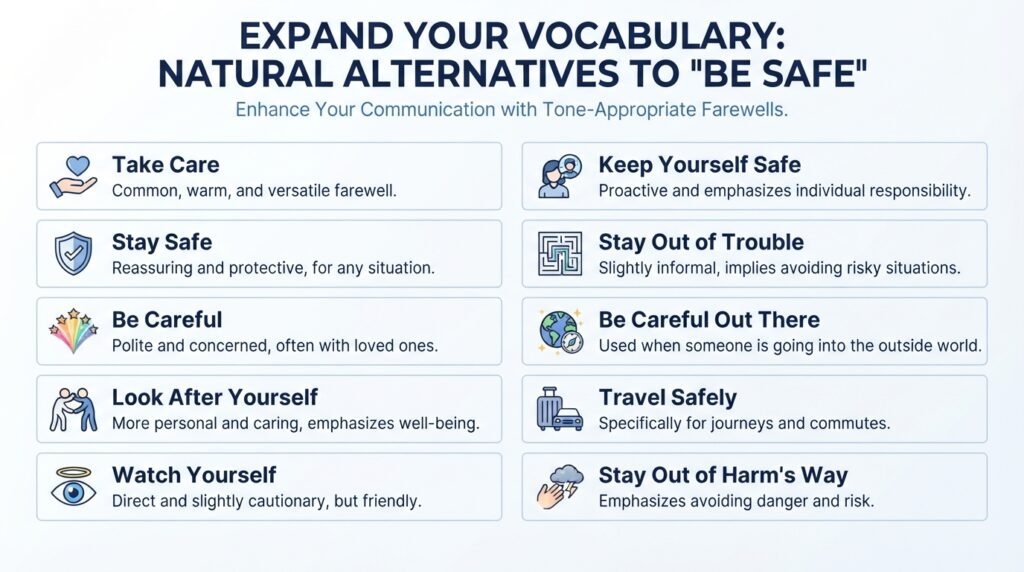
1. Take Care
Meaning
“Take care” is one of the most natural and versatile alternatives to “be safe.” It expresses concern for someone’s well-being without making the conversation sound overly serious.
Best For
- Casual
- Friendly
- Warm
- Polite
Example 1
“Thanks for stopping by. Take care on your way home.”
Example 2
“I’ll see you tomorrow. Take care!”
Quick Tip
Use “take care” as a friendly goodbye when you want to sound thoughtful but relaxed.
2. Stay Safe
Meaning
“Stay safe” directly communicates the idea of protecting yourself from danger. It is especially useful when someone is traveling, working in difficult conditions, or dealing with an uncertain situation.
Best For
- Casual
- Friendly
- Warm
- Polite
Example 1
“Have a great trip, and stay safe while you’re driving.”
Example 2
“The weather looks rough tonight, so stay safe out there.”
Quick Tip
Choose “stay safe” when the person may encounter a general risk or difficult conditions.
3. Be Careful
Meaning
“Be careful” is useful when you want someone to pay attention to a particular danger. Unlike “be safe,” it often suggests that there is a specific reason for caution.
Best For
- Casual
- Friendly
- Polite
Example 1
“Be careful on those wet stairs.”
Example 2
“Be careful with that box; it’s heavier than it looks.”
Quick Tip
Use “be careful” when you can identify a specific situation that requires caution.
4. Look After Yourself
Meaning
“Look after yourself” is a warm expression that encourages someone to care for their own well-being. It can sound especially thoughtful when saying goodbye to a friend, family member, or someone you care about.
Best For
- Friendly
- Warm
- Polite
Example 1
“It was great catching up with you. Look after yourself.”
Example 2
“You’ve been working really hard lately, so look after yourself.”
Quick Tip
Use this phrase when you want to show personal care rather than simply warn someone about danger.
5. Watch Yourself
Meaning
“Watch yourself” can mean “be careful” or “pay attention.” It is informal and can sound protective, especially when someone is entering a potentially risky situation.
Best For
- Casual
- Friendly
Example 1
“Watch yourself when you’re walking around that construction area.”
Example 2
“There’s a lot of traffic outside, so watch yourself.”
Quick Tip
Keep this phrase for casual conversations because it can sound too informal in professional settings.
6. Keep Yourself Safe
Meaning
“Keep yourself safe” puts more emphasis on personal responsibility. It tells someone to take reasonable steps to protect themselves from harm.
Best For
- Friendly
- Warm
- Polite
- Formal
Example 1
“Enjoy the hiking trip, and keep yourself safe on the trail.”
Example 2
“Whatever you decide, keep yourself safe and let us know when you arrive.”
Quick Tip
This works well when you want your concern to sound sincere and direct.
7. Stay Out of Trouble
Meaning
“Stay out of trouble” is a playful way to tell someone to make good choices and avoid risky situations. Depending on the relationship, it can sound humorous rather than serious.
Best For
- Casual
- Friendly
Example 1
“Have fun at the concert, and stay out of trouble!”
Example 2
“Enjoy your weekend, and try to stay out of trouble.”
Quick Tip
Use it with friends or people you know well; it may sound too playful in serious situations.
8. Be Careful Out There
Meaning
“Be careful out there” expresses concern about conditions outside someone’s current environment. It is common when someone is heading into traffic, bad weather, a busy area, or another potentially challenging situation.
Best For
- Casual
- Friendly
- Warm
- Polite
Example 1
“There’s a lot of snow on the roads, so be careful out there.”
Example 2
“It’s getting dark, so be careful out there tonight.”
Quick Tip
This phrase is especially natural when the person is about to leave for an uncertain or potentially hazardous environment.
9. Travel Safely
Meaning
“Travel safely” is a clear and considerate expression for someone who is going on a trip. It focuses specifically on having a safe journey rather than general well-being.
Best For
- Professional
- Formal
- Polite
- Warm
Example 1
“Thank you for visiting our office. Travel safely and have a wonderful evening.”
Example 2
“Have a great vacation, and travel safely.”
Quick Tip
Choose “travel safely” when the person’s safety concern is directly connected to their journey.
10. Stay Out of Harm’s Way
Meaning
“Stay out of harm’s way” is a stronger expression that tells someone to avoid dangerous situations. It sounds more serious than “take care” or “stay safe.”
Best For
- Formal
- Warm
- Polite
Example 1
“Please stay out of harm’s way until the storm passes.”
Example 2
“If the situation becomes unstable, stay out of harm’s way.”
Quick Tip
Save this phrase for situations involving a meaningful or serious risk.
Comparison Table
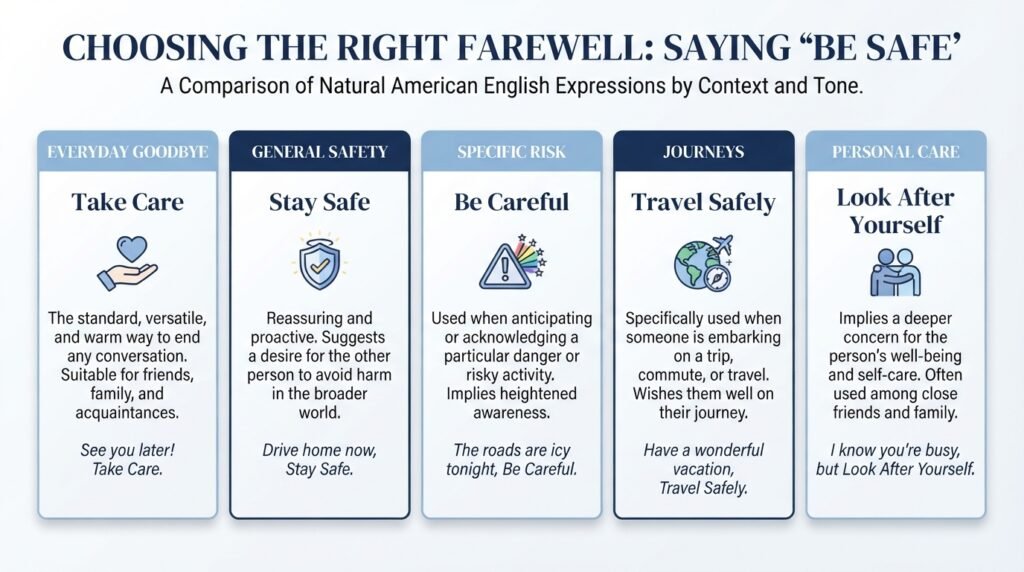
| Alternative | Best Used In | Tone |
| Take care | Everyday goodbyes | Warm, friendly |
| Stay safe | General safety concerns | Caring, direct |
| Be careful | Specific risks | Cautious, direct |
| Look after yourself | Personal conversations | Warm, caring |
| Watch yourself | Informal situations | Casual, protective |
| Keep yourself safe | Situations involving personal responsibility | Caring, direct |
| Stay out of trouble | Friends and casual goodbyes | Playful, casual |
| Be careful out there | Outdoor or uncertain conditions | Caring, cautious |
| Travel safely | Trips and journeys | Polite, professional |
| Stay out of harm’s way | Serious risks | Serious, protective |
Common Mistakes
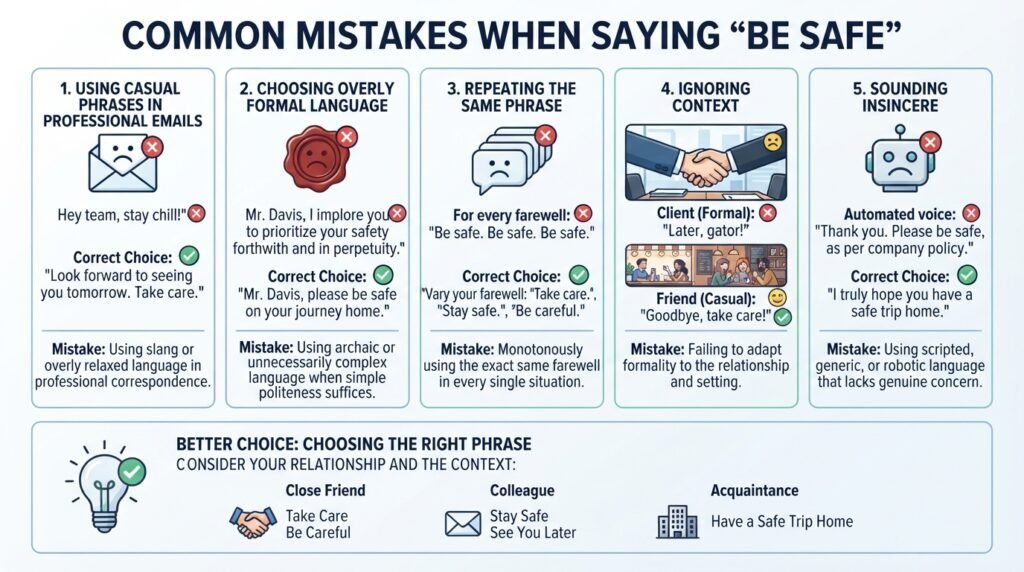
1. Using Casual Phrases in Professional Emails
Expressions such as “watch yourself” or “stay out of trouble” can sound too informal at work. Choose “travel safely” or “take care” when communicating professionally.
2. Choosing an Overly Serious Expression
“Stay out of harm’s way” can sound dramatic when someone is simply driving home after work. For ordinary situations, “take care” or “stay safe” usually sounds more natural.
3. Repeating the Same Phrase
Using “be safe” every time you say goodbye can make your communication feel repetitive. Rotate between natural alternatives depending on the context.
4. Forgetting the Context
“Travel safely” makes sense for someone going on a trip but is unnecessary when a coworker is simply walking to another room. Match the phrase to the situation.
5. Sounding Insincere
A safety phrase should fit your relationship and the seriousness of the situation. Using an overly dramatic expression casually can make your concern sound forced rather than genuine.
Frequently Asked Questions
What is a better way to say “be safe”?
“Take care” is one of the best alternatives because it sounds natural, warm, and appropriate in many situations. “Stay safe” is another excellent choice when you want to focus directly on someone’s safety. For a specific danger, “be careful” may communicate your concern more clearly.
What is a sweet way to say “be safe”?
“Take care” and “look after yourself” are sweet, natural choices. If you are speaking to someone close to you, “Please take care of yourself” can sound even more caring. The best phrase depends on how personal you want the message to feel.
How do you say “be safe” professionally?
In professional communication, you can say “travel safely,” “take care,” or “please take care.” If someone is traveling for work, “I hope you have a safe trip” is also appropriate. Avoid overly casual expressions such as “watch yourself” in formal emails or workplace messages.
What can I say instead of “stay safe”?
You can say “take care,” “be careful,” “look after yourself,” or “keep yourself safe.” If the person is traveling, “travel safely” is more specific. For a serious situation, “stay out of harm’s way” may be more appropriate.
Is “take care” the same as “be safe”?
They are similar, but they are not exactly the same. “Be safe” directly focuses on avoiding danger, while “take care” has a broader meaning that can include general well-being. Both are commonly used as friendly expressions when saying goodbye.
What is a casual way to say “be safe”?
“Take care,” “stay safe,” and “be careful” are all common casual alternatives. With close friends, you can also say “stay out of trouble” as a playful goodbye. The right choice depends on whether you want to sound caring, cautious, or humorous.
How do you say “be safe” in a caring way?
“Look after yourself” is a particularly caring alternative. You could also say “Please take care of yourself” when you want to show stronger personal concern. These expressions work well when talking to friends, family members, or someone going through a difficult situation.
What should I say to someone who is traveling?
“Travel safely,” “have a safe trip,” and “take care” are natural choices. You can make the message warmer by saying, “Have a wonderful trip, and take care.” For a professional traveler, “I hope you have a safe and successful trip” is also appropriate.
Conclusion
Knowing another way to say “be safe” gives you more flexibility when showing concern for someone’s well-being. The best expression depends on the situation, your relationship with the person, and how serious the safety concern is.
Knowing another way to say “be safe” gives you more flexibility when showing concern for someone’s well-being. Understanding the meaning of “safe” can also help you choose the right expression for different situations.

Sarah Whitfield is the founder and lead editor of Anchors Press. With a background in copyediting and content strategy, she reviews every guide for accuracy, tone, and everyday usefulness before it’s published.