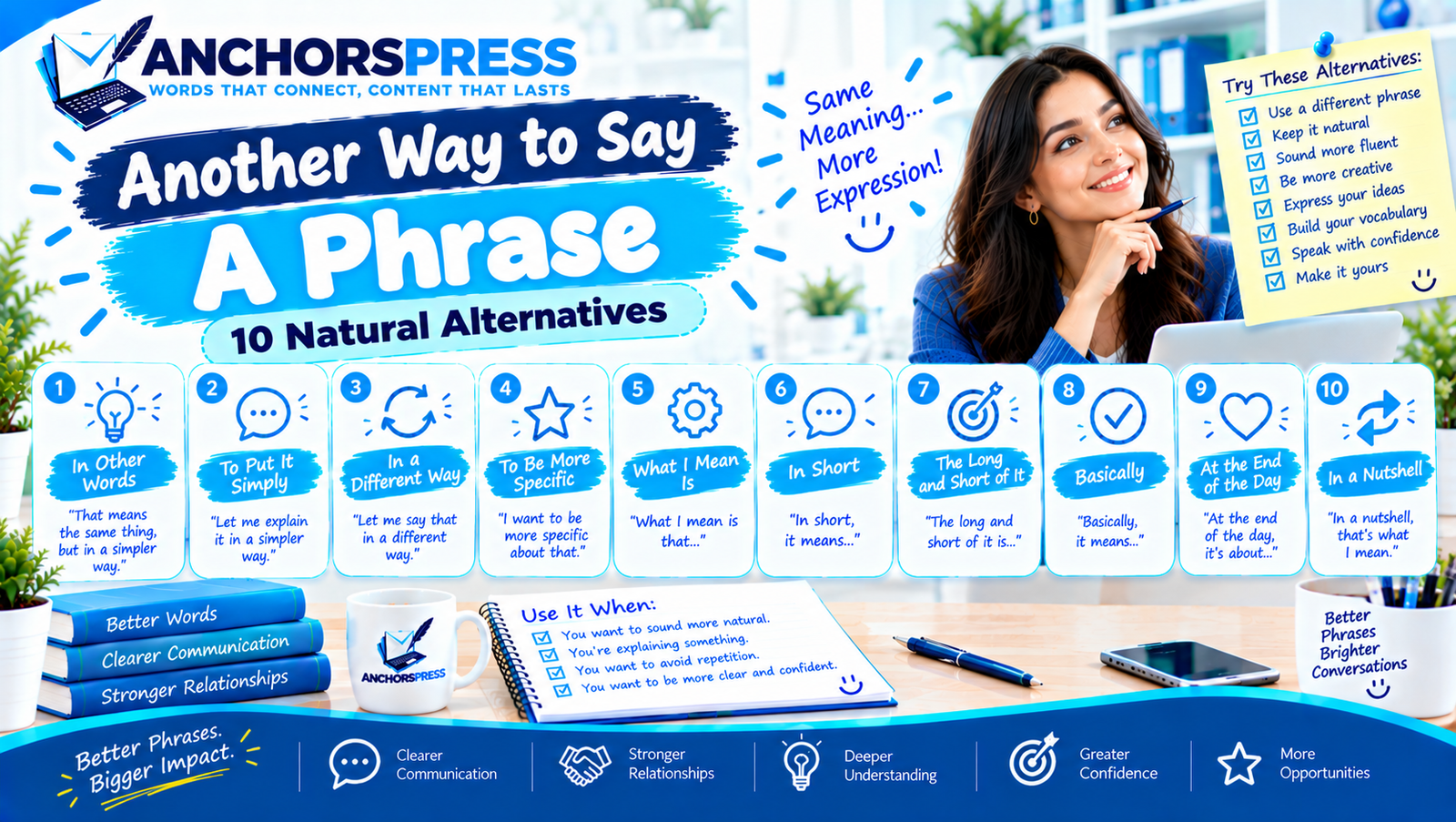
Finding another way to say a phrase can make your writing and conversations sound clearer, more natural, and less repetitive. Whether you are writing an email, speaking with friends, preparing a report, or improving your vocabulary, choosing the right wording can make a real difference.
The best replacement is not always a direct synonym. Sometimes, rephrasing the entire expression creates a more natural result. Below are 10 useful ways to describe saying a phrase differently.
What Does “Another Way to Say a Phrase” Mean?
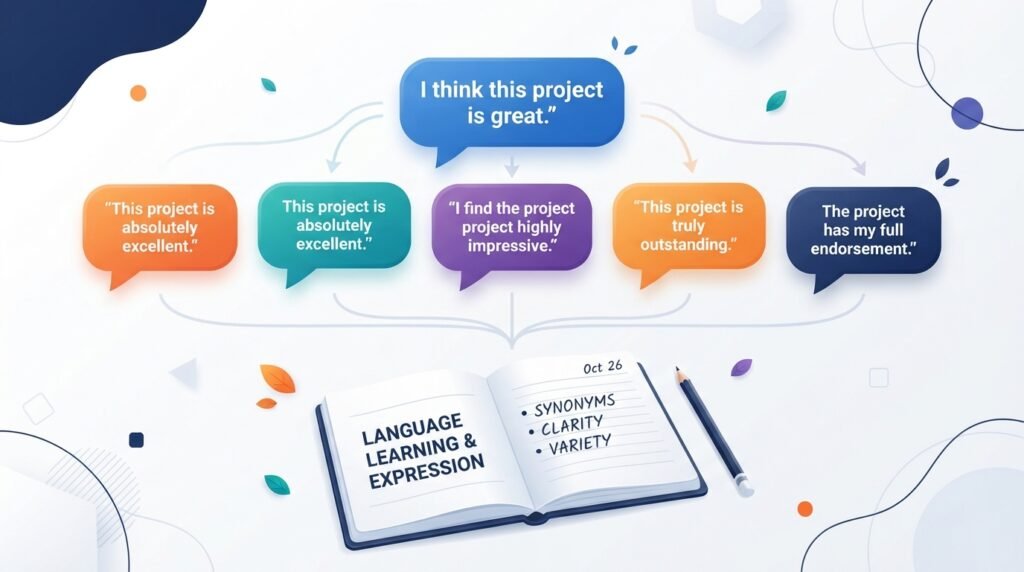
“Another way to say a phrase” means expressing the same or a similar idea using different words. You might replace one word with a synonym, rewrite the entire sentence, or choose an expression with a different tone.
People commonly look for alternative wording when they want to avoid repetition, sound more natural, or make their communication fit a specific situation. This is especially common in writing, emails, conversations, presentations, and schoolwork.
Why Use Other Ways to Say “Another Way to Say a Phrase”?

Using different wording can improve both written and spoken communication. It gives you more flexibility and helps you choose language that fits the moment.
Benefits include:
- Avoiding repetitive language
- Making writing sound more natural
- Matching formal or casual situations
- Improving professional communication
- Making your meaning clearer
- Adjusting your tone for different audiences
10 Best Other Ways to Say “Another Way to Say a Phrase”

1. Rephrase It
Meaning
“Rephrase it” means saying the same idea in different words. This is one of the most direct and useful alternatives when you want to change the wording without changing the meaning.
Best For
Professional, Casual, Friendly
Example 1
Could you rephrase that sentence so it sounds easier to understand?
Example 2
I like the idea, but I would rephrase it before sending the email.
Quick Tip
Use “rephrase it” when the original wording needs to be changed but the meaning should stay the same.
2. Put It Another Way
Meaning
“Put it another way” is a natural expression used when explaining something differently. It often introduces a simpler or clearer version of what was just said.
Best For
Professional, Casual, Friendly
Example 1
Put another way, the project will take longer than we first expected.
Example 2
Let me put it another way so everyone understands the main point.
Quick Tip
This phrase works especially well when you are clarifying an idea for someone.
3. Say It Differently
Meaning
“Say it differently” is a simple and direct way to ask for new wording. It is useful when the original expression does not sound quite right.
Best For
Casual, Friendly, Professional
Example 1
Can you say it differently without making the sentence too long?
Example 2
She explained the idea again and said it differently.
Quick Tip
Use this option when you want plain, everyday language.
4. Use Different Words
Meaning
“Use different words” means replacing the original language with alternative wording. The new version may have the same meaning, but it can sound clearer, more natural, or more appropriate.
Best For
Casual, Friendly, Professional
Example 1
Try to use different words so the paragraph does not sound repetitive.
Example 2
He used different words to explain the same message to the new team.
Quick Tip
This phrase is helpful when talking about rewriting, editing, or improving vocabulary.
5. Express It Another Way
Meaning
“Express it another way” sounds slightly more polished and focuses on communicating an idea differently. It works well when the message or feeling matters more than the exact words.
Best For
Professional, Formal, Polite
Example 1
You may want to express it another way before presenting it to the client.
Example 2
She expressed the same concern another way without sounding negative.
Quick Tip
Choose this phrase when discussing ideas, opinions, emotions, or messages.
6. Reword It
Meaning
“Reword it” means changing the wording of a phrase or sentence. It is concise and commonly used in editing, writing, and professional communication.
Best For
Professional, Casual, Formal
Example 1
Please reword the opening paragraph to make it more direct.
Example 2
I had to reword my response because the first version sounded too formal.
Quick Tip
“Reword it” is one of the best choices when discussing specific written text.
7. Restate It
Meaning
“Restate it” means saying something again, usually in a clearer or different form. The goal is often to emphasize or explain the original point.
Best For
Professional, Formal, Polite
Example 1
The teacher restated the question before asking the students to answer.
Example 2
Could you restate your main point in simpler language?
Quick Tip
Use “restate” when repeating an idea for clarity or emphasis.
8. Paraphrase It
Meaning
“Paraphrase it” means expressing the meaning of something in your own words. Unlike a simple synonym, paraphrasing often changes the structure and wording of the original phrase.
Best For
Formal, Professional
Example 1
The student was asked to paraphrase the passage rather than copy it directly.
Example 2
Can you paraphrase that explanation in a way that is easier for beginners to follow?
Quick Tip
Use “paraphrase” when the overall wording changes but the original meaning remains.
9. Say It in Other Words
Meaning
“Say it in other words” is a friendly and natural expression for explaining something differently. It often helps make a complicated idea easier to understand.
Best For
Casual, Friendly, Warm
Example 1
In other words, we need to finish the work before Friday.
Example 2
Can you say it in other words? I am not sure I understand what you mean.
Quick Tip
This is an excellent choice for everyday conversations and simple explanations.
10. Find an Alternative Expression
Meaning
“Find an alternative expression” means choosing a different phrase that communicates a similar meaning. It is more formal than many of the other options on this list.
Best For
Professional, Formal
Example 1
We should find an alternative expression that sounds more appropriate for the report.
Example 2
The editor suggested finding an alternative expression for the repeated phrase.
Quick Tip
Use this option when discussing vocabulary, writing, or language choices in a formal setting.
Comparison Table

| Alternative | Best Used In | Tone |
| Rephrase it | Writing and conversation | Neutral |
| Put it another way | Explanations and clarification | Friendly |
| Say it differently | Everyday communication | Casual |
| Use different words | Writing and editing | Neutral |
| Express it another way | Professional communication | Polished |
| Reword it | Editing and rewriting | Direct |
| Restate it | Formal explanations | Professional |
| Paraphrase it | Academic and professional writing | Formal |
| Say it in other words | Conversations and teaching | Friendly |
| Find an alternative expression | Formal writing | Professional |
Common Mistakes
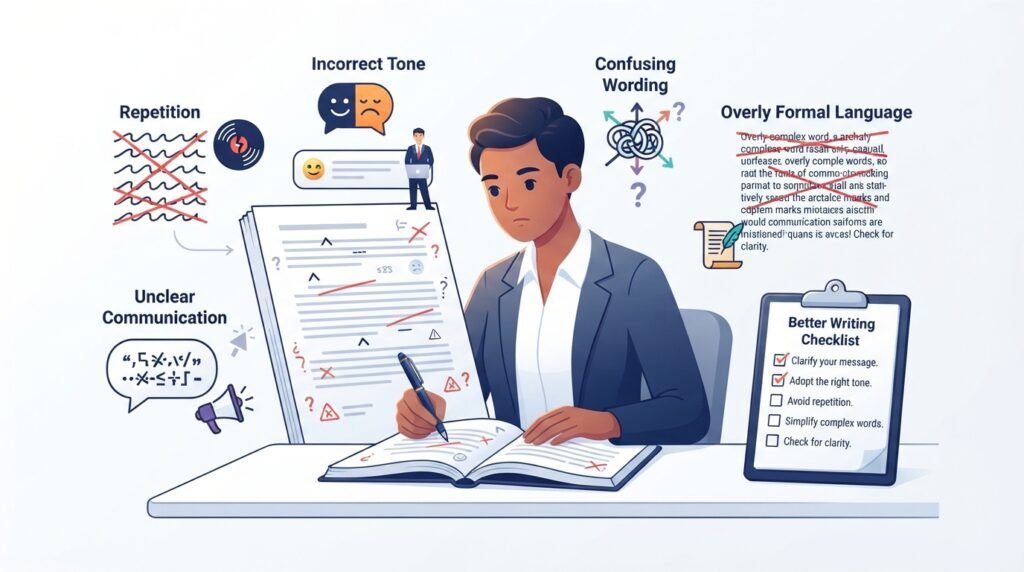
1. Changing the Original Meaning
A replacement phrase should communicate the same basic idea. Choosing a word that sounds similar but changes the meaning can confuse your audience.
2. Using Casual Language in Professional Writing
Some alternatives sound perfect in conversation but may feel too relaxed in a business email. Consider your audience before choosing your wording.
3. Choosing Language That Is Too Formal
Overly formal wording can make a simple message sound unnatural. Clear language is often more effective than complicated vocabulary.
4. Repeating the Same Alternative
Replacing one repeated phrase with another repeated phrase does not solve the problem. Vary your language naturally.
5. Forgetting the Context
The best wording depends on the situation. A phrase that works in an academic paper may not sound right in a text message.
Frequently Asked Questions
What is another way to say a phrase?
Another way to say a phrase is to rephrase, reword, paraphrase, or express the same idea differently. The best option depends on whether you are changing a sentence for clarity, using a synonym, or explaining something in a new way.
What is the best way to say something differently?
“Put it another way” and “say it in other words” are natural choices for everyday communication. For writing, “rephrase it” or “reword it” may work better because they clearly describe changing the original wording.
Is rephrasing the same as paraphrasing?
They are similar, but paraphrasing usually involves rewriting a larger piece of text in your own words. Rephrasing can involve changing a short phrase, sentence, or expression while keeping the original idea intact.
How can I avoid repeating the same phrase?
Use synonyms when they fit, but do not force them into the sentence. You can also change the sentence structure, combine ideas, or explain the point from a slightly different angle.
What is a professional way to say “say it differently”?
“Rephrase it,” “reword it,” and “express it another way” are strong professional alternatives. They sound clear and natural in business emails, reports, meetings, and other workplace communication.
Can I use synonyms to change a phrase?
Yes, but replacing individual words with synonyms may not always create a natural sentence. Sometimes, rewriting the entire phrase is a better way to keep the meaning while improving the flow.
What does “put it another way” mean?
“Put it another way” means explaining or expressing the same idea differently. People often use it before giving a clearer, simpler, or more direct explanation of something they have already said.
How do I choose the right alternative phrase?
Start by considering your audience and purpose. A professional email may require “reword” or “rephrase,” while a casual conversation may sound better with “say it differently” or “put it another way.”
Conclusion
Finding another way to say a phrase can make your communication clearer, more natural, and better suited to the situation. If you are editing written content, rephrase it and reword it are strong choices. For everyday conversations, put it another way or say it in other words can sound more relaxed and friendly.
When in doubt, focus on meaning, context, and natural language, and learn more about paraphrasing effectively.

Daniel Cho writes about professional communication, drawing on years spent training teams on clear, confident workplace writing — from emails to performance reviews.