

When you want to encourage someone, “you can do it” is simple, positive, and widely understood. However, using the same phrase repeatedly can make your encouragement sound predictable.
Fortunately, American English offers many natural alternatives. You can choose a phrase that sounds more personal, confident, professional, or energetic depending on the situation.
What Does “Another Way to Say You Can Do It” Mean?

The phrase “another way to say you can do it” refers to different expressions that communicate confidence in someone’s ability to succeed.
People commonly say “you can do it” when encouraging someone before an exam, interview, presentation, competition, difficult task, or personal challenge. It tells the listener that you believe they have the ability to succeed.
For example, a friend might say, “You’ve prepared for this interview. You can do it!” A manager could use a more professional version, such as, “I’m confident you can handle this.”
Why Use Other Ways to Say “You Can Do It”?
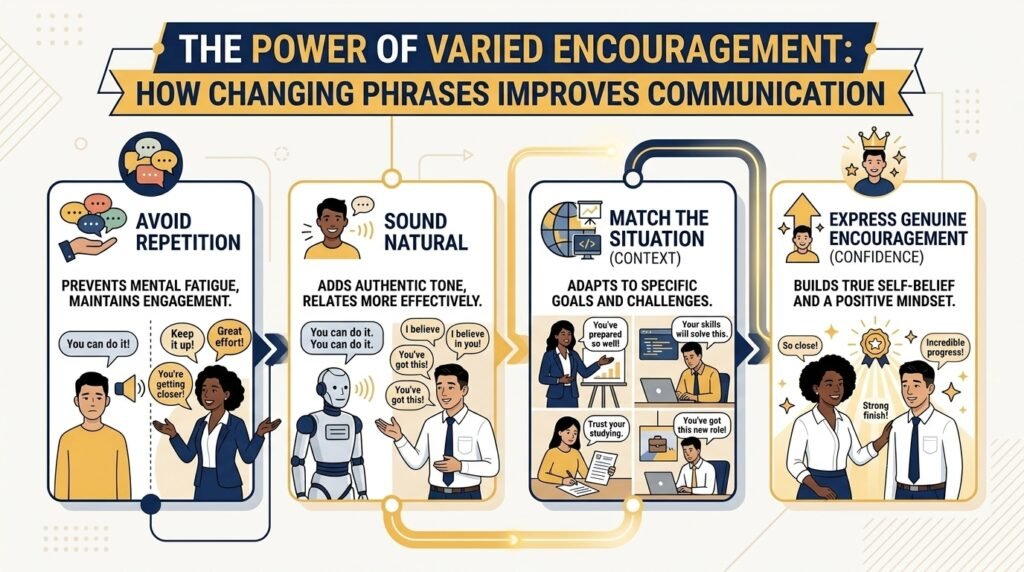
Using different expressions can make your encouragement feel more natural and appropriate.
Other phrases can help you:
- Avoid repeating the same expression.
- Sound more personal and sincere.
- Match formal and informal situations.
- Give someone confidence before a challenge.
- Express support without sounding repetitive.
- Add energy, warmth, or reassurance to your message.
The right alternative depends on who you are speaking to and what they are facing.
10 Best Other Ways to Say “You Can Do It”

1. You’ve Got This
Meaning
“You’ve got this” means you believe someone has the ability, preparation, or confidence needed to succeed. It is one of the most common modern ways to encourage someone in everyday American English.
Best For
- Casual
- Friendly
- Warm
Example 1
You’ve practiced your presentation all week—you’ve got this!
Example 2
Take a deep breath before the interview. You’ve got this.
Quick Tip
Use this phrase with friends, coworkers, classmates, or family members when you want to sound upbeat and supportive.
2. I Believe in You
Meaning
“I believe in you” communicates strong personal confidence in someone’s abilities. It often feels more emotional and sincere than a simple statement of encouragement.
Best For
- Friendly
- Warm
- Casual
Example 1
This project is challenging, but I believe in you.
Example 2
No matter what happens tomorrow, remember that I believe in you.
Quick Tip
Choose this phrase when you want your encouragement to feel personal rather than simply motivational.
3. You Can Handle It
Meaning
“You can handle it” reassures someone that they are capable of dealing with a difficult responsibility or situation. It emphasizes competence and resilience.
Best For
- Professional
- Friendly
- Confident
Example 1
The client may ask some tough questions, but you can handle it.
Example 2
It looks like a lot of work, but you can handle it one step at a time.
Quick Tip
This works especially well when someone is worried about managing pressure, responsibility, or a difficult task.
4. I Know You Can
Meaning
“I know you can” expresses confidence in another person’s ability to succeed. Because it sounds direct and personal, it can provide reassurance when someone doubts themselves.
Best For
- Friendly
- Warm
- Casual
Example 1
Keep working on that final chapter. I know you can finish it.
Example 2
You’ve come this far, and I know you can get through the last part.
Quick Tip
Use it after someone expresses doubt or frustration to directly reinforce your confidence in them.
5. Go for It
Meaning
“Go for it” encourages someone to take action or pursue an opportunity. Unlike some alternatives, it focuses more on taking the chance than guaranteeing success.
Best For
- Casual
- Friendly
- Energetic
Example 1
If you really want to apply for the position, go for it!
Example 2
You’ve been thinking about starting that business for months. Go for it.
Quick Tip
Use “go for it” when someone is deciding whether to take a risk, make a choice, or pursue an opportunity.
6. You’re Capable of This
Meaning
“You’re capable of this” tells someone that they have the skills or ability required for a particular task. It sounds confident without being overly casual.
Best For
- Professional
- Formal
- Encouraging
Example 1
You’ve handled similar projects before, so you’re capable of this.
Example 2
The role will challenge you, but you’re capable of meeting its demands.
Quick Tip
This is a strong choice for professional encouragement because it focuses on ability rather than emotion alone.
7. I’m Confident You Can
Meaning
“I’m confident you can” communicates trust in someone’s ability while maintaining a polished, professional tone. It works particularly well in workplace conversations.
Best For
- Professional
- Formal
- Polite
Example 1
I’m confident you can lead the meeting successfully.
Example 2
You have the experience needed, and I’m confident you can complete the assignment.
Quick Tip
Use this phrase with employees, colleagues, students, or clients when you want to sound supportive and professional.
8. Keep Going
Meaning
“Keep going” encourages someone to continue instead of giving up. It does not directly promise success, but it gives the person motivation to stay focused.
Best For
- Casual
- Friendly
- Warm
Example 1
You’re almost finished with the race—keep going!
Example 2
The first draft is already much better. Keep going and finish your revisions.
Quick Tip
Choose “keep going” when someone is already making progress but needs motivation to continue.
9. You’re Up to the Challenge
Meaning
“You’re up to the challenge” means someone has the skills, determination, or confidence needed to deal with a difficult situation. It has a confident and motivating tone.
Best For
- Professional
- Formal
- Friendly
Example 1
This new position will require leadership, but you’re up to the challenge.
Example 2
The competition will be tough, but I think you’re up to the challenge.
Quick Tip
This phrase is especially useful when the person faces something demanding and you want to recognize their abilities.
10. I’m Rooting for You
Meaning
“I’m rooting for you” means you are hoping someone succeeds and are emotionally supporting them. It is friendly, warm, and common in American English.
Best For
- Casual
- Friendly
- Warm
Example 1
Good luck at your audition tomorrow. I’m rooting for you!
Example 2
Whatever happens during the competition, know that I’m rooting for you.
Quick Tip
Use this expression when you want to show personal support, especially before an important event or goal.
Comparison Table
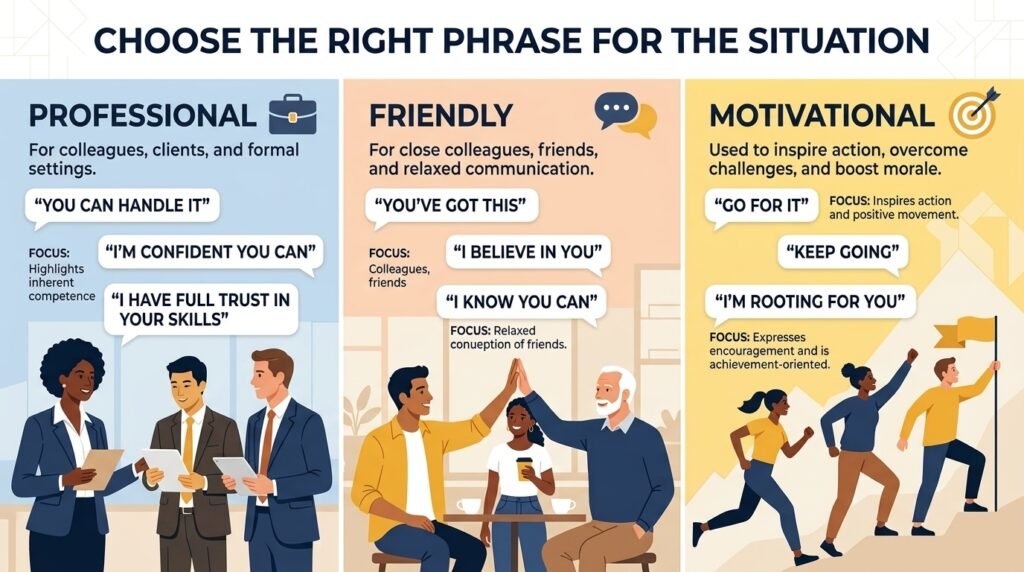
| Alternative | Best Used In | Tone |
| You’ve Got This | Everyday conversations | Friendly, upbeat |
| I Believe in You | Personal encouragement | Warm, supportive |
| You Can Handle It | Challenges and responsibilities | Confident |
| I Know You Can | Personal support | Warm, reassuring |
| Go for It | Decisions and opportunities | Casual, energetic |
| You’re Capable of This | Work and challenging tasks | Professional, confident |
| I’m Confident You Can | Workplace communication | Formal, supportive |
| Keep Going | Ongoing efforts | Encouraging, motivating |
| You’re Up to the Challenge | Difficult situations | Confident, motivating |
| I’m Rooting for You | Personal goals and events | Friendly, warm |
Common Mistakes
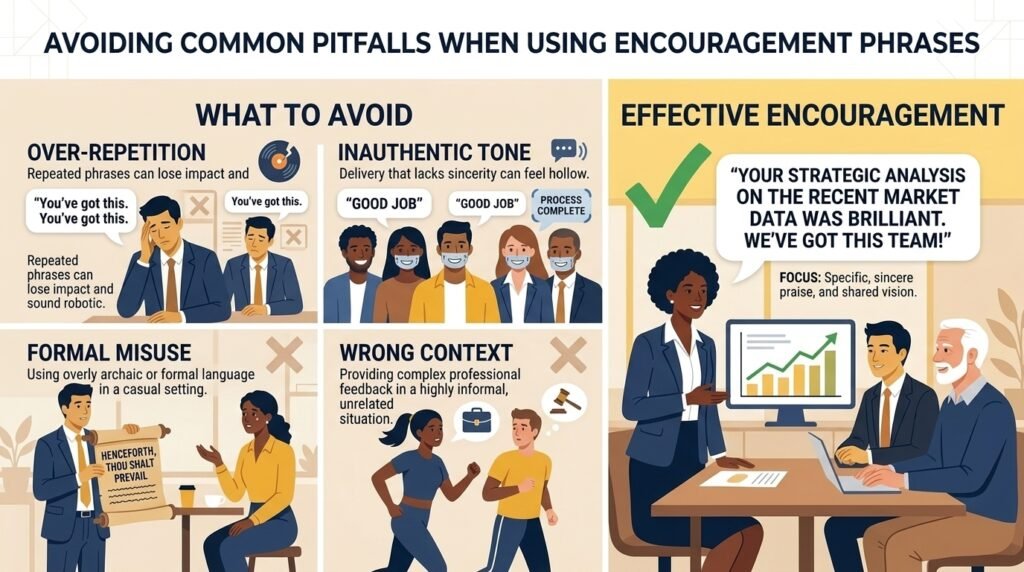
1. Using Casual Phrases in Professional Emails
Expressions such as “go for it” or “you’ve got this” can be perfectly natural, but they may not suit every formal workplace message. Consider “I’m confident you can” when communicating with clients or senior colleagues.
2. Choosing Overly Formal Language
Not every situation needs polished corporate language. Telling a close friend, “I am confident in your ability to complete this task,” may sound stiff when “You’ve got this!” would feel more natural.
3. Repeating the Same Phrase
Even a useful expression can lose its impact when you use it constantly. Rotate between encouragement, reassurance, and action-focused phrases based on the situation.
4. Forgetting the Context
Think about what the person actually needs. Someone facing a difficult task may need “You can handle it,” while someone deciding whether to take an opportunity may respond better to “Go for it.”
5. Sounding Insincere
Encouragement works best when it feels genuine. Instead of giving automatic praise, mention something specific that supports your confidence, such as the person’s preparation, experience, or progress.
Frequently Asked Questions
What is another way to say “you can do it”?
Some natural alternatives include “you’ve got this,” “I believe in you,” “you can handle it,” “I know you can,” and “I’m confident you can.” The best option depends on the situation. “You’ve got this” is casual and upbeat, while “I’m confident you can” sounds more professional.
What is a professional way to say “you can do it”?
“I’m confident you can” is one of the best professional alternatives. You can also say “you’re capable of this” or “I’m confident in your ability to handle this.” These expressions communicate trust without sounding too casual for workplace emails, meetings, or professional conversations.
What is a friendly way to say “you can do it”?
“You’ve got this” is a very natural friendly alternative. Other choices include “I believe in you,” “I know you can,” and “I’m rooting for you.” These expressions work well when encouraging friends, family members, classmates, or coworkers.
Is “you’ve got this” the same as “you can do it”?
Yes, the two expressions communicate a very similar idea. Both tell someone that you believe they can succeed. However, “you’ve got this” often sounds more conversational and modern, while “you can do it” is simpler and works across a wider range of situations.
How do you encourage someone before an interview?
You can say “You’ve got this,” “I know you can,” or “I’m confident you’ll do well.” For a professional relationship, a phrase such as “You’re well prepared, and I’m confident you can handle the interview” provides encouragement while also giving a specific reason for your confidence.
What can I say instead of “you can do it” in a motivational message?
Good alternatives include “Keep going,” “you’ve got this,” “you’re up to the challenge,” and “I believe in you.” Choose the phrase according to the situation. “Keep going” emphasizes persistence, while “you’re up to the challenge” emphasizes ability and confidence.
What is a more supportive way to say “you can do it”?
“I believe in you” is especially supportive because it expresses personal confidence rather than simply giving instructions. “I’m rooting for you” is another warm option. Both phrases can make encouragement feel more personal when someone is nervous, discouraged, or facing an important goal.
Can I use “you can do it” at work?
Yes. “You can do it” is grammatically correct and can sound natural in workplace conversations, especially with coworkers you know well. In more formal situations, however, “I’m confident you can,” “you’re capable of this,” or “I’m confident in your ability” may sound more polished.
Conclusion
Knowing another way to say “you can do it” gives you more flexibility when encouraging people in American English. While the original phrase is simple and effective, different alternatives can communicate confidence, warmth, motivation, or professionalism more precisely.
The most important thing is to match your words to the person and situation. A short, sincere phrase can have a much greater impact than a complicated one. When in doubt, choose the expression that sounds natural and genuinely reflects your confidence in the other person.

Amara Reyes has taught English to adult learners for over eight years. She focuses on how phrases are actually used in everyday conversation, not just textbook definitions.